
New Study Reveals Brain Develops from Two Distinct Progenitor Lines, Not One
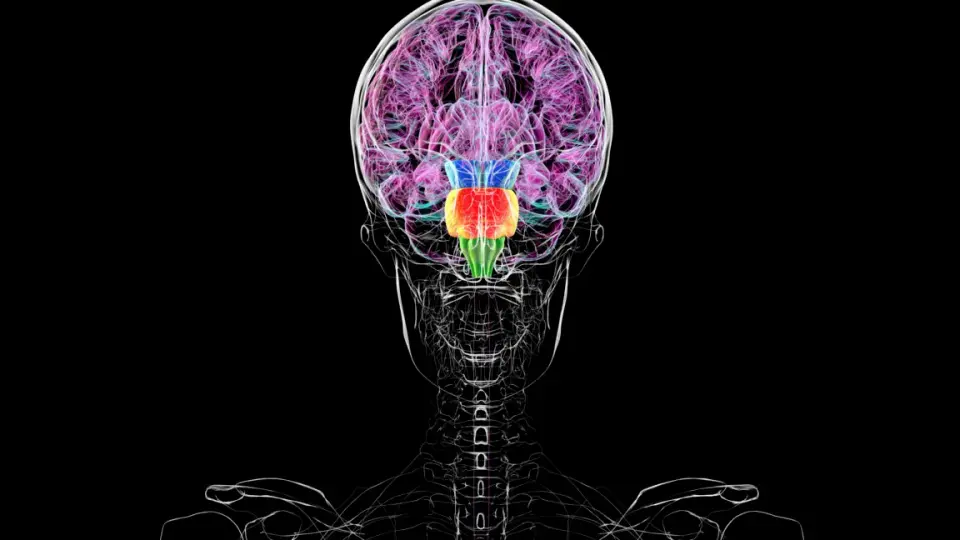
A study published in Nature Neuroscience on September 18, 2026, challenges the traditional view that the human brain develops from a single progenitor cell. Researchers from Stanford Medicine found that the forebrain/midbrain and hindbrain arise from two separate, parallel neural ectoderm populations during embryonic gastrulation. This finding explains why hindbrain neurons have been difficult to cultivate in labs and enables the first successful derivation of hindbrain motor neurons from human pluripotent stem cells, offering new avenues for studying diseases like ALS and SMA.
Key points
- The study identifies two distinct progenitor cells: one expressing Otx2 for the forebrain/midbrain and one expressing Gbx2 for the hindbrain.
- These cell populations have different chromatin configurations, locking them into separate developmental fates early in embryogenesis.
- The research allows for the first successful generation of human hindbrain motor neurons from pluripotent stem cells.
- This breakthrough facilitates the study of brainstem-related diseases, including spinal muscular atrophy (SMA) and amyotrophic lateral sclerosis (ALS).
- Evolutionary evidence suggests this dual-origin pattern is conserved across vertebrates and some invertebrates, such as acorn worms.
Background
Previous models assumed a single neural progenitor gave rise to the entire brain. Recent archive coverage from September 2026 highlighted this shift, noting that the inability to grow hindbrain neurons in labs had hindered research into neurodegenerative conditions. The new findings provide a mechanistic explanation for this historical difficulty by showing that hindbrain cells cannot be derived from forebrain/midbrain progenitors due to their distinct early genetic and epigenetic commitments.
How outlets are covering it
Stanford Medicine and the Nature Neuroscience paper emphasize that the brain is a composite organ formed by two ancient, parallel neural systems, overturning the single-progenitor model. Ars Technica offers a more cautious interpretation, arguing that while the hindbrain forms a distinct fate early, it does not constitute a separate 'brain' but rather a distinct region within a single organ, noting that 96% of traced cells remained in their assigned fates but acknowledging some flexibility. Smithsonian Magazine highlights the evolutionary implications, suggesting that two separate nervous systems were 'squished together' over millions of years. Critics, including Alex Pollen and Cecilia Moens, noted in Smithsonian's coverage, argue that the two populations might originate from a single short-lived progenitor or that cell fates can swap, challenging the absolute separation claimed by the study.
Why it matters
This discovery resolves a decades-long obstacle in neuroscience: the inability to generate hindbrain neurons in vitro. By understanding the distinct origins of brain regions, researchers can now cultivate these cells to study and develop treatments for fatal conditions like ALS and SMA, which affect the brainstem. It also provides a new framework for understanding how complex brain structures evolve from simple embryonic cells.
What to watch
Researchers plan to extend their studies to determine the developmental origins of the spinal cord and investigate how SMA and ALS compromise hindbrain neuron function. The ability to grow these neurons in a dish may lead to regenerative therapies and better models for testing potential treatments for neurodegenerative diseases.
- Contrary to some reports, you don’t have two brains Ars Technica
- Human brain is two separate organs, Stanford Medicine-led research finds Stanford Medicine
- Two parallel neural ectoderm progenitors contribute to the developing brain Nature
- Scientists Say the Human Brain Might Be Made of Two Distinct Nervous Systems That Got Squished Together Smithsonian Magazine
- Human Brain is Two Organs Fused Together, Study Suggests Sci.News
Want the full story? Read the original reporting
Read on Ars Technica