
Mice Study Reveals Prefrontal Cortex Blocks Creative Problem-Solving by Enforcing Old Habits
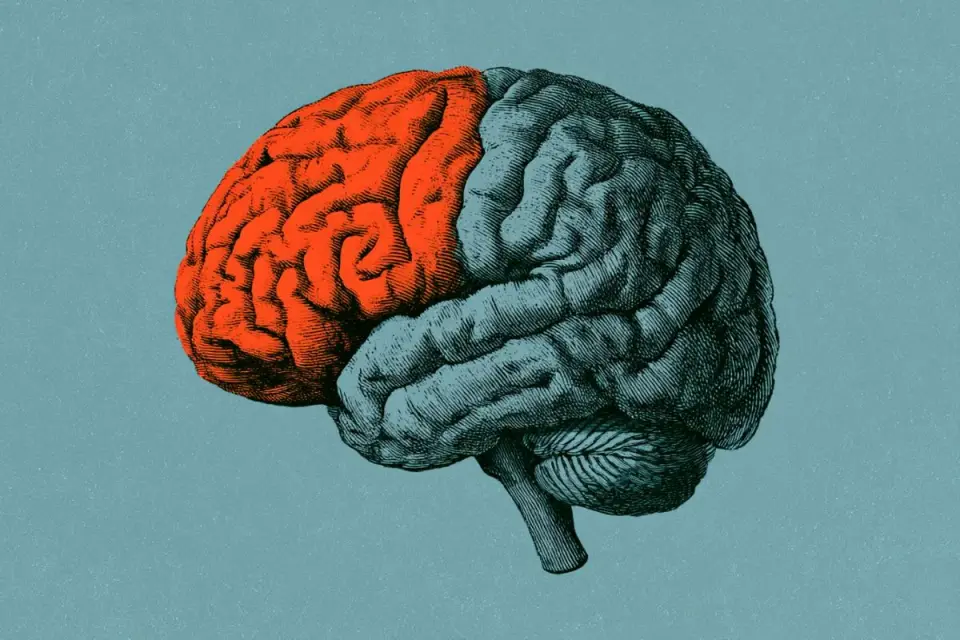
Emory University researchers found that the medial prefrontal cortex (mPFC) actively hinders the adoption of new, efficient strategies by enforcing default habits. In a T-maze pup-retrieval task, mice naturally relied on a memory-based 'win-stay' strategy. Silencing the mPFC accelerated the shift to a superior sound-guided strategy, reducing learning time from up to eight days to just two to three days. This challenges the view of the prefrontal cortex as solely a driver of flexibility, suggesting it can act as a bottleneck for innovation. The findings offer new insights into neurodiversity and potential therapeutic targets for cognitive disorders.
Key points
- The medial prefrontal cortex (mPFC) was found to impede problem-solving by locking mice into a default 'win-stay' habit, contrary to its traditional role as a center for behavioral flexibility.
- In a naturalistic T-maze task, mice initially ignored auditory cues to return to where they last found a pup, demonstrating a strong reliance on memory over real-time sensory input.
- Chemogenetic silencing of the mPFC allowed mice to adopt the superior sound-guided strategy in two to three days, compared to four to eight days for control groups.
- Silencing the auditory cortex impaired the ability to learn the sound cue, causing mice to remain stuck in the default strategy even after extended training.
- The researchers are translating these findings to human applications, testing transcranial magnetic stimulation (TMS) to modulate mPFC activity and improve executive function therapies.
- The study suggests that 'thinking outside the box' requires suppressing the executive mPFC to allow focus on immediate environmental cues rather than past experiences.
Background
This finding builds on earlier research indicating that the medial prefrontal cortex plays a complex role in cognitive flexibility. A July 2026 study linked hyperactivity in the mPFC to early Alzheimer's symptoms, while another found that psilocybin dampens reward pursuit by activating inhibitory neurons in the same region. These prior studies highlight the mPFC's involvement in regulating behavior, but the current research specifically identifies it as a barrier to adopting new, efficient strategies rather than just a regulator of existing ones.
Why it matters
Understanding that the prefrontal cortex can actively block new learning provides a new framework for treating cognitive disorders. If rigid thinking is driven by excessive mPFC activity, non-invasive techniques like TMS could be used to modulate this region, potentially helping patients with executive dysfunction or neurodivergent conditions to adopt more adaptive strategies. This shifts the focus from enhancing prefrontal activity to potentially suppressing it in specific contexts to facilitate learning.
What to watch
The Liu Lab is currently conducting studies in mice with genetic markers associated with autism to further understand the role of the mPFC in neurodiversity. Additionally, researchers are collaborating with human participants to test whether transcranial magnetic stimulation can effectively modulate mPFC activity to improve outcomes for individuals with cognitive disorders related to executive function.
Want the full story? Read the original reporting
Read on Neuroscience News