Researchers pinpoint a specific cortico-basal ganglia synapse in zebra finches as the initial site where learning begins, using optogenetics and AI-driven song scoring to show that early learning hinges on this single connection. Manipulating activity at these synapses speeds learning but can reduce accuracy, highlighting a balance between exploratory babbling and precise Mastery with implications for human speech and movement disorders.
LinkedIn is laying off staff and scaling back investments while reorganizing its product operations to move faster with AI. The changes include centralizing user experience design, creating a shared UX resource model, shifting learning content to instructor-driven monetization, and closing the Graz, Austria office, with Microsoft-like emphasis on leaner teams and fewer management layers.
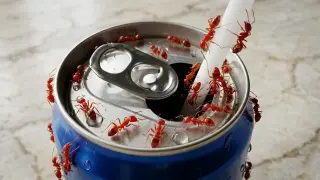
A new study finds caffeine-influenced Argentine ants learn faster and take straighter routes to sugar rewards, reducing foraging time by up to 38% at intermediate caffeine doses without increasing speed. This could enhance bait effectiveness for pest control, but field tests and safety assessments are still needed.
A collection of 61 moments where people spoke with unwavering certainty and were completely wrong, highlighting how overconfidence can outpace knowledge. The piece references psychology research showing our brains overestimate what we know, and that exposure to opposing viewpoints can erode initial certainty, underscoring the value of humility and curiosity.
Field observations of nine hunting cases in arboreal and fossorial tarantulas across the Americas suggest these spiders can learn and remember, adapting their hunting by using spatial information. Arboreal species moved up to two meters to better-lit hunting spots, fossorial tarantulas climbed to the canopy—even in the dry season—and several spiders, including a blind cave-dwelling species, returned quickly and directly to their burrows after disturbance. While the findings point to learning and memory, it remains unclear whether external landmarks or internal cues guide navigation, and researchers call for further field work and controlled experiments to confirm the cognitive interpretation.
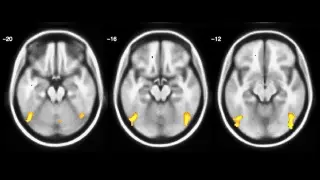
New Dartmouth-led research reframes the amygdala as a dynamic arbiter that toggles between action-based and stimulus-based learning under uncertainty, promoting flexible decision-making. When the amygdala is damaged, arbitration becomes random and behavior locks into rigid action-based patterns. The findings offer a potential path for treating phobias and anxiety by encouraging action-based exploration over stimulus-driven fear, and pave the way for further studies on how the amygdala coordinates with prefrontal circuits to guide learning.
Mark Cuban says there are two types of AI users—those who use AI to learn everything and those who use it to avoid learning—urging companies to embrace AI while acknowledging its flaws; other tech leaders warn that overreliance on AI can deskill workers, though AI can act as a potent accelerant for career differentiation.
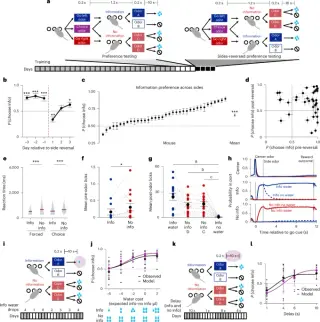
A UCSF study shows the brain learns more efficiently when rewards are rare and spaced apart, with dopamine responses driven by the time between cue and reward rather than the number of repetitions. This challenges Pavlovian practice-as-learning and explains why cramming is less effective, while suggesting educational strategies and potential faster, sparse-learning approaches for AI.
For much of the 20th century, scientists believed the adult brain was fixed, but neuroplasticity now shows the brain can change throughout life in response to experience—though changes are gradual and bounded. The article traces this shift from Hebb’s 1949 idea to modern imaging that reveals learning reshapes brain activity and connectivity, with the hippocampus showing limited adult neurogenesis. Change is strongest with effortful, meaningful engagement and is enhanced by practice, regular exercise (which raises BDNF) and sleep, while chronic stress can impair plasticity. Plasticity can be maladaptive, reinforcing harmful patterns like chronic pain or addiction, but therapies such as cognitive behavioral therapy and rehab can steer it toward recovery. The piece also debunks myths of rapid, limitless change, emphasizing that real brain remodeling comes from challenging, real-life activities like language learning, playing music, and complex social interaction.
The Learning Network defines puerile as an adjective meaning childish or immature, provides pronunciation (via Vocabulary.com), and offers usage context including a reference from a Ne Zha II review. It also invites readers to craft sentences using the word and to explore related vocabulary activities.
Pearson and Deloitte announced a strategic alliance to co-develop and deliver AI-powered learning, leadership and workforce development solutions for global enterprises and government, including AI-enabled skills platforms and scalable content delivery; Deloitte will accelerate AI adoption across its portfolio and deploy Pearson’s AI-powered learning products in-house.
Computer scientist Yann LeCun emphasizes that true intelligence fundamentally involves learning, highlighting the importance of learning processes in understanding and developing artificial intelligence.
The article discusses the versatility and limitations of text as a primary medium for communication and learning, highlighting its historical significance, efficiency, and the challenges of richer media like video and interactive tools. It emphasizes that while text remains fundamental due to its durability and ecosystem, exploring other modes and improving tools could enhance knowledge transmission, especially in education and complex data representation.
AI is transforming workplace learning, but the article also highlights concerns about personal data processing and sharing with multiple vendors and ad partners, emphasizing the importance of managing privacy settings.
Kumail Nanjiani expressed pride in his performance in Marvel's 'Eternals' and reflected on how the experience changed his approach to work, emphasizing learning from every project regardless of its reception.