A new study from the University of Tsukuba indicates that a 10-minute slow jog can improve mood and executive function. Participants showed increased brain activity in the prefrontal cortex and better attention scores compared to resting, suggesting minimal effort yields cognitive benefits.
Researchers have created the most comprehensive map of gene activity in the human prefrontal cortex, utilizing data from nearly 1,500 donors. This landmark atlas, which tracks gene expression from infancy to old age, provides critical insights into the biological mechanisms underlying neurodegenerative and psychiatric disorders, potentially accelerating the development of targeted therapies for conditions like Alzheimer's disease and schizophrenia.
A small study found that an in-phase pattern of dual-site transcranial alternating current stimulation, applied during a task that required overriding automatic emotional responses, strengthened the connection between the lateral prefrontal and sensorimotor cortices and reduced amygdala influence in socially anxious adults. Participants with stronger neural responses showed greater improvement, while anti-phase stimulation offered no consistent benefit. The findings suggest rhythm-based brain stimulation could augment exposure therapy for social anxiety, but results varied across individuals and require larger, more personalized studies.
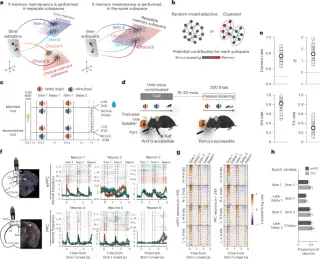
A Nature Neuroscience study shows mice performing a delayed match-to-sample task reuse separate neural subspaces for stimulus processing and memory maintenance, each supported by distinct neuron clusters in the medial prefrontal and posterior parietal cortices. These subspaces are largely orthogonal and are repurposed across inputs and memories within the same task. Analyses of data-constrained recurrent networks reveal that silencing the corresponding clusters causes modular, task-specific deficits, providing evidence for a brain-wide reusable architecture of cognitive components that parallels modular ideas in artificial networks.
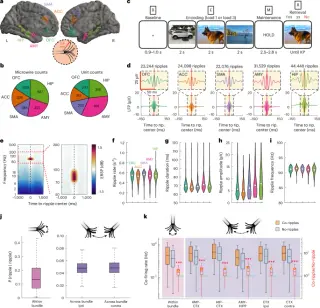
Intracranial recordings from epilepsy patients performing a Sternberg working memory task show that high-frequency ripple oscillations co-occur across distant brain regions (up to ~220 mm) and boost cross-regional neuronal co-firing by ~30% during encoding, maintenance, and retrieval. Co-ripples scale with memory load and, during retrieval, reinstate stimulus-specific long-range co-firing patterns observed at encoding, indicating ripple-mediated coordination supports distributed memory representations across hippocampus, amygdala, vmPFC, ACC and preSMA.
In mice, the medial prefrontal cortex—traditionally linked to flexible thinking—can impede problem-solving by enforcing a memory-based win-stay habit. Chemogenetic silencing of the mPFC speeds the shift to a superior sound-guided strategy from 4–8 days in controls to 2–3 days, with the auditory cortex also crucial for cue learning. These findings suggest suppressing executive control can help acquire new, sensory-driven habits and may guide human therapies (e.g., TMS) to modulate prefrontal activity in cognitive disorders.
A Nature Communications study using 5xFAD mice shows cognitive flexibility is impaired before memory deficits, linked to hyperactivity in the medial prefrontal cortex; silencing overactive neurons reduces amyloid-beta accumulation and partially restores flexibility, suggesting a potential route to earlier Alzheimer’s diagnosis.
A rat study found that a single psilocybin dose (1 mg/kg, given intraperitoneally) reduced the rats’ preference for larger rewards 48 hours after administration, by increasing activity of parvalbumin inhibitory interneurons wrapped in perineuronal nets in the medial prefrontal cortex. This linked change in brain circuitry suggests psilocybin may dampen incentive motivation and alter reward processing, offering insight into potential mechanisms for treating substance-use disorders. Results are preliminary and limited to male rats, with no impairment to attention or basic motor skills observed.
A Neurobiology of Disease study finds that aging-related memory decline may be driven by an excess of inhibitory synapses in the prefrontal cortex. In aged mice, researchers identified two groups—cognitively susceptible and resilient—with the susceptible group showing higher levels of inhibitory markers (Gephyrin, VGAT) and denser inhibitory synapses in the prefrontal cortex. Using optogenetics, activating inhibitory neurons in young mice reproduced memory and exploration deficits, while similar stimulation in aged impaired mice had no additional effect, suggesting a chronic, structure‑level inhibitory load contributes to cognitive decline. The study warns that treatments increasing inhibition could worsen age-related cognitive deficits and notes limitations, including all-male subjects and the artificial nature of the manipulation.
MRI-based study of 136 people with PTSD and 66 trauma-exposed controls found those with PTSD have weaker prefrontal control over the thalamus when challenging negative self-beliefs, predicting less benefit from standard talk therapies; results suggest treating brain wiring first and exploring psychedelics or other approaches, while noting that ongoing trauma exposure and cultural factors affect outcomes.
A UC Davis Health meta-analysis of 25 studies found people with anxiety disorders have about 8% lower brain choline levels, especially in the prefrontal cortex, suggesting nutrition could influence brain chemistry and anxiety, but more research is needed before dietary changes or supplements are recommended.
Two studies reveal how ketamine triggers rapid antidepressant effects by briefly silencing interneuron brakes in the prefrontal cortex via mu-opioid receptors, and show that a low-dose three-drug combo can replicate this benefit with fewer side effects; longer-lasting relief depends on TrkB and mGluR5 receptor cross-talk driven by BDNF, which strengthens and stabilizes synapses. Researchers plan accelerated clinical trials using safe, existing drugs to translate these findings into patient treatments.
A mouse study shows psilocybin dose-dependently activates the brain’s 5-HT2A receptors in the prefrontal cortex, with an inverted-U relationship for acute behaviors. The following day, moderate doses reduced anxiety-like exploration and higher doses decreased depression-like immobility, coinciding with changes in microtubule dynamics and increased synaptic plasticity proteins—primarily in the prefrontal cortex, not the amygdala—suggesting a neural mechanism for lasting antidepressant effects, though results in animals may not directly translate to humans.
A UCLA study finds mice facing cold organize into adaptive huddles that stabilize core temperature. The dorsomedial prefrontal cortex tracks others’ choices as if simulating the group; silencing it makes some mice passive while others compensate, keeping overall huddle time and body temperature unchanged. Larger groups exhibit stronger collective behavior, highlighting neural circuits for social resilience with potential implications for conditions like depression and schizophrenia.
New findings show relapse in addiction results from a circuit-level imbalance in the prefrontal cortex: parvalbumin-positive (PV) inhibitory neurons act as a gate on the PFC-to-VTA reward pathway. Suppressing PV cells reduced cocaine-seeking in mice, while activating them sustained drug-seeking after withdrawal; the effect is specific to drug rewards, not sugar, and not observed in other inhibitory cells. This reveals a targetable mechanism for relapse and suggests precision therapies to rebalance this circuit.