
Single Gene Fix Restores Neuron Communication in ALS Lab Models
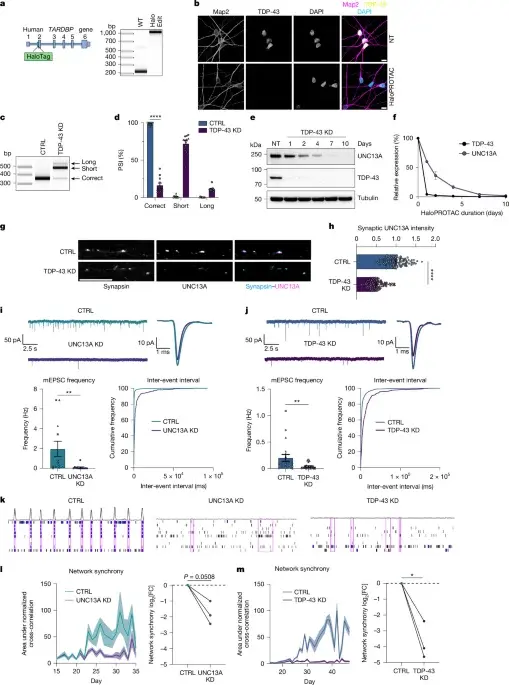
Researchers have identified a specific genetic error in the UNC13A gene that causes synaptic failure in amyotrophic lateral sclerosis (ALS) and frontotemporal dementia (FTD). By using antisense oligonucleotides (ASOs) to correct this single splicing defect, scientists restored neuron communication in human lab models, offering a potential treatment for 97% of ALS patients.
Key points
- Loss of the TDP-43 protein leads to widespread splicing errors, but correcting just one event in the UNC13A gene restores synaptic function.
- The study used human induced pluripotent stem cell-derived neurons to show that TDP-43 loss causes a breakdown in network synchrony.
- ASOs targeting the UNC13A cryptic exon restored protein levels and synaptic transmission in both cortical and spinal motor neurons.
- This approach targets the common pathology of TDP-43 aggregation, which affects nearly all non-genetic ALS cases and half of FTD patients.
- A related ASO therapy, TRCN-1023, has already entered Phase I/II clinical trials in the UK, Europe, and China.
Background
Previous research established that TDP-43 mislocalization is a hallmark of ALS and FTD, but its direct impact on synaptic function remained unclear. While existing therapies like SOD1 and FUS ASOs only benefit less than 3% of patients, this new study addresses the broader population affected by TDP-43 pathology. The findings build on earlier genetic association studies linking UNC13A variants to ALS risk and progression.
How outlets are covering it
The primary source, Nature, emphasizes the mechanistic validation of UNC13A as the primary driver of synaptic dysfunction, highlighting that correcting this single event is sufficient to rescue network activity. Secondary sources, including Medical Xpress and Mirage News, frame the discovery as a breakthrough for the 97% of patients lacking disease-modifying treatments, noting the parallel development of the TRCN-1023 drug. Technology Networks reports on a separate but related C9-PMO therapy for inherited MND, illustrating the broader trend of RNA-based therapeutics in the field. All sources agree on the potential of ASOs to target splicing errors, though the Nature article provides the specific preclinical data supporting the UNC13A target.
Why it matters
This research provides a genetically validated therapeutic strategy for the majority of ALS and FTD patients who currently have no effective treatment. By demonstrating that a single splicing correction can restore neuron communication, it offers a new path for developing drugs that target the common TDP-43 pathology rather than rare genetic mutations.
What to watch
The next steps involve advancing the developed ASOs into clinical trials. While the TRCN-1023 trial is already underway, the specific UNC13A ASOs described in this study will likely undergo further preclinical testing to optimize efficacy and safety before human trials begin. Researchers will also continue to investigate whether correcting other splicing events can address the remaining synaptic deficits not resolved by UNC13A correction.
- UNC13A splice correction rescues synaptic dysfunction induced by TDP-43 loss Nature
- Human neurons regain communication in motor neuron disease lab models Medical Xpress
- Patient-Derived Neuron Models Support Development of MND Therapy Technology Networks
- Potential MND Therapy Restores Neuron Communication in Lab Mirage News
Want the full story? Read the original reporting
Read on Nature