
Brain regions divide labor to manage continuous goal shifts
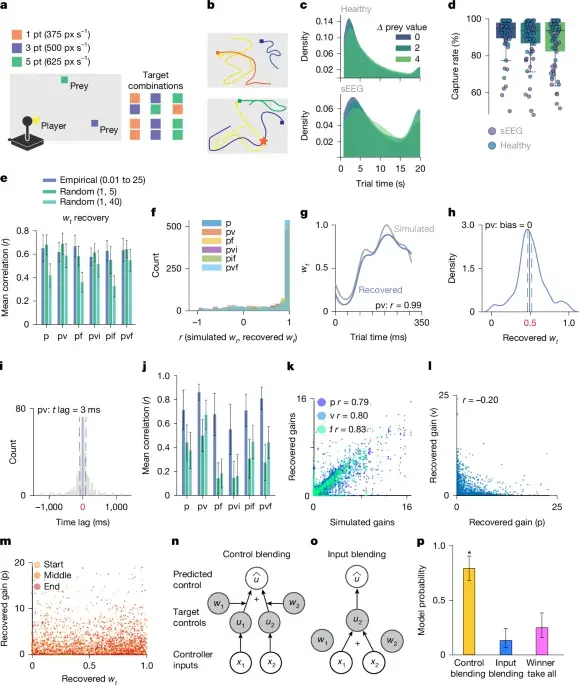
Researchers at Columbia University and other institutions have identified a three-part neural system that allows humans to manage continuous, goal-directed actions. By analyzing brain activity during a prey-pursuit task, the study shows that the hippocampus, anterior cingulate cortex, and orbitofrontal cortex work together to estimate state, switch strategies, and evaluate value, respectively.
Key points
- The study utilizes a control-theoretic model to analyze how humans adjust continuous behaviors when goals change dynamically.
- A tripartite functional division was identified: the hippocampus acts as a state-estimating controller, the anterior cingulate cortex serves as a meta-controller for policy switching, and the orbitofrontal cortex encodes the current value structure.
- Neurons in the anterior cingulate cortex predict major changes in behavioral policy blends, while hippocampal neurons update the latent policy state necessary for early planning.
- The research suggests that continuous choice is not a single decision but a strategic reweighting of lower-level control policies linked to specific goals.
Background
Previous research, such as a 2025 study on context-dependent decision-making in primate circuits, has explored how the hippocampus and prefrontal cortex interact. This new work builds on those foundations by applying control theory to continuous actions rather than discrete choices, offering a more rigorous framework for understanding dynamic goal pursuit.
Why it matters
Understanding the neural basis of continuous control provides a foundation for modeling complex human behaviors and could inform the development of AI systems that manage dynamic, multi-goal environments more effectively.
What to watch
The researchers have made preprocessed data and code available for further analysis, which may allow other scientists to validate the control-theoretic decomposition of behavior and explore its applications in other continuous tasks.
Want the full story? Read the original reporting
Read on Nature