A new study published in Psychological Medicine reveals that methylphenidate improves decision-making in adults with ADHD specifically by enhancing their sensitivity to negative consequences, rather than by increasing reward motivation or slowing down response times.
Patriots quarterback Drake Maye is navigating the tough line between aggressive play and disciplined decision-making, as Vrabel and McDaniels push him to be decisive without sacrificing risk-taking. After early interceptions that echoed last season's impatience, Maye and the coaching staff emphasize checking down to keep drives alive, aiming for the growth path exemplified by Josh Allen while maturing into a more consistent game manager who can still strike when the right opportunity arises.
Seattle Sounders’ 0-0 draw with the Red Bulls highlights a season-long struggle with decision-making—from front-office transfer choices to tactics and lineup plans—while the attack remains inefficient. Despite a shutout and signs of effort, a lack of clear plan and ongoing transfer drama jeopardize a late push for the playoffs, underscoring the need for decisive off-field actions.
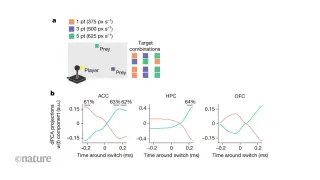
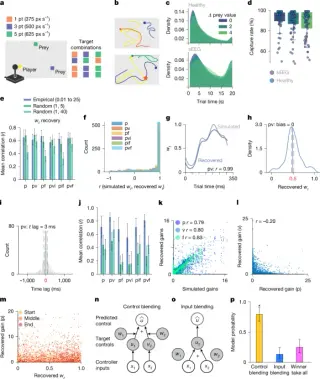
A Nature Briefing reports that humans can pursue several goals at once by blending strategies. Using control theory applied to a simple video game, researchers identified a trio of brain regions that coordinate to implement compositional control, illuminating how the brain can concurrently pursue multiple objectives.
A continuous prey-pursuit task reveals that naturalistic, goal-directed behavior is governed by a control-theoretic blend of multiple lower-level policies, managed by a meta-controller that shifts policy composition. Neural data show the anterior cingulate cortex signals major policy switches, the hippocampus encodes latent policy states for early planning, and the orbitofrontal cortex represents the task's value structure, supporting a tripartite view in which the hippocampus estimates state, ACC orchestrates control, and OFC provides value context for flexible decision-making.
A Canadian-led study published in the British Journal of Psychology finds that desk posture affects more than comfort: sitting upright can boost self-confidence and promote more deliberate risk-taking strategies, while slouching may dampen mood and alter decision styles. Using adjustable desks and a balloon-risk task with around 200 volunteers, researchers observed that upright posture increased pride and led to more effective choices. The piece also notes standing desks aren’t a cure-all for health, though prolonged sitting can impact blood flow and muscle tension.
Researchers from three French and Italian universities found that access to AI advice drastically reduced people’s willingness to admit ignorance (44% to 3%), cut accuracy (27% to 9%), and boosted confidence (30% to 76%). The study used a known-failure model (Step 3.5 Flash) with questions about visual details in films, showing that simply having AI available can suppress the habit of recognizing what you don’t know, leading some participants to be wrong despite being more confident—and incentives did little to counteract it.
UIUC researchers show that decision-making engages early sensory brain regions via feedback from higher areas, challenging the idea of a strictly bottom-up process and suggesting that AI could be made more energy-efficient by emulating brain-wide feedback loops. The findings, derived from mouse experiments and published in PNAS, are not a turnkey blueprint but point to new directions for AI architectures and future research into brain timing and neural activity.
A new analysis combining nine cognitive and personality domains finds that overall psychological functioning peaks in late midlife (around ages 55–60 in the comprehensive model, with a similar peak near 60 in the conventional model). While raw processing speed and certain cognitive functions decline with age, crystallized knowledge, conscientiousness, emotional stability, emotional intelligence, moral reasoning, and financial literacy can continue to improve, enabling older adults to maintain high functional capacity even as some abilities wane. The study cautions that cross‑sectional Western data limit universal conclusions and notes implications for leadership and policy roles, where midlife readiness may trump youth or old age, though more longitudinal and non‑Western research is needed.
Researchers combine fine-tuned large language models with formal choice mathematics to analyze thousands of participants’ free-text rationales for gambling decisions. The LLMs classify reasons (e.g., maximax vs. loss aversion) and are validated by comparing the text-derived motives with the actual choices, yielding about 95% alignment. The study shows that people’s decision strategies adapt to how a problem is framed, and presents a scalable framework for analyzing verbal reports that could inform public policy and complex real-world decision making.
A Neuron study shows that consciously extending the exhale increases heart-rate variability and boosts reward-related brain activity, making people more likely to take risks. Brain regions like the ventromedial prefrontal cortex and precuneus showed greater activation, linking bodily state to decision-making. The findings suggest simple breathing techniques could aid self-regulation and have potential clinical use for anxiety, depression, and eating behavior.
A NYU Langone Health study published in PNAS shows that people with major depressive disorder hold a higher internal baseline for rewards and are less able to adapt their expectations when rewards change. In a three-minute smartphone game, depressed participants stopped harvesting a depleting tree earlier (after about eight to nine apples) than healthy controls, indicating a higher decisional reference point. A second task revealed that depressed individuals showed inflexibility in adjusting their willingness to pay after environmental adaptation. The findings offer a potential remote-measurement tool for depression and point to a cognitive mechanism that could become a therapeutic target, though subtypes and broader applicability require further research.
Researchers show that the brainless slime mold Physarum polycephalum makes decisions through mechanical means—rhythmic contractions driving cytoplasmic flows—allowing it to adapt and escape blue-light traps. In experiments with shaped light barriers, the organism followed the longest axis and reconfigured its mass to move, illustrating decentralized, non-neural decision-making and shedding light on how such systems optimize behavior without a nervous system.
A new study argues there is no discrete neural 'decision center' in the brain; instead, intentional-looking behavior arises from the simultaneous interaction of sensory, sensorimotor, and motor processes, challenging the linear 'sandwich' model and the Cartesian Theater. The paper uses analogies to nonphysical decisions and a simple wall-following robot to illustrate how decisions can appear purposeful without a central controller, and calls for embodied, ecological approaches to studying decision-making.
A new Imaging Neuroscience study finds that voluntary and forced choices unfold through remarkably similar evidence-accumulation processes in the brain: neural signals ramp up before a decision, with faster ramps for quick choices and slower ramps for slower ones, suggesting our brains weigh internal preferences and goals in the same automatic way across decision types, challenging simple notions of free will.