
Wool-Derived Keratin Outperforms Collagen in Bone Regeneration Tests
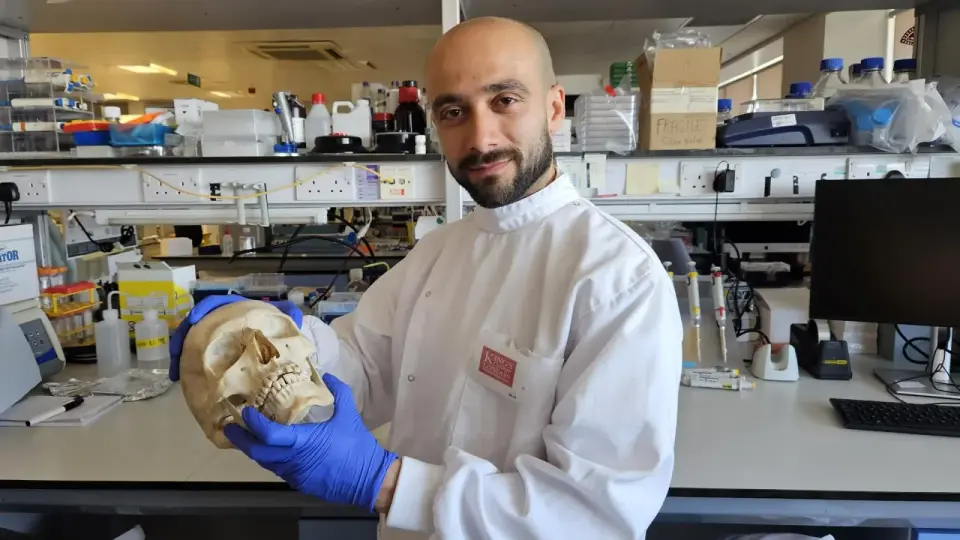
Researchers at King's College London have demonstrated that keratin extracted from sheep’s wool can effectively support bone regeneration in animal models. The study found that wool-based scaffolds produced new bone tissue that was more structurally organized and aligned with natural bone compared to collagen, the current standard in regenerative medicine. While collagen generates more total bone volume, keratin offers superior structural integrity and durability. This finding positions wool as a sustainable, scalable alternative to collagen, which is often costly and prone to rapid degradation. The research marks a significant step toward using agricultural waste products in clinical bone repair applications.
Key points
- King's College London researchers tested keratin extracted from wool as a scaffold for bone repair in rats with skull defects.
- Keratin scaffolds produced bone with better fiber alignment and structural organization than collagen, resembling natural healthy bone more closely.
- Collagen remains the gold standard but has drawbacks, including weakness, rapid degradation, and high extraction costs.
- Wool is a renewable resource often discarded as waste by the farming industry, offering a sustainable alternative to collagen.
- The keratin membranes remained stable during healing and integrated smoothly with surrounding tissue in animal trials.
Background
This development follows broader trends in materials science exploring sustainable and novel biomaterials. Recent studies, such as the identification of a new metallic alloy from the 1945 Hiroshima blast, highlight how extreme conditions can create unique material structures, though that research focuses on physics rather than biology. Similarly, ongoing efforts to map lung diseases through pigeon fanciers and proposals to mine atmospheric gases using metal-organic frameworks illustrate the growing interest in repurposing or discovering new materials for medical and industrial applications. The current wool-keratin research aligns with the push for sustainable, renewable biomaterials in regenerative medicine.
Why it matters
The discovery could reduce reliance on collagen, which is expensive and less durable for load-bearing bone repairs. Using wool, a common agricultural waste product, offers a scalable and cost-effective solution. If successful in human trials, this could lower the cost of bone repair procedures and improve outcomes by providing scaffolds that better mimic natural bone structure.
What to watch
The next step is likely clinical trials in humans to verify the safety and efficacy of keratin scaffolds in real patients. Researchers will need to assess long-term integration and performance in human bone repair scenarios. Additionally, efforts may focus on optimizing the chemical treatment of keratin to ensure consistent durability and scalability for widespread medical use.
Want the full story? Read the original reporting
Read on ScienceDaily