
Lake Mead Hits Record Low, Deepening Colorado River Crisis
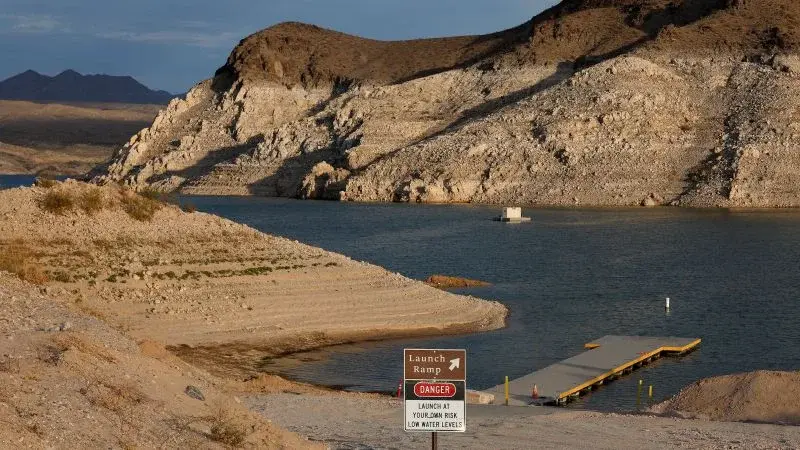
Lake Mead, the largest reservoir in the United States, has reached its lowest water level on record, dropping to 1,040.5 feet. This milestone, confirmed by the US Bureau of Reclamation, signals a deepening crisis in the Colorado River system. The reservoir, which supplies water to over 20 million people, is now lower than it has been since its creation in the 1930s. Experts attribute this decline to a 25-year drought, climate change, and overallocation of water. The record low follows a historic drop in combined levels for Lake Mead and Lake Powell in July 2026. While the Bureau of Reclamation and the Department of the Interior are committed to preventing critical infrastructure failures, the situation remains precarious. The Colorado River, a 1,400-mile artery, supports 40 million people, irrigates 5 million acres of farmland, and generates power for 700,000 homes. The crisis has intensified negotiations among seven basin states over water sharing, with no consensus reached yet.
Key points
- Lake Mead's water level fell to 1,040.5 feet, breaking the previous record low of 1,040.58 feet set in July 2022.
- The reservoir supplies water to over 20 million people and is a critical component of the Colorado River system.
- Experts cite a 25-year drought, climate change, and overallocation as primary drivers of the water crisis.
- The US Bureau of Reclamation and the Department of the Interior are committed to protecting critical infrastructure and meeting water and hydropower needs.
- Seven states relying on the Colorado River are in negotiations over water sharing, with no deal reached yet.
- The Colorado River supports 40 million people, irrigates 5 million acres of farmland, and generates power for 700,000 homes.
Background
The current record low for Lake Mead follows a series of historic lows in the Colorado River basin. In July 2026, the combined water levels of Lake Mead and Lake Powell reached their lowest point since 1957, before Lake Powell was even filled. This decline has prompted renewed negotiations among the seven states that rely on the river, with the US Bureau of Reclamation releasing a 10-year operating framework in July. The framework proposes collective cuts of up to 3 million acre feet per year for lower basin states, equivalent to the water supply for 9 million US families. The crisis has also led to increased water-saving measures in cities across the Southwest, such as Phoenix, Tucson, San Diego, and Albuquerque. The ongoing drought and climate change have made the Colorado River system increasingly vulnerable, with experts warning that the current plan may not be sufficient to address the deepening crisis.
Why it matters
The record low in Lake Mead is a stark indicator of the severe water crisis facing the Colorado River basin. The river is a vital resource for 40 million people, supporting agriculture, hydropower, and wildlife habitats. The decline in water levels threatens the stability of the entire system, with potential consequences for water supplies, electricity generation, and the economy. The crisis has also intensified political tensions among the seven states that rely on the river, with no consensus reached on how to share the declining water. The record low underscores the need for urgent action, including major investments in water efficiency, crop shifts, and other adaptive measures, to prevent a system-wide failure. The situation also highlights the impact of climate change on water resources, with hotter, drier weather and a lack of snowpack exacerbating the drought. The record low in Lake Mead is a wake-up call for the need to address the water crisis and ensure the long-term sustainability of the Colorado River system.
What to watch
The US Bureau of Reclamation is expected to publish two-year operating guidelines in the coming days, specifying the exact cuts required of states through 2028. The lower basin states are anticipated to face cuts of around 20%, while no mandatory cuts are expected for the upper basin states. The seven states relying on the Colorado River are expected to continue negotiations over water sharing, with the goal of reaching a durable, consensus-based solution. The US Bureau of Reclamation and the Department of the Interior are committed to reducing the collective risk of both Lake Powell and Lake Mead falling below critical elevations. Experts are expected to monitor the water levels closely, with the potential for Lake Powell to reach record low levels in the coming weeks. The crisis is expected to continue to impact tourism, agriculture, and hydropower, with potential consequences for the economy and the environment. The record low in Lake Mead is expected to serve as a catalyst for further action, with the need for major investments in water efficiency, crop shifts, and other adaptive measures to prevent a system-wide failure.
Want the full story? Read the original reporting
Read on CNN