
Record-Breaking Tides Threaten California Coast as El Niño and Heat Converge
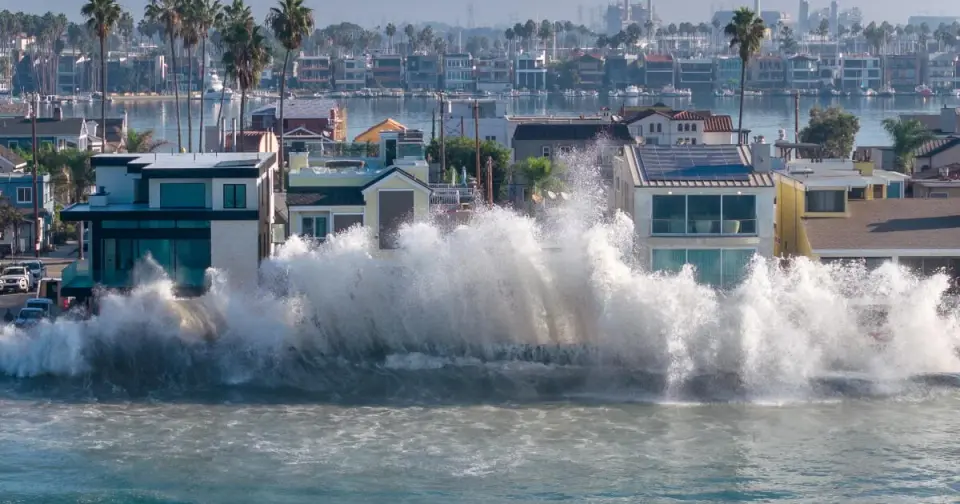
Exceptionally high tides are set to impact California’s coast starting Sunday, with the National Weather Service warning of significant flooding in San Diego and Orange counties. These surges, driven by a rare alignment of astronomical cycles, a powerful El Niño, and record ocean heat, could reach 8 feet in Southern California. Officials are preparing for potential record-breaking water levels, with further peaks expected around Thanksgiving and Christmas.
Key points
- The National Weather Service issued a coastal flood warning for San Diego and Orange counties, effective Sunday morning through Thursday afternoon, predicting tides of 7.5 to 8 feet.
- Coastal flood advisories cover Los Angeles, Ventura, Santa Barbara, and San Luis Obispo counties, warning of moderate to significant beach erosion and potential structural damage.
- In the Bay Area, tides are expected to reach 1.9 feet above normal, exceeding the record set earlier this month, with advisories in effect for San Francisco, Monterey, and surrounding bays.
- The surge is attributed to a convergence of the 18.6-year lunar node cycle, a 4.4-year lunar perigee cycle, and an El Niño-driven marine heat wave that has expanded ocean water volume.
- Newport Beach declared a local emergency, deploying sandbags and pumps, while Long Beach began dredging Alamitos Bay to reinforce eroded beaches on the Peninsula.
- Metrolink suspended commuter train service in southern Orange and San Diego counties for the workweek due to the tide forecast, and crews are raising sections of Highway 37 in the Bay Area.
Background
California’s coastline has faced unprecedented stress in 2026, with earlier swells from hurricanes Marie and Rachel causing significant damage to the Long Beach Peninsula and Newport Beach. The current event is distinct from those storm-driven surges, as it is driven primarily by astronomical alignments and thermal expansion rather than wind-driven waves. Previous records in October were set just weeks ago, but forecasters indicate that tides will continue to rise through the winter, with peaks anticipated around Thanksgiving, Christmas, and Martin Luther King Jr. Day. The ongoing marine heat wave, which has kept ocean temperatures well above seasonal averages, is a persistent factor exacerbating sea-level rise and erosion along the state’s battered shoreline.
How outlets are covering it
The Los Angeles Times and Yahoo both report on the severity of the incoming tides but emphasize different aspects of the crisis. The Los Angeles Times focuses heavily on the long-term implications, noting that the current surge is part of a 'battered' coast facing a rare convergence of threats, and highlights the potential for record-breaking tides in San Diego and Orange counties. It stresses the role of the marine heat wave in raising sea levels by 1.25 to 1.75 feet above astronomical predictions. Yahoo, via the San Francisco Chronicle, highlights the immediate record-breaking potential for both San Diego and Los Angeles, noting that these levels are 'more likely than not' to be the highest on record for Tuesday morning. Yahoo also provides specific details on the Bay Area, noting that tides will exceed the previous October record of 1.73 feet, and includes a quote from meteorologist Philip Gonsalves comparing the thermal expansion of water to heating a pot on a stove. Both sources agree on the timeline and the involvement of El Niño, but the Los Angeles Times provides more detail on the specific infrastructure responses in Southern California, such as the sand barriers at Crystal Cove, while Yahoo focuses more on the comparative records in the Bay Area.
Why it matters
These tides represent a critical test for California’s coastal infrastructure, which has already suffered significant erosion and damage earlier in 2026. The combination of astronomical cycles and climate-driven thermal expansion could lead to permanent changes in the coastline, threatening homes, businesses, and critical transportation routes. The event underscores the increasing frequency and intensity of coastal flooding in the state, driven by a powerful El Niño and record ocean temperatures. As tides are expected to peak again in the coming months, the current surge serves as a warning of the potential for more severe impacts if winter storms coincide with future king tides.
What to watch
Tides are expected to peak on Tuesday morning, with the highest levels in Southern California reaching 8.5 feet in Newport Beach. After this peak, tides will gradually decline but are forecast to rise again around Thanksgiving, Christmas, and Martin Luther King Jr. Day. Officials are continuing to monitor shoreline erosion and infrastructure integrity, particularly in areas like the Long Beach Peninsula and Highway 1 near Point Mugu. The National Weather Service advises the public to avoid driving through flooded roadways and to protect flood-prone property. Further coastal flood advisories are likely to be issued as the astronomical cycles continue to align with the El Niño conditions through the winter.
- Exceptionally high tides will swamp California, ‘likely to get worse before it gets better’ Los Angeles Times
- Newport Beach adds sand to build up beach in battle against the sea Orange County Register
- Coastal flood warning issued as SoCal beach communities brace for more unusually high tides ABC7 Los Angeles
- Metrolink to suspend part of OC Line due to forecasted high surf KTLA
- San Diego, L.A. likely to see highest tides on record; Bay Area also could see coastal flooding Yahoo
Want the full story? Read the original reporting
Read on Los Angeles Times