
Iran offers US a seven-day plan to reopen Strait of Hormuz and restart nuclear talks
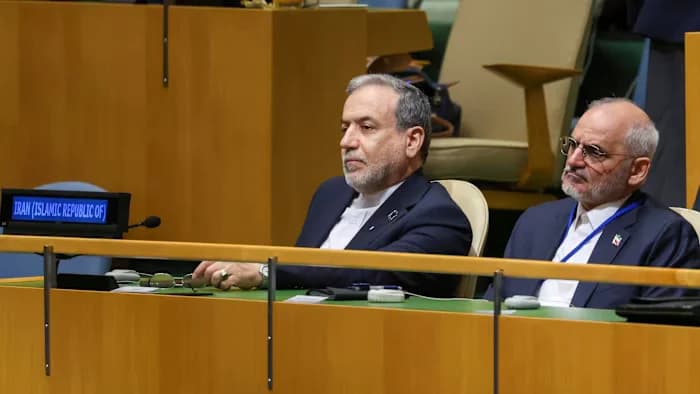
Iranian Foreign Minister Abbas Araghchi announced on Thursday that Tehran has submitted a new proposal to Washington to reopen the Strait of Hormuz within seven days and restart comprehensive nuclear negotiations. The plan, transmitted via Qatari mediators during the UN General Assembly, builds on a June memorandum of understanding that collapsed in July. While Iran claims it is 'not in a hurry' and seeks a deal before the US midterm elections, the White House maintains it is in a strong position and not rushing to accept terms. Oil prices fell on the news, but significant hurdles remain, including US demands for a broader agreement covering Iran's nuclear program and potential Israeli objections to Iranian control over the strait.
Key points
- Iran’s foreign minister Abbas Araghchi stated that Tehran has offered the US a plan to reopen the Strait of Hormuz within seven days, contingent on certain conditions being met.
- The proposal aims to accelerate the timeline for nuclear talks, which under the previous June agreement would not have begun for 60 days.
- Iran demands the lifting of sanctions on oil exports, the end of military operations in Lebanon, and the release of frozen assets as preconditions.
- The White House declined to comment on the specific plan but noted that 'positive and constructive discussions' are ongoing, emphasizing that the US is not in a rush due to its control of the strait.
- Global oil prices dropped, with Brent crude falling 2.9% to $103.48 a barrel, on hopes of a truce.
- Iranian officials privately fear that Israel may use its influence to prevent the US from accepting the proposal, and Saudi Arabia has pulled back from endorsing the proposed shipping route due to Houthi attacks.
Background
This development follows the collapse of a June memorandum of understanding between the US and Iran, which had extended an April ceasefire for 60 days. That agreement unraveled in early July after Iran began firing on ships it deemed to be using unauthorized routes through the Strait of Hormuz. Prior to this new proposal, the US had imposed a naval blockade, causing Iranian crude exports to drop to zero in September, while shipping through the strait remained at 38% of pre-war levels. The current standoff has driven US gasoline and diesel prices to record highs, making fuel costs a critical issue for the upcoming November midterm elections.
How outlets are covering it
The Financial Times and The New York Times report that the proposal closely mirrors the commitments of the failed June memorandum of understanding, with Iran ready to implement it immediately upon US acceptance. The Guardian adds that Iran has consulted with China, which fully supports the plan, and that Saudi Arabia has pulled back from endorsing the Oman-Iran shipping route due to anger over Houthi attacks. The Jerusalem Post highlights the White House's stance that it is in a 'very strong position' and not in a rush, noting that nearly 22 million barrels of oil left the strait the previous night. All sources agree that the core issue is the timeline and scope of the deal, with the US pushing for a comprehensive agreement covering the nuclear program, while Iran seeks to accelerate the reopening of the strait and the start of negotiations.
Why it matters
The resolution of the Strait of Hormuz standoff is critical for global energy markets, as the waterway is a key chokepoint for oil shipments. A successful reopening could ease the record-high fuel prices in the US, potentially influencing the outcome of the November midterm elections. Furthermore, the proposal offers a potential pathway to restart negotiations on Iran's nuclear program, which has been a central point of contention for months. The outcome will also test the limits of US leverage in the region and the ability of mediators to bridge the gap between Washington and Tehran.
What to watch
Iranian Foreign Minister Abbas Araghchi is staying in New York over the weekend to await a response from the US. The White House has indicated that discussions are ongoing but has not committed to accepting the seven-day timeline. The next steps will depend on whether the US agrees to the preconditions, including lifting sanctions and ending military operations in Lebanon. If the US rejects the plan, tensions may escalate, potentially leading to further military action or a prolonged deadlock. The outcome of the midterm elections in November may also influence the US administration's willingness to engage in negotiations.
- Iran offers US new ‘7-day’ ceasefire proposal Financial Times
- Iran Proposes 7-Day Plan to End War The New York Times
- Araghchi claims Iran offered US deal to reopen Strait of Hormuz within one week The Jerusalem Post
- Iran awaiting response from Trump on proposal to open strait of Hormuz in six days The Guardian
- Oil prices pull back from session highs after report of talks for phased reopening of Strait of Hormuz CNBC
Want the full story? Read the original reporting
Read on Financial Times