
Hormuz Deal Nears, but US Munitions Crisis and Red Sea Attacks Complicate Peace
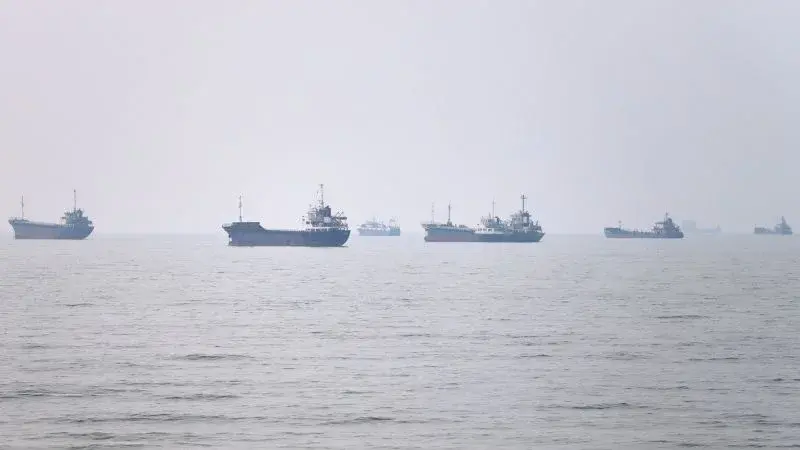
Iran and Oman are finalizing a framework for shipping through the Strait of Hormuz, but Tehran insists the waterway will not reopen until the US lifts sanctions and ends its naval blockade. Simultaneously, the US faces a severe munitions shortage, with the Pentagon having exhausted nearly 80% of its THAAD interceptors, prompting a clash between President Trump and Defense Secretary Pete Hegseth. In the Red Sea, Houthi attacks on vessels have escalated, while Israel and Lebanon resumed talks in Rome after a brief pause due to renewed strikes.
Key points
- Iran’s deputy foreign minister stated that a deal with Oman does not guarantee the reopening of the Strait of Hormuz, requiring US action on sanctions and naval blockades first.
- CNN reports the US military has used nearly 80% of its THAAD interceptors, while Trump claims the US has 'massive amounts' of munitions, contradicting Pentagon warnings of dangerously low stockpiles.
- The Washington Post and NBC News report that Trump confronted Defense Secretary Pete Hegseth at Camp David over the munitions shortfall, leading to a crisis meeting at the Pentagon.
- Two vessels were attacked near the Bab al-Mandeb Strait in the Red Sea, with the Houthis threatening to escalate attacks on Saudi shipping in the northern Red Sea.
- Israel and Lebanon resumed US-mediated talks in Rome after a pause caused by Israeli airstrikes in southern Lebanon, which killed two Israeli soldiers and wounded four others.
Background
This situation follows a June 2026 memorandum of understanding between the US and Iran that collapsed, leading to renewed hostilities. Previous attempts to reopen the Strait of Hormuz involved a 60-day transit regime that failed, and the current negotiations are part of a broader effort to resolve the conflict that has lasted six months. The US has also been supplying Ukraine with Patriot missiles, further straining its global stockpiles.
How outlets are covering it
CNN emphasizes the diplomatic deadlock over Hormuz and the US munitions crisis, noting that Trump dismissed reports of low stockpiles. The Washington Post and NBC News focus on the internal conflict within the US administration, highlighting Trump’s frustration with Hegseth and the Pentagon’s crisis meeting. The BBC provides a broader context, noting the administration’s efforts to control information leaks and the impact on global oil prices. All sources agree on the severity of the munitions shortage but differ on the administration’s response, with Trump denying the crisis while military commanders warn of dangerously low levels.
Why it matters
The reopening of the Strait of Hormuz is critical for global oil supply, as 20% of the world’s oil traveled through the strait pre-war. A failure to reopen it could lead to higher energy prices and economic uncertainty. The US munitions shortage threatens its ability to sustain military operations and support allies like Ukraine, while the Red Sea attacks pose a risk to global shipping routes and could escalate the conflict in the region.
What to watch
Iran and Oman are expected to finalize their deal, but the reopening of the Strait of Hormuz depends on US actions regarding sanctions and naval blockades. The US is ramping up munitions production, but the timeline for replenishing stockpiles is uncertain. The Houthis may continue to escalate attacks in the Red Sea, and Israel-Lebanon talks in Rome will continue, though significant developments on the ground could disrupt negotiations.
- Live updates: Iran says Hormuz deal is close but US must meet commitments before strait reopens CNN
- Trump, Hegseth clashed at Camp David over Iran missile depletion concerns The Washington Post
- Trump denies US munitions shortage and said he'd seek to jail 'leakers' BBC
- Pentagon holds crisis meeting on weapons shortfall after angry Trump call, sources say NBC News
- A Shortage of Weapons Is Shaping the War With Iran The Atlantic
Want the full story? Read the original reporting
Read on CNN