
Iran strikes US base in Bahrain as Trump rejects peace talks amid stalled negotiations
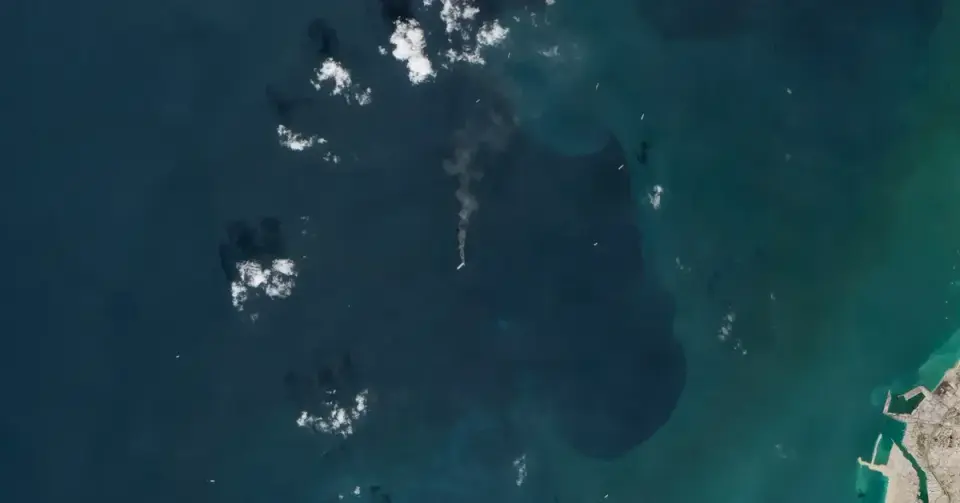
Iran’s Islamic Revolutionary Guard Corps (IRGC) launched drone attacks on a US military base in Bahrain on Sunday, marking the second strike in three days. While Tehran claims the attacks targeted US radar systems in retaliation for 'aggression,' the US military and Bahraini authorities state that all drones were intercepted with no damage or injuries. The escalation occurs as diplomatic efforts to end the nine-month regional conflict stall. President Donald Trump has signaled a preference for an economic blockade over a negotiated deal, while Iran demands the lifting of sanctions and the release of frozen assets. Simultaneously, tensions in the Strait of Hormuz have risen, with multiple oil tankers reporting mine strikes, though the US denies any significant disruption to shipping.
Key points
- IRGC claimed Sunday’s drone attack targeted a US radar system at Bahrain’s Riffa Air Base, describing it as a 'serious warning' against US actions.
- US Central Command and Bahrain’s Defense Force stated that all Iranian drones were shot down, resulting in no injuries or damage to facilities.
- President Trump told senior advisers he may hold off on striking Iran if no new provocations occur, but he has canceled efforts by Vice President JD Vance to revive peace talks.
- Iran’s chief negotiator, Mohammad Bagher Ghalibaf, stated that Tehran is awaiting a US response to seven conditions for a deal, including lifting the naval blockade and unfreezing assets.
- Three oil tankers caught fire over the weekend after hitting naval mines in the Strait of Hormuz, according to Iranian claims, though the US disputes the extent of the disruption.
Background
This escalation follows a preliminary agreement in June to end the war and reopen the Strait of Hormuz, which collapsed within weeks after Iranian attacks on shipping resumed. The conflict, which began on February 28, 2026, has entered its ninth month. Recent archive coverage indicates that while oil prices have stabilized due to global supply surpluses, the region remains in a state of 'no war, no peace.' A Pentagon report from September noted that Iranian attacks had damaged US installations in eight countries, including Bahrain, during the initial phase of the conflict.
How outlets are covering it
Outlets disagree on the impact of the strikes. The IRGC and Iranian state media claim successful hits on US radar systems, while the US military and Bahraini authorities insist all drones were intercepted with no damage. CNN emphasizes the economic pressure on Iran, noting that Gulf oil exports have risen to 18.4 million barrels a day, reducing Tehran’s leverage, whereas Al Jazeera highlights the stalled diplomatic track, with Iran demanding seven specific conditions for a deal. Semafor notes that Trump is adopting a 'waiting game,' hoping the economic squeeze will force Iran to soften its terms, while Iranian officials insist they can withstand the pressure. BBC reports that the US conducted limited strikes on Iran’s Qeshm Island earlier in the week, which Iran did not publicly comment on but claimed to have shot down US drones in response.
Why it matters
The continued tit-for-tat attacks raise the risk that limited exchanges could spiral into a wider regional war. As diplomatic channels stall, the economic blockade and maritime disruptions in the Strait of Hormuz threaten to deepen Iran’s economic hardship, potentially leading to further escalation. The situation remains unstable, with both sides signaling a willingness to absorb significant costs rather than compromise on core demands.
What to watch
Analysts warn that the current 'unstable limbo' could lead to miscalculation. If the US maintains its blockade and Iran continues limited maritime and regional escalation, the conflict could broaden to include infrastructure across the region. The next critical moment will be whether the US responds to Iran’s seven conditions or if Trump’s strategy of economic pressure forces Tehran to soften its stance on the nuclear issue and sanctions.
- Iran attacks US military base in Bahrain as talks stall Semafor
- Iran raises stakes with new drone attacks as Trump signals a waiting game CNN
- US condemns Iranian strikes in Bahrain as Rubio holds call with Bahraini counterpart Reuters
- Iran targets US military base in Bahrain with drone attack BBC
- Iran says it targets US radar in Bahrain. What do we know? Al Jazeera
Want the full story? Read the original reporting
Read on Semafor