
Trump-Xi Summit Yields AI Hotline and Coal Deal, but Leaves Core Trade Disputes Unresolved
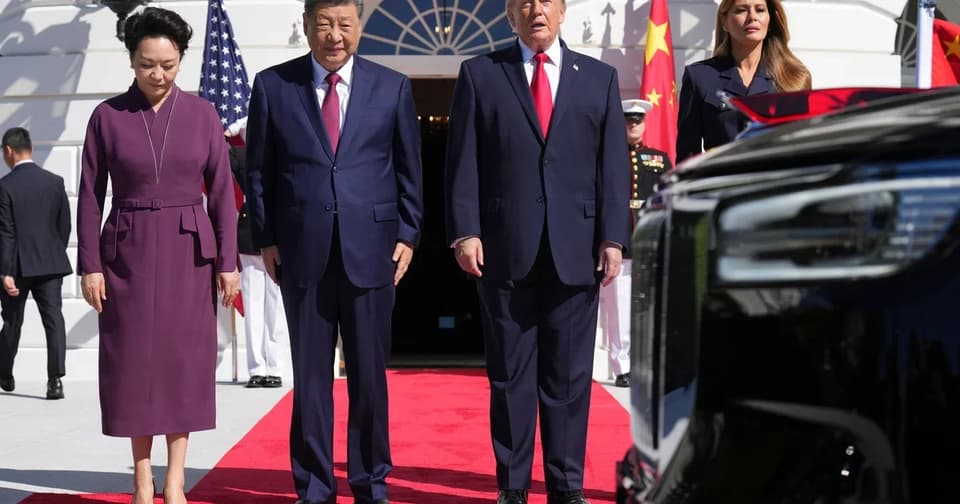
A three-day summit between US President Donald Trump and Chinese President Xi Jinping in Washington resulted in the establishment of an AI safety communication channel and a two-month extension of a trade truce. While the US announced a Chinese commitment to buy 10 million metric tons of US coal in 2027-2028, Beijing omitted this detail from its official statement. The talks produced no major breakthroughs on tariffs or rare earth exports, with both sides agreeing to continue working-level negotiations through new trade and investment boards.
Key points
- The US and China agreed to create a communication channel for AI-related incidents, with a specific dialogue scheduled for November.
- Trump insisted on using the term 'super intelligence' instead of 'artificial intelligence,' arguing the latter implies the technology is fake.
- The trade truce was extended by two months, pushing potential triple-digit tariffs until early 2027.
- The White House claimed China agreed to purchase 10 million metric tons of US coal annually in 2027 and 2028, a detail absent from the Chinese fact sheet.
- Both governments agreed to continue working on rare earth supply issues, though China’s statement did not address its export restrictions.
Background
This summit followed weeks of speculation that the meeting would yield only incremental progress, as noted in our September 21 coverage. Prior to the visit, markets had rallied on hopes of trade de-escalation, but analysts warned that fundamental differences in AI governance and trade policy remained. Trump had previously dismissed AI safety concerns as a hoax during a call with Nvidia CEO Jensen Huang, setting the tone for his approach to the technology during the summit.
How outlets are covering it
CBS News and Politico highlighted the establishment of the AI safety channel and the coal deal as key, if limited, outcomes. However, they noted significant discrepancies between the US and Chinese fact sheets; China’s statement omitted the coal purchase and the Board of Investment, while the US statement did not mention the military crisis communication memorandum. The New York Times offered a different angle, arguing that China is skeptical of AI safety calls because such warnings feel distinctly Western or like a ploy to hinder Chinese AI companies from overtaking US rivals. Trump’s insistence on the term 'super intelligence' was viewed by some as a symbolic victory, while others, including Democratic lawmakers, criticized the lack of substantive AI guardrails.
Why it matters
The summit’s outcomes signal a shift toward institutionalized, working-level engagement to manage US-China tensions, particularly in the AI and military domains. The lack of major breakthroughs on trade and rare earths suggests that underlying economic and security rivalries remain unresolved, potentially leading to renewed tensions in the coming months. The AI safety channel, while described by Politico as a simple hotline, represents a new mechanism for crisis management between the two largest AI powers.
What to watch
The two leaders are scheduled to meet at the APEC summit in Shenzhen, China, in November, and at the G20 in Miami in December. The AI-specific dialogue is also set for November. The Board of Trade and Board of Investment are expected to continue working on tariff carveouts and investment issues, though progress may be slow due to unresolved differences on sensitive sectors like semiconductors and rare earths.
- Trump and Xi agree to set up AI safety channel as military and trade talks continue CBS News
- China says US trade truce extension creates space to advance talks reuters.com
- The Surprising Reasons China Is Skeptical of A.I. Safety Calls The New York Times
- Xi visit delivers coal deal, tariff talks — and plenty of unresolved issues Politico
- Open Questions | Scott Kennedy on China’s ‘slow tech dragon’ and 2 more Xi-Trump meetings South China Morning Post
Want the full story? Read the original reporting
Read on CBS News