
Ukraine reports renewed Starshield speed caps hampering drone defense as US envoys meet Putin
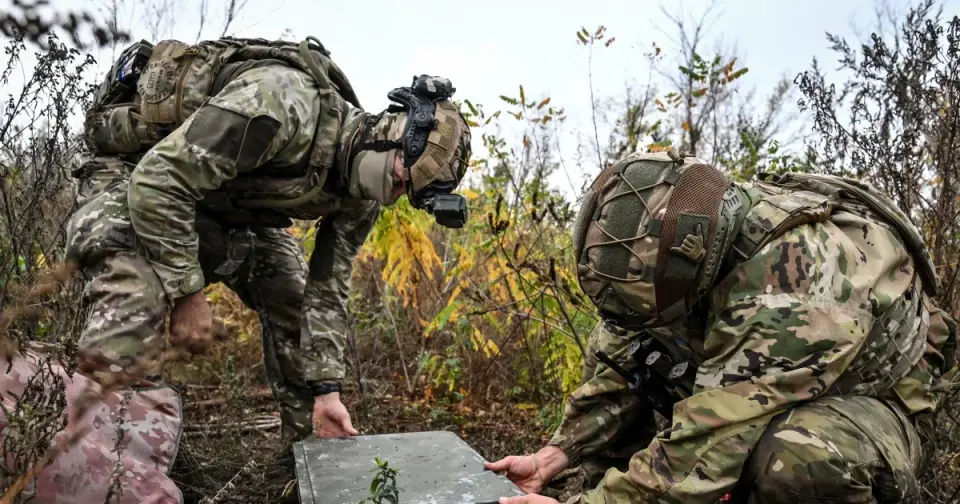
President Volodymyr Zelenskyy reported that Ukraine’s military is facing new, systematic speed restrictions on the Starshield satellite network, limiting connectivity to 100 mph and hindering the interception of Russian jet-powered drones. These technical disruptions occurred as US envoys Steve Witkoff and Jared Kushner met with Vladimir Putin in Moscow, following trilateral talks in Abu Dhabi that yielded a prisoner exchange but no ceasefire. European leaders in Dublin are pushing for inclusion in future negotiations, while Zelenskyy criticized the lack of transparency regarding the satellite limitations.
Key points
- Zelenskyy stated that Starshield speeds were capped at 161 km/h (100 mph) for several days, causing 'significant disruptions' across the front line and occupied territories.
- The speed limit prevents Ukrainian interception systems from reaching sufficient velocity to stop Russian jet-powered drones, leading to successful strikes on Ukrainian cities.
- US envoys Witkoff and Kushner met with Putin in Moscow to discuss humanitarian relief and prisoner releases, following an Abu Dhabi summit that ended without a major breakthrough.
- Zelenskyy accused the US of failing to share intelligence on incoming attacks, a claim the White House denied, while also criticizing decisions that treat Ukrainian territory as non-sovereign.
- European leaders at a Dublin summit urged Russia to stop attacks and called for Europe to have a formal role in peace negotiations, with Macron and others emphasizing collective security.
Background
This development follows a series of Starshield access issues reported in October 2026, where Ukrainian forces claimed restrictions remained despite White House assurances of restoration. Previous diplomatic efforts, including Witkoff’s visit to St. Petersburg and Trump’s waiver of Russian sanctions, failed to secure a ceasefire. The current tensions occur against a backdrop of intensified long-range missile and drone attacks on Ukrainian energy infrastructure as winter approaches.
How outlets are covering it
NBC News and CNBC both highlight Zelenskyy’s assertion that the speed caps are systematic rather than random errors, noting that SpaceX did not immediately respond to comment requests. The Guardian provides broader context on the diplomatic fallout, detailing Zelenskyy’s criticism of the US approach and the European push for a unified security voice. While all sources agree on the technical limitations, they differ in emphasis: NBC and CNBC focus on the military impact and the US-Russia meeting, whereas The Guardian highlights the political tension between the US and Europe regarding who should represent European interests in peace talks.
Why it matters
The return of Starshield restrictions directly impacts Ukraine’s ability to defend against aerial threats, potentially increasing civilian casualties. Simultaneously, the diplomatic maneuvering between the US, Russia, and Europe signals a shift in the peace process, with Europe seeking a formal role in negotiations to ensure its security interests are protected. The lack of transparency regarding the satellite limitations raises questions about the reliability of US support for Ukraine’s air defense systems.
What to watch
Witkoff and Kushner are scheduled to meet with Zelenskyy in Dublin to discuss the outcomes of the Moscow meeting and the prisoner exchange. European leaders will continue to press for a unified stance on security guarantees, while Ukraine will likely seek further clarification from the US regarding the Starshield restrictions. The next phase of trilateral talks may include European representatives, depending on the outcome of the current diplomatic exchanges.
- Ukraine says it’s facing new restrictions to the Starshield network, as Trump envoys meet with Putin NBC News
- Ukraine warns of fresh Starshield disruptions as U.S. envoys arrive in Moscow for talks with Putin CNBC
- Ukraine hit by ‘significant’ Starshield disruptions as US envoys meet Putin, Zelenskyy says - Europe live The Guardian
- Ukraine says Starlink restrictions are back as US envoys land in Moscow Financial Times
- Zelenskiy says Starshield speed limited again, hampering Ukraine's defences Reuters
Want the full story? Read the original reporting
Read on NBC News