
U.S. Launches 'Operation Economic Outcast' to Strangle Iran's Global Trade
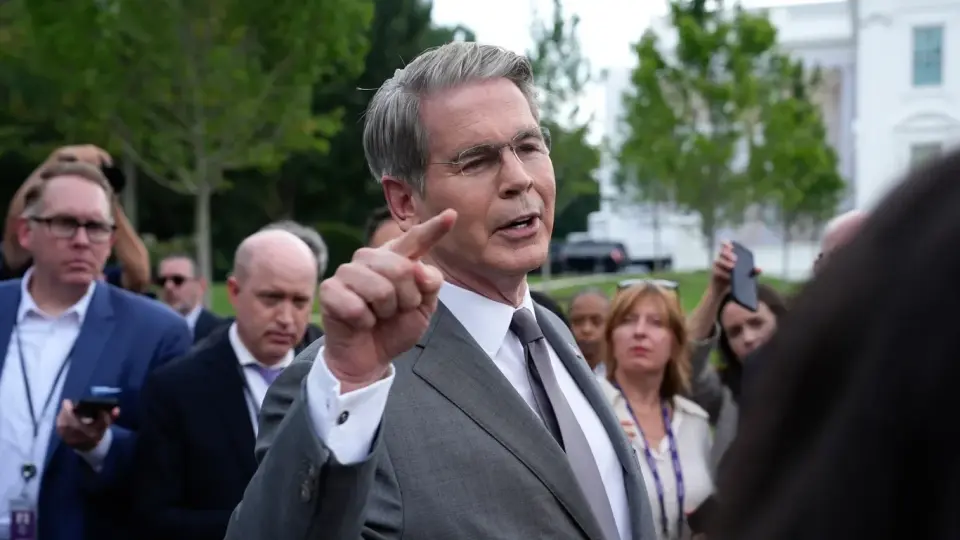
Treasury Secretary Scott Bessent announced 'Operation Economic Outcast,' a new wave of secondary sanctions targeting nations that trade with Iran. The move aims to force Tehran into isolation by threatening global financial institutions with exclusion from the dollar system, marking a shift from military strikes to economic pressure amid a stalled conflict.
Key points
- Bessent designated the new measures as an 'economic D-Day,' expanding secondary sanctions to digital assets, technology, gold, aviation, and shipping.
- The Treasury sanctioned nearly 60 entities, individuals, and vessels involved in illicit nuclear procurement, cyber operations, and oil smuggling.
- The U.S. is suspending previously issued licenses that allowed payments to Iran and access to U.S. cultural and academic institutions.
- Bessent stated that countries must sever ties with Iran or face immediate secondary sanctions, with a major financial institution targeted by the end of the week.
- Iran’s rial hit a new low of 2 million per U.S. dollar, and the government is struggling to pay salaries for military and police workers.
Background
This escalation follows a six-month stalemate in the U.S.-Iran conflict, where military strikes have paused but the naval blockade of the Strait of Hormuz continues. Previous archive coverage noted that the Treasury Department faces a staffing crunch, with seven Senate-confirmed officials departing since 2025, potentially straining its ability to coordinate this aggressive sanctions campaign. The administration has also been managing domestic financial pressures, including recent bond-buyback adjustments to stabilize yields, while now focusing on external economic warfare.
How outlets are covering it
Axios and USA Today emphasize the aggressive nature of the new 'zero-leakage' approach, highlighting Bessent’s warnings that non-compliance will result in exclusion from the global financial system. Fox News focuses on the immediate impact on trading partners and the potential for further military action if economic pressure fails, noting that War Secretary Pete Hegseth is not ruling out kinetic strikes. CBS News highlights the diplomatic fallout, including China’s dismissal of the sanctions as illegal and Iran’s foreign ministry accusing the U.S. of bullying and violating international law. While U.S. officials claim the pressure is causing internal panic in Tehran, Iranian leaders, including President Masoud Pezeshkian and Parliament Speaker Mohammad Bagher Ghalibaf, have downplayed the threats, asserting that trading partners are not taking the U.S. warnings seriously and that Iran has a two-year plan to manage the economic impact.
Why it matters
The effectiveness of these sanctions depends on the willingness of Western allies and major trading partners like China, Russia, and India to comply. If the U.S. fails to mobilize a coalition to enforce these measures, the campaign may prove ineffective, as Iran has historically found ways to evade sanctions. Conversely, successful enforcement could force Iran into a subsistence economy, potentially compelling it to return to negotiations or accept a permanent isolation, thereby reshaping the global energy and financial landscape.
What to watch
The U.S. expects to sanction a major financial institution by the end of the week for conducting business with Iran. Treasury, State, and Defense teams are engaging with counterparts worldwide to set specific timelines for severing Iran-related business. Oil prices have fallen for two consecutive days following the announcement, suggesting the market may not be reacting as severely as anticipated. Diplomatic efforts continue, with Oman and Iran discussing a temporary shipping corridor in the Strait of Hormuz, and Pakistan relaying Iran’s conditions for a return to the ceasefire deal to Washington.
- Bessent unveils sanctions designed to cripple Iran Axios
- Scott Bessent to unveil unprecedented sanctions against Iran's economy Fox News
- Iran War Updates: U.S. unveils new sanctions after Trump threatened "economic D-Day" CBS News
- Iran live updates: Tanker struck by projectile as US and Iran trade threats ABC News - Breaking News, Latest News and Videos
- US launches 'Operation Economic Outcast' against Iran USA Today
Want the full story? Read the original reporting
Read on Axios