
Nobel Laureate Karl Deisseroth Plans School Lunches After Optogenetics Prize
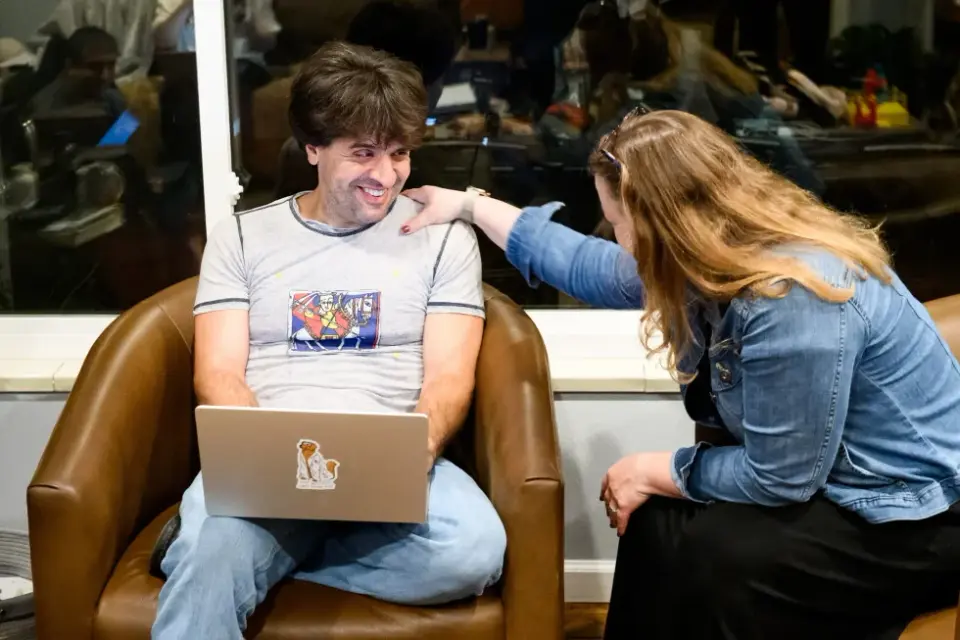
Karl Deisseroth, Peter Hegemann, and Georg Nagel won the 2026 Nobel Prize in Physiology or Medicine for developing optogenetics, a technique using light to control neurons. Deisseroth, a Stanford professor, learned of the award late at night and planned to prepare his children's school lunches before celebrating.
Key points
- The 2026 Nobel Prize in Physiology or Medicine was awarded to Karl Deisseroth, Peter Hegemann, and Georg Nagel for the development of optogenetics.
- Optogenetics uses light-gated ion channels derived from algae to activate or inhibit specific neurons in living brains.
- The technique allows researchers to map neural circuits and link specific brain cells to behaviors, aiding the study of disorders like depression and schizophrenia.
- Deisseroth, a psychiatrist and bioengineering professor at Stanford, was working late in California when he received the news and planned to make his children's school lunches.
- The discovery has early medical applications, including restoring partial vision in patients with retinitis pigmentosa, though it remains primarily a research tool.
Background
Our archive from October 5-6, 2026, confirms that the 2026 Nobel Prize in Physiology or Medicine was awarded to Deisseroth, Hegemann, and Nagel for their work on optogenetics. Previous coverage highlighted the technique's potential to treat conditions like blindness and depression by mapping neural circuits. This briefing synthesizes the announcement details and the laureates' reactions from the primary and secondary sources.
How outlets are covering it
The New York Times emphasizes the scientific significance of optogenetics, noting that it enables 'functional maps' of the brain and has been used to study memory, parenting, and psychiatric diseases. WBUR focuses on Deisseroth's personal reaction and his explanation of how the technique bridges psychiatry and biology, allowing for targeted treatments. AP News highlights the human element, noting Deisseroth's surprise and his intention to make his children's school lunches before any other celebration. All sources agree on the core facts of the award and the technique's mechanism, but differ in emphasis: NYT on scientific impact, WBUR on clinical potential, and AP on the personal anecdote.
Why it matters
The award recognizes a transformative tool in neuroscience that allows precise control of brain cells, potentially leading to new treatments for neurological and psychiatric disorders. It also highlights the human side of scientific achievement, as Deisseroth prioritized family duties over immediate celebration.
What to watch
The other Nobel Prizes, including Physics, Chemistry, Literature, Peace, and Economic Sciences, will be announced in the coming days. Deisseroth and his colleagues may continue to develop optogenetic therapies for conditions like blindness and psychiatric disorders.
- California scientist wins a Nobel Prize, then makes school lunches for his kids AP News
- Nobel Prize in Physiology or Medicine Is Awarded for Discoveries in Neuroscience The New York Times
- What is optogenetics? Nobel Prize winner Karl Deisseroth explains how light could help treat brain disorders WBUR
- US and German scientists win Nobel medicine prize for work on light and brain Reuters
- Press release: Nobel Prize in Physiology or Medicine 2026 - NobelPrize.org NobelPrize.org
Want the full story? Read the original reporting
Read on AP News