
King Tides and El Niño Storms Cause Record Flooding and Pier Collapse in California
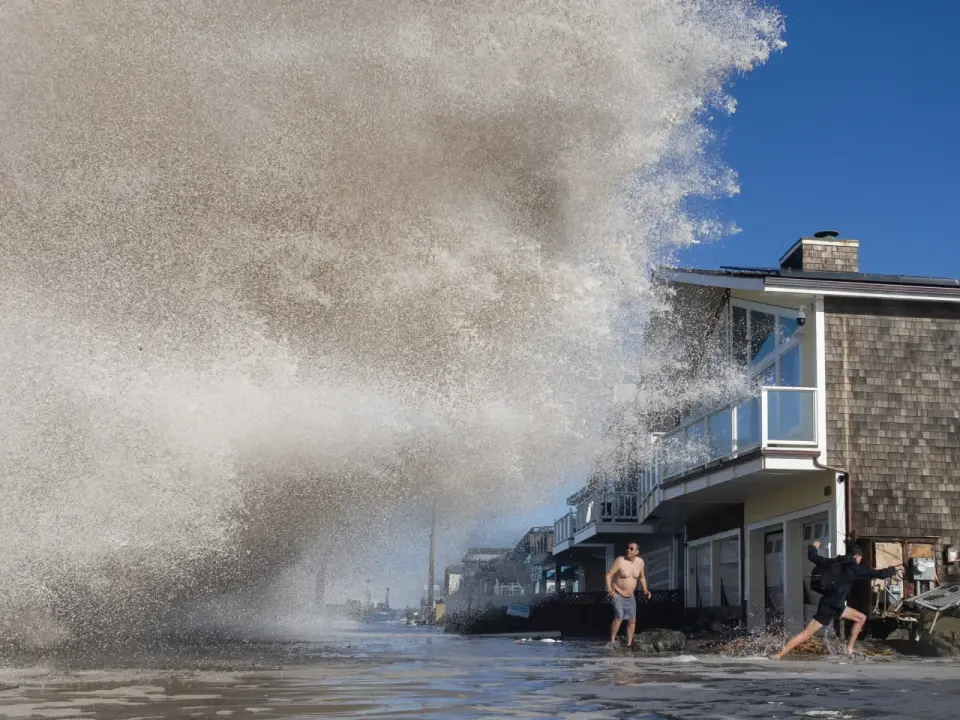
Record-high water levels and powerful storms battered the U.S. West Coast on Wednesday, November 25, causing significant flooding and infrastructure damage. The National Oceanic and Atmospheric Administration reported that Charleston, Oregon, reached its highest-ever coastal water level, while several California locations, including San Diego and Los Angeles, recorded historic highs. In Pacifica, California, a massive wave caused the end of the municipal pier to collapse. San Francisco Mayor Daniel Lurie confirmed the city survived waves up to 9 meters but warned of further king tides in December and January. The extreme conditions were driven by a combination of natural king tides, a stronger-than-normal El Niño, and climate change, leading to widespread evacuations and road closures across the region.
Key points
- NOAA reported that Charleston, Oregon, reached its highest-ever coastal water level, measuring roughly 1.12 meters above the mean high water level.
- The L-shaped municipal pier in Pacifica, California, collapsed after a wave as tall as its platform struck the structure, an event captured on video by bystanders.
- San Francisco Mayor Daniel Lurie stated that the city experienced waves up to 9 meters but warned that more king tides are expected in December and January.
- The National Weather Service issued coastal flood warnings for San Francisco and San Pablo bays, with some areas seeing nearly 3 feet of inundation above ground level.
- Evacuation warnings were issued for parts of Santa Cruz County and Marin County, while beaches and wharves in Santa Cruz and Capitola were temporarily closed due to hazardous surf.
Background
Earlier reports from November 22 to 24 indicated that forecasters expected record-breaking king tides to coincide with a powerful storm system and El Niño-driven warm waters during the Thanksgiving holiday. Officials had warned that sea levels could exceed 9 feet in San Francisco and break 40-year records in the Bay Area. Cities from San Diego to San Francisco had deployed sandbags, pumps, and flood barriers in preparation for the convergence of high tides, storm surge, and thermal expansion from hot ocean temperatures.
How outlets are covering it
Al Jazeera emphasized the structural damage in Pacifica and the broader impact of El Niño and climate change on the severity of the tides. NBC Bay Area focused on the immediate emergency response, detailing specific evacuation orders, road closures, and the collapse of the Pacifica pier, while also highlighting the lifting of some warnings as conditions improved. KRCR provided a localized perspective from King Salmon, noting that strong winds of 40 to 45 mph compounded the flooding, leading to saltwater damage and debris cleanup efforts that continued into Wednesday evening.
Why it matters
The event highlights the increasing frequency and intensity of extreme weather events driven by El Niño and climate change. The collapse of infrastructure, such as the Pacifica pier, and the record water levels in multiple locations underscore the vulnerability of coastal communities. The warnings from local officials about future king tides in December and January indicate that the region must continue to prepare for further severe weather, with potential impacts on transportation, property, and public safety.
What to watch
San Francisco Mayor Daniel Lurie has warned that more king tides are expected in December and January, urging residents to prepare ahead of future storms. Residents in King Salmon are looking ahead to the possibility of additional storms in December and are preparing for future conditions. Authorities have advised the public to stay alert and avoid floodwaters, as the El Niño season continues to influence weather patterns along the West Coast.
- Photos: Storms and an El Nino-charged king tide batter California’s coast Al Jazeera
- Part of Pacifica Pier Collapses as King Tides and Strong Waves Batter Bay Area KQED
- Bay Area weather recap: Flood cleanup underway after waves slam Pacifica NBC Bay Area
- 40-45 mph gusts and king tides flood King Salmon, prompting debris cleanup KRCR
- What are king tides? These exceptionally high tides are increasingly flooding coastal communities PBS
Want the full story? Read the original reporting
Read on Al Jazeera