
Polo remnants trigger widespread flash flood warnings across US Southwest and Plains
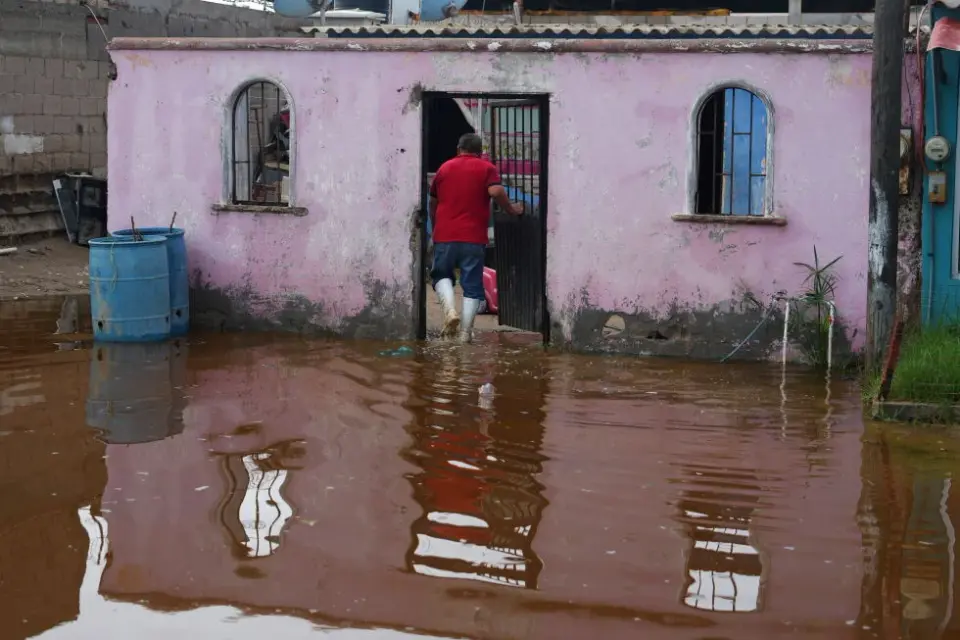
Hurricane Polo made landfall in Mexico’s Baja California Sur on Monday night, sending moisture-rich remnants into the United States. These remnants are merging with an upper-level trough to create a 'hybrid storm' that threatens life-threatening flash floods across the Southwest and Plains through Wednesday. Flood watches are currently in effect for approximately 28 million people, with the highest risks concentrated in Arizona, New Mexico, Colorado, Kansas, Oklahoma, and Texas.
Key points
- Hurricane Polo made landfall in Baja California Sur, Mexico, on Monday night, bringing 6 to 12 inches of rain to parts of the region.
- The storm’s remnants are merging with an upper-level trough to form a 'hybrid storm' that will drive heavy rainfall across the US Southwest and central Plains.
- Flood watches are in effect for approximately 28 million people, with the highest risks in Arizona, New Mexico, Colorado, Kansas, Oklahoma, and Texas.
- Forecasters warn of 3 to 4 inches of rain in north-central New Mexico, including Albuquerque and Santa Fe, with potential for urban flooding.
- A truck was swept away in a wash in the New River area north of Phoenix, though the driver escaped safely.
Background
Hurricane Polo had previously intensified to a Category 5 storm with 175 mph winds before weakening to Category 4. It was expected to bring severe flooding and mudslides to Mexico’s Pacific coast, particularly Guerrero and Michoacán. Tropical Storm Odalys also contributed moisture to the region, exacerbating the flood threat. New Mexico had already issued a statewide flood watch due to saturated ground conditions from recent storms.
How outlets are covering it
AP News emphasizes the immediate impact of Polo’s landfall in Mexico and the resulting flood watches in the US Southwest, highlighting specific rainfall amounts and local incidents like the truck swept away near Phoenix. The Washington Post focuses on the broader risk to 28 million people and the potential for life-threatening flash floods across multiple states. USA Today highlights the formation of a 'hybrid storm' from Polo’s remnants and an upper-level trough, noting that even without Polo, the central US would face significant rain and flood risks due to the trough. All sources agree on the severity of the threat but differ in emphasis: AP on local impacts, WaPo on the scale of the risk, and USA Today on the meteorological mechanism behind the flooding.
Why it matters
The convergence of Hurricane Polo’s remnants and an upper-level trough creates a 'hybrid storm' that poses a significant risk of life-threatening flash floods across a large portion of the US Southwest and central Plains. The widespread nature of the threat, affecting 28 million people, underscores the potential for widespread disruption, property damage, and loss of life. The saturated ground conditions from recent storms further exacerbate the risk, making the situation more dangerous than typical rainfall events. This event highlights the complex interactions between tropical systems and other weather patterns, which can lead to severe flooding even after a hurricane has made landfall.
What to watch
Forecasters expect the heaviest rainfall to occur in Texas, eastern Arizona, Oklahoma, southwestern Colorado, Kansas, and Nebraska, with some areas potentially receiving up to 8 inches of rain. Flash and urban flooding are possible in eastern Nebraska and western Iowa by September 29 and 30, while central Texas and southern Oklahoma may see impacts starting mid-week. Authorities are urging residents to avoid travel through flooded areas and to be cautious at night, emphasizing the 'turn around, don't drown' advice. The National Weather Service will continue to monitor the situation and update flood watches as the hybrid storm progresses.
- Hurricane Polo makes landfall in Baja California with forecast of ‘life-threatening’ winds AP News
- Timeline: When will dangerous, tropically enhanced flooding reach the Southwest, Southern Plains and Midwest? FOX Weather
- Hurricane Polo’s moisture will trigger flooding in Southwest The Weather Channel
- Life-threatening flash floods may soon hit the Southwest, driven by Polo remnants The Washington Post
- Huge 'hybrid storm' will form over the US USA Today
Want the full story? Read the original reporting
Read on AP News