
Stone Tools in Saudi Desert Suggest Neanderthals Ranged Farther South Than Previously Believed
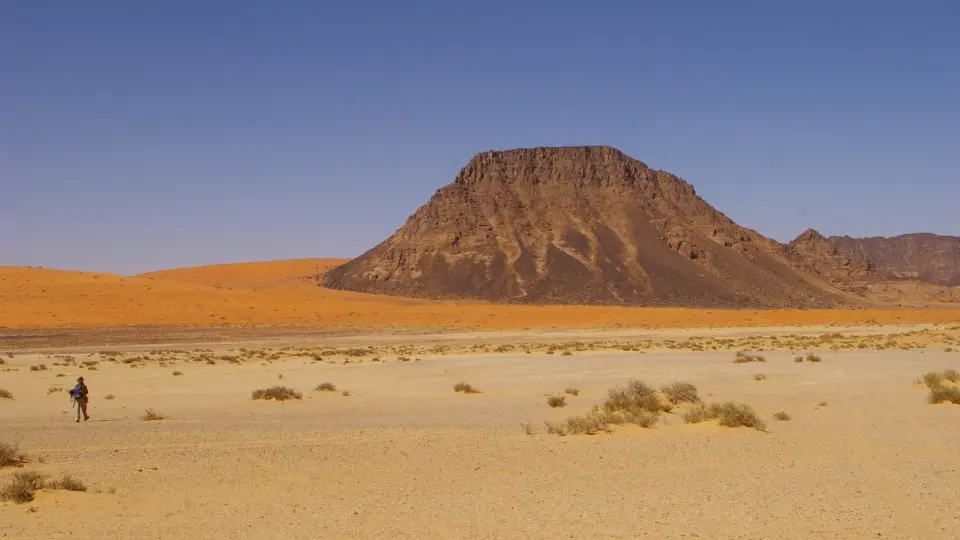
A new study suggests Neanderthals may have lived in the arid deserts of Saudi Arabia around 55,000 years ago, expanding the known geographic range of the species. Researchers analyzed stone tools from the Jebel Katefeh-1 site near Jubbah, finding their shape closely matches Neanderthal craftsmanship rather than that of Homo sapiens. Although no bones or DNA were found, the tools indicate these ancient humans were adapted to open, dry environments, not just cold European climates. The findings, published in Quaternary Science Reviews, challenge the traditional view that Neanderthals were limited to northern latitudes, though experts note more evidence is needed to confirm the species' presence in the region.
Key points
- Stone tools from Jebel Katefeh-1 in Saudi Arabia's Nefud Desert show characteristics typical of Neanderthal manufacturing.
- The site dates to approximately 55,000 years ago, located beside an ancient lake near the city of Jubbah.
- Researchers identified the tools by measuring the shape of stone flakes, as no Neanderthal bones or DNA have been found in Arabia.
- The discovery suggests Neanderthals were adapted to arid, open desert environments, not just cold, forested regions.
- The study extends the known southern range of Neanderthals into the Arabian Peninsula, though confirmation requires further evidence.
Background
Previous research, including a 2026 study on the Üçağızlı II Cave in Turkey, indicated that Neanderthals and early Homo sapiens shared cultural practices and stone-tool technologies in the Levant corridor around 59,000 years ago. This new finding in Saudi Arabia extends that geographic range further south into the Arabian interior. While earlier discoveries placed Neanderthals in Siberia and the Middle East, this study highlights their potential adaptation to desert conditions, contrasting with the traditional view of them as cold-adapted Europeans.
Why it matters
This discovery reshapes the understanding of Neanderthal adaptability and geographic distribution. If confirmed, it suggests Neanderthals could thrive in diverse environments, including arid deserts, rather than being restricted to colder climates. This expands the timeline and range of human evolution in the Middle East and may influence future archaeological searches in the region for similar evidence.
What to watch
Researchers will continue to analyze stone tools from other sites across Arabia, the Levant, and northeast Africa to confirm the Neanderthal presence. Further excavations may uncover additional artifacts or, ideally, genetic material to definitively link the tools to Neanderthals. The study also prompts a re-evaluation of Neanderthal environmental adaptability in broader human evolution models.
Want the full story? Read the original reporting
Read on Live Science