
New Analysis Suggests 700-Year-Old 'Birdman' Copper Plate Depicts a Female Warrior
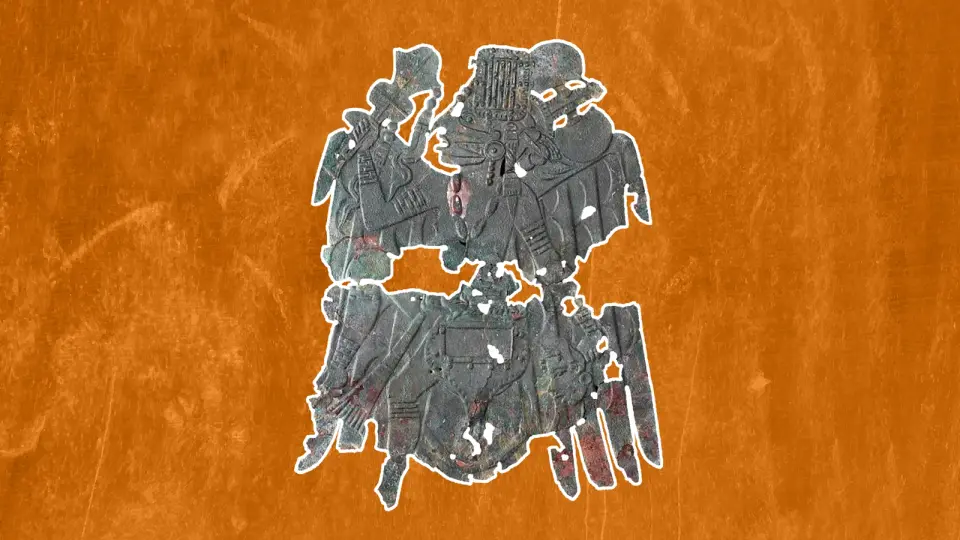
A 13th-century copper plate found in a Georgia burial, long interpreted as a male warrior, may actually depict a female or gender-variant individual, according to a 2017 study by archaeologist Billie Follensbee and art historian Katie Buford. The artifact, known as the 'Birdman' plate, was unearthed in the 1880s at the Etowah Indian Mounds site but is believed to have been crafted at Cahokia in Illinois and traded south. While previous interpretations, such as a 2004 study by Adam King, viewed the figure as a male chieftain's emblem, Follensbee and Buford noted the figure's slender build and prominent breasts. They proposed the image represents a 'manly-hearted woman' or a 'two-spirit' individual, a gender-variant role in Indigenous North American societies. The plate, roughly 11 inches tall, shows a figure in a bird costume holding a mace and a severed head, and is part of the Southeastern Ceremonial Complex tradition.
Key points
- The 'Birdman' copper plate was discovered in the 1880s at the Etowah Indian Mounds site in Georgia but is believed to have been created at Cahokia in Illinois.
- The artifact, roughly 11 inches tall, depicts a figure in a bird costume holding a mace and a severed head, with a pleated skirt possibly made from human scalps.
- A 2017 study by Billie Follensbee and Katie Buford argues the figure is female or gender-variant, citing slender features and prominent breasts, contrary to earlier male warrior interpretations.
- The plate is part of the Southeastern Ceremonial Complex, a shared ritual and artistic tradition among Mississippian culture groups in the southeastern United States.
- The figure is associated with the 'Birdman' or 'Morning Star' hero, linked to agriculture and rebirth in prehistoric Mississippian societies.
Background
The 'Birdman' copper plate is one of two hammered copper plates found by Smithsonian archaeologist John P. Rogan in the 1880s at the Etowah Indian Mounds site in Georgia. Etowah was a major Mississippian culture site occupied from 1000 to 1550 CE. The plate is believed to have been crafted at Cahokia in Illinois, a major Mississippian center, and traded south to Etowah. The artifact is part of the Southeastern Ceremonial Complex, a shared ritual and artistic tradition among Mississippian culture groups. The plate is now in the collection of the Smithsonian National Museum of Natural History in Washington, D.C.
Why it matters
The reinterpretation of the 'Birdman' copper plate challenges long-standing assumptions about gender roles in prehistoric Indigenous societies. It highlights the presence of gender-variant individuals, such as 'two-spirit' people, in Mississippian culture and underscores the importance of re-examining historical artifacts through modern lenses. The artifact also illustrates the extensive trade networks and shared ceremonial traditions among Mississippian culture groups in the southeastern United States.
What to watch
Further research may involve re-examining other artifacts from the Southeastern Ceremonial Complex for similar gender-variant depictions. Archaeologists may also continue to study the Etowah and Cahokia sites to better understand the social structures and gender roles of Mississippian culture societies.
Want the full story? Read the original reporting
Read on Live Science