
Russian Archaeologists Unearth 11th-Century Bread Peel with Carved Game Board
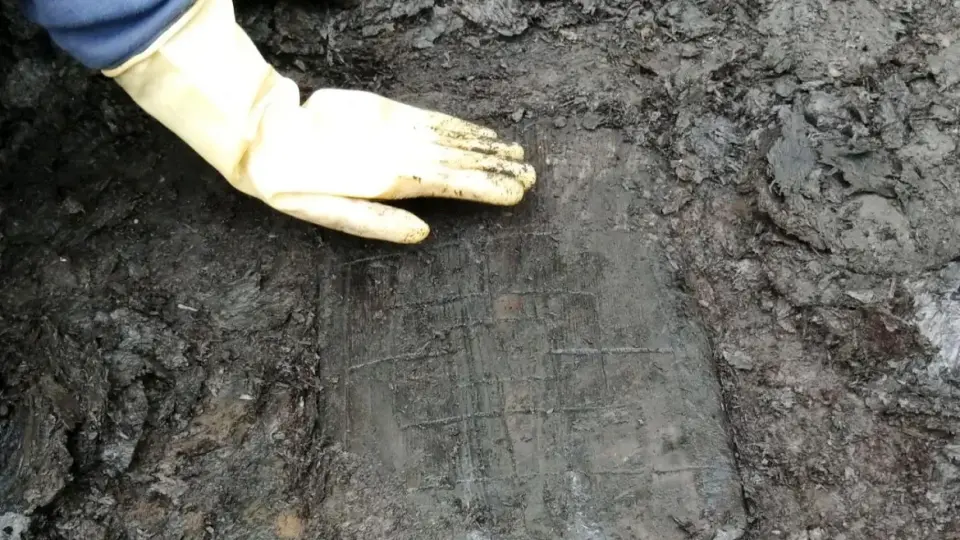
Archaeologists in Staraya Russa, Russia, have discovered an 11th-century wooden bread peel that also served as a board game surface. The artifact, measuring approximately 30 by 40 centimeters, features a flat side for baking and a reverse side carved with the layout for the medieval game 'merels.' Found at the Pyatnitsky site, this well-preserved oak object offers rare insight into how medieval bakers may have combined utility and leisure, using the tool to pass time while waiting for bread to bake.
Key points
- The artifact was found at the Pyatnitsky archaeological site in Staraya Russa, a medieval town located between Moscow and St. Petersburg.
- The wooden peel, likely made of oak, measures about 12 by 16 inches (30 by 40 cm) and dates to the 11th century.
- One side of the tool is flat for baking, while the reverse features three nested squares carved for the game 'merels' (also known as nine-men's morris or mills).
- Sergey Toropov, director of Novgorod State University's Center for Archaeological Research, noted that such dual-purpose objects were common, as players could quickly mark boards on flat surfaces.
- The game 'merels' was popular across Europe and Asia in the Middle Ages due to its minimal equipment requirements, with roots potentially tracing back to ancient Rome.
- Researchers are unsure if the peel was originally designed for both purposes or repurposed as a game board after it broke and was no longer useful for baking.
Background
This discovery adds to a growing body of evidence regarding medieval daily life in Russia, following recent finds such as a 1,000-year-old 'snake amulet' in Staraya Russa and a medieval nobleman buried with his horse and dog. While previous archive items focused on religious relics and military morale, this find highlights the intersection of domestic utility and recreation in the 11th century. The game 'merels' has been found in ninth-century sites in the kingdom of the Rus, but this specific artifact is noted for its exceptional preservation.
Why it matters
The discovery provides a tangible link to the everyday lives of medieval bakers, illustrating how they utilized downtime for entertainment. It also highlights the adaptability of household objects in the Middle Ages, where tools often served multiple functions. The well-preserved state of the peel offers a unique opportunity to study the craftsmanship and cultural practices of the era, particularly the popularity of board games like 'merels' across Europe and Asia.
What to watch
Researchers will likely continue to analyze the artifact to determine its exact age and usage patterns. Further excavations at the Pyatnitsky site may yield more insights into medieval daily life and the prevalence of dual-purpose objects. The find may also prompt a broader review of other household items in medieval collections to identify similar hidden game boards.
Want the full story? Read the original reporting
Read on Live Science