
DarkSky International Reveals Winners of Record-Breaking 2026 Night Photography Contest
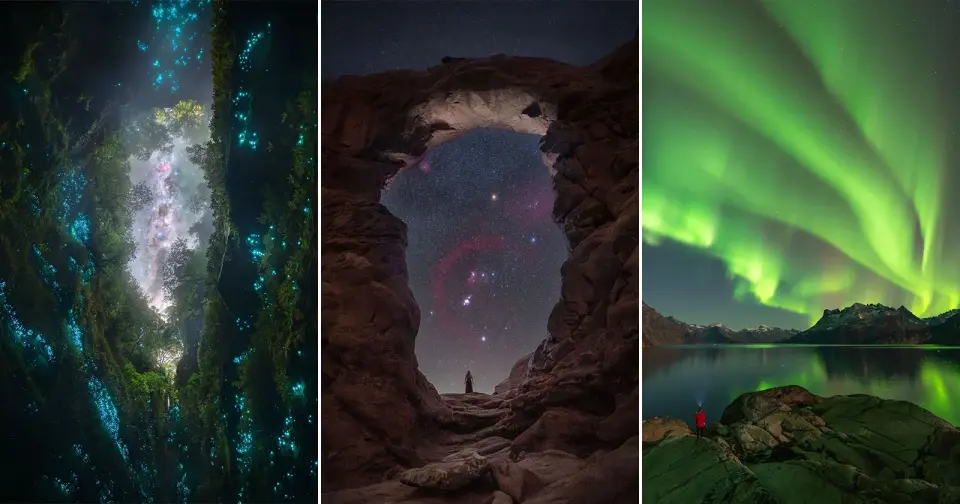
DarkSky International has announced the 31 winners of its sixth annual Capture the Dark 2026 photography contest, which received a record number of entries from over 30 countries. The competition aims to highlight the beauty of dark skies while raising awareness about the harmful effects of light pollution, which the organization states is increasing by nearly 10% annually worldwide. Winners were selected across nine standard categories, including Nightscapes, International Dark Sky Places, and Deep Sky Observations, as well as a special Star Trek 60th anniversary category and a People’s Choice Award. Notable winners include Paul Wilson for a panorama in South Australia, Kat Lawman for a composite shot in Utah’s Arches National Park, and Ethan Keller for a northern lights image in Alberta that reflects Indigenous folklore. The contest serves as a key advocacy tool for DarkSky International, using visual storytelling to promote responsible outdoor lighting and preserve nighttime environments for wildlife and astronomy.
Key points
- The 2026 contest marked the sixth annual edition and achieved a record number of submissions from photographers in more than 30 countries.
- DarkSky International cites a nearly 10% annual increase in global light pollution, which disrupts wildlife and community well-being, as the primary driver for the initiative.
- Paul Wilson won the Nightscape category with a tracked panorama from Quorn, South Australia, captured using a Canon EOS R5 and Sigma 28mm f/1.4 lens.
- Kat Lawman won the International Dark Sky Places category with a blended composite from Arches National Park in Utah, utilizing Sony mirrorless bodies and a 20mm f/1.8 lens.
- Ethan Keller won the People’s Choice Award for an Alberta northern lights image that incorporates Indigenous stories regarding the Aurora Borealis as ancestral spirits.
- A special category celebrating the 60th anniversary of Star Trek was won by Monika Deviat for a self-portrait featuring the Vulcan salute in Banff National Park, Canada.
Background
This event follows DarkSky International’s ongoing efforts to combat light pollution through education and advocacy. While previous coverage in our archive focused on unrelated cultural and legal events, this contest represents a consistent annual initiative by the organization to use photography as a tool for environmental awareness. The 2026 edition expands on prior years by introducing a themed category for Star Trek’s 60th anniversary and emphasizing the impact of satellite trails and artificial light on the night sky.
Why it matters
The contest underscores the growing urgency of light pollution, which is not merely an aesthetic issue but a significant environmental and public health concern. By showcasing high-quality images from the world’s darkest locations, DarkSky International provides a tangible contrast to the degrading night skies caused by urban expansion. The inclusion of categories like 'Impact of Light Pollution' and 'Creatures of the Night' highlights the ecological consequences of artificial lighting, while the 'Young Astrophotographers' category demonstrates the potential for engaging new generations in conservation efforts. The record-breaking participation suggests a rising global interest in preserving dark skies, indicating that visual advocacy is becoming a more effective method for driving policy changes and community awareness regarding responsible lighting design.
What to watch
DarkSky International will likely continue to leverage the visibility of the 2026 winners to further its advocacy campaigns. The organization may use the contest results to support policy recommendations for lighting standards in the participating countries. Additionally, the highlighted images may be used in educational materials to demonstrate the visual and ecological value of dark skies to the public and local governments. Future editions of the contest may expand categories or partner with more international bodies to address the accelerating rate of light pollution.
Want the full story? Read the original reporting
Read on PetaPixel