
September 2026 Harvest Moon: Key Dates, Viewing Tips, and Planetary Alignments
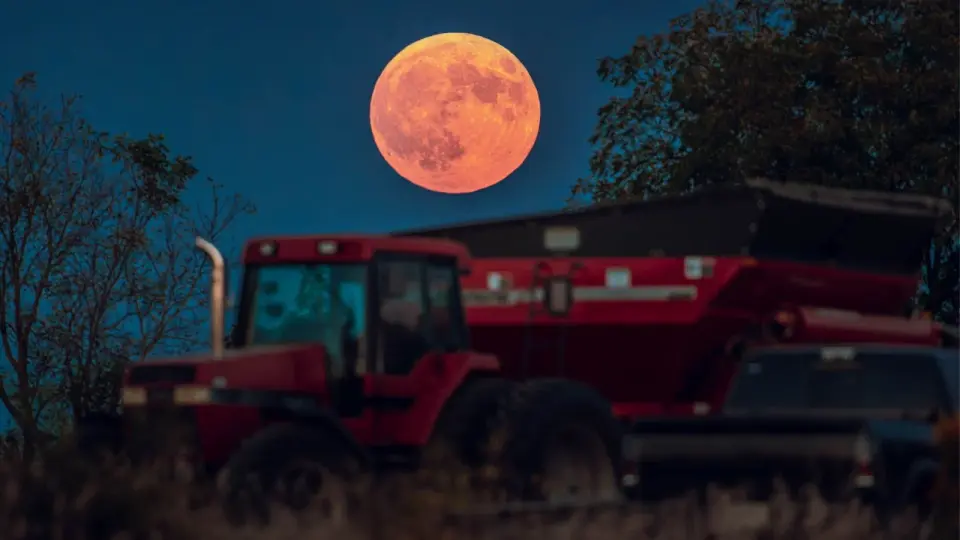
The September 2026 full moon, known as the Harvest Moon, peaks on Sept. 26. It offers a prime opportunity for naked-eye observation, with Saturn nearby and Venus reaching peak brightness earlier in the month. The event coincides with the autumn equinox, potentially boosting aurora activity.
Key points
- The full moon occurs at 12:49 p.m. EDT on Sept. 26, 2026, rising at sunset in the constellation Pisces.
- Venus reaches its brightest magnitude (-4.8) on Sept. 18, while Neptune reaches opposition on Sept. 25.
- The Harvest Moon is named for its proximity to the September equinox, traditionally aiding harvests with extended moonlight.
- The autumn equinox on Sept. 22 may trigger increased aurora activity due to Earth's tilt and solar wind conditions.
- Saturn will appear within six degrees of the moon on Sept. 26, offering a notable planetary pairing for observers.
Background
Following the August 2026 Sturgeon Moon, which featured a partial lunar eclipse, the September full moon marks a shift to a non-eclipse event. The July Buck Moon and August Sturgeon Moon were highlighted for their visibility and cultural significance, setting the stage for the Harvest Moon's traditional role in agricultural cycles. The September equinox, occurring on Sept. 22, aligns with the Harvest Moon's timing, reinforcing its historical importance.
How outlets are covering it
Space.com emphasizes the Harvest Moon's visibility and Rayleigh scattering effects, while National Geographic highlights broader September sky events, including Venus's peak brightness and aurora potential. MyEasternShoreMD focuses on planetary positions, noting Neptune's opposition and Saturn's rising times. Daily Camera provides a detailed view of Cygnus and the Milky Way, linking the Harvest Moon to the autumn equinox. Outlets agree on the moon's date but differ in emphasis: Space.com and National Geographic focus on visibility, while MyEasternShoreMD and Daily Camera highlight planetary and galactic features.
Why it matters
The Harvest Moon serves as a key astronomical marker for the autumn season, influencing cultural practices and skywatching opportunities. Its proximity to the equinox and planetary alignments makes it a significant event for both casual observers and astronomers, offering a chance to observe the moon, planets, and potential aurora displays.
What to watch
Observers should watch for the Harvest Moon on Sept. 26, with Saturn nearby. Venus's peak brightness on Sept. 18 and Neptune's opposition on Sept. 25 provide additional targets. The autumn equinox on Sept. 22 may lead to increased aurora activity, particularly in Arctic latitudes. Future full moons will follow the standard lunar cycle, with the next occurring in October.
- September full moon 2026 — When, where and how to see the Harvest Moon Space
- 9 Night Sky Events to See in September, From the Harvest Moon to Venus at Its Brightest nationalgeographic.com
- Bright and dim planets MyEasternShoreMD
- September’s swan and its shadows (Skywatcher’s Guide) Daily Camera
- September Stargazing: Summer’s official end, a big ol’ moon, and a chance to see Neptune Popular Science
Want the full story? Read the original reporting
Read on Space