
JWST Discovers Widespread Giant Black Holes in Early Universe
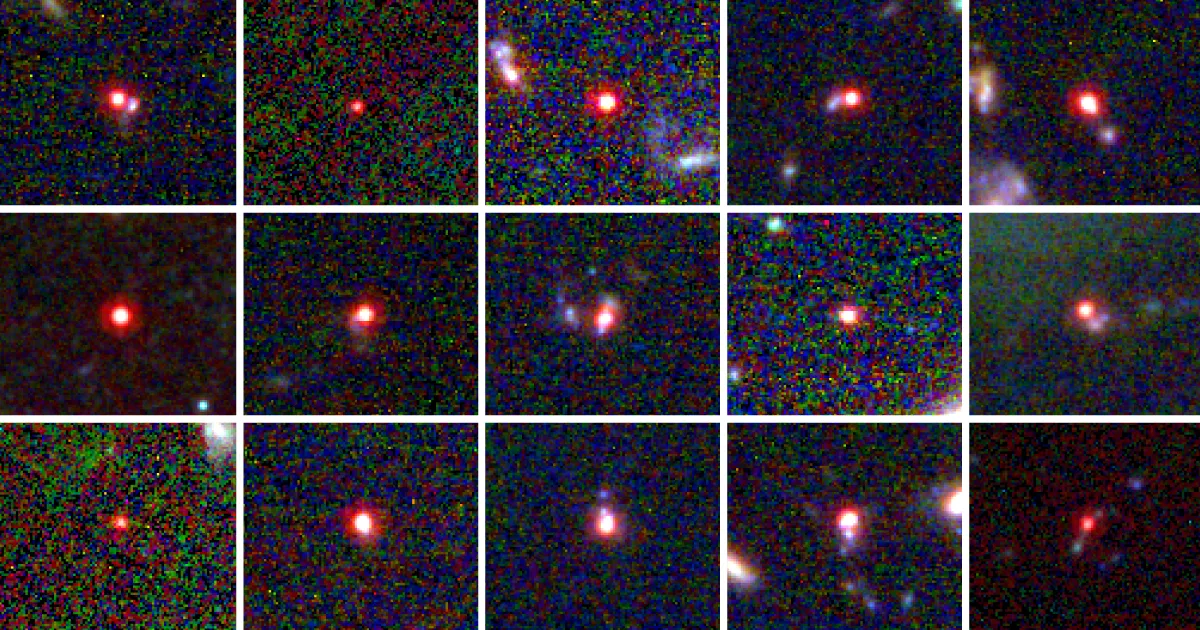
The James Webb Space Telescope (JWST) has been making groundbreaking observations of the early universe, revealing a surprising abundance of young galaxies with cyclones churning in their centers. These cyclones are believed to be caused by large black holes, challenging existing theories of black hole formation. JWST's ability to detect light from deeper in space than previous telescopes has allowed astronomers to study the chemical composition and age of galaxies at unprecedented distances. The telescope's observations have exceeded expectations, uncovering a multitude of young, active black holes that may reshape our understanding of stars, galaxies, and the early cosmos.
Reading Insights
0
11
9 min
vs 10 min read
95%
1,868 → 99 words
Want the full story? Read the original article
Read on Quanta Magazine