
LIGO Reactivated with Enhanced Sensitivity to Detect More Black Hole Collisions
TL;DR Summary
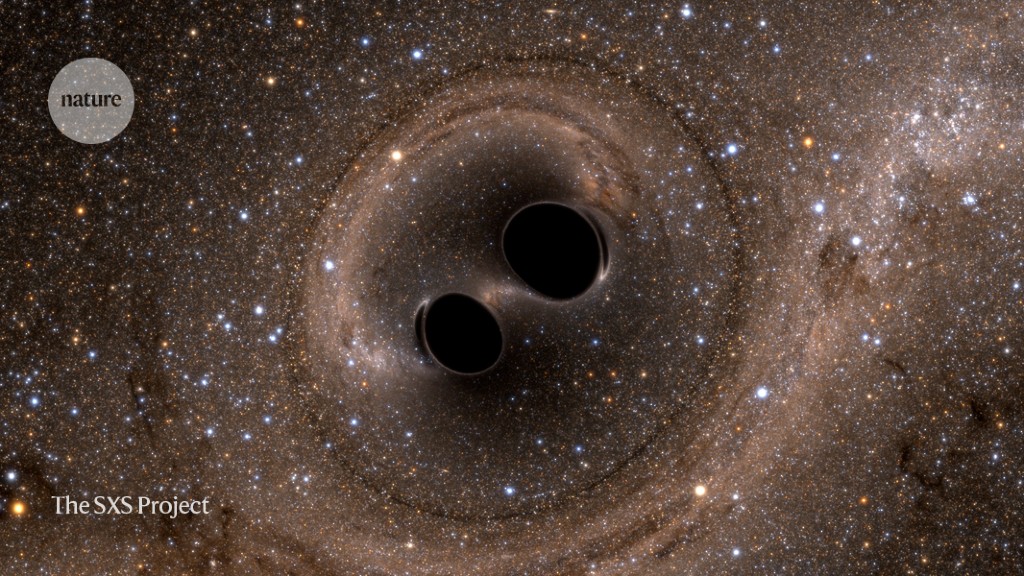
The Laser Interferometer Gravitational-Wave Observatory (LIGO) has resumed its search for gravitational waves after a three-year hiatus and a multimillion-dollar upgrade. The improvements should allow the facility to pick up signals from colliding black holes every two to three days. The Virgo detector near Pisa, Italy, which has undergone its own €8.4-million (US$9-million) upgrade, was meant to join in, but technical issues are forcing its team to extend its shutdown and perform further maintenance. KAGRA, another gravitational-wave detector located under Mount Ikenoyama, Japan, is also restarting on 24 May.
- Gravitational-wave detector LIGO is back — and can now spot more colliding black holes than ever Nature.com
- Upgraded LIGO Reactivated: Resumes Unraveling Universe's Secrets With Enhanced Gravitational Wave Detection SciTechDaily
- Gravitational wave lab LIGO roars back online to detect the oldest black hole collisions ever seen Livescience.com
- A Massive Gravitational Wave Observatory Is Returning to Action Gizmodo
- The LIGO observatory is finally back, now with double the sensitivity Interesting Engineering
Reading Insights
Total Reads
0
Unique Readers
10
Time Saved
5 min
vs 6 min read
Condensed
92%
1,144 → 89 words
Want the full story? Read the original article
Read on Nature.com