
"Unprecedented Discoveries: James Webb Space Telescope Challenges Cosmological Understanding"
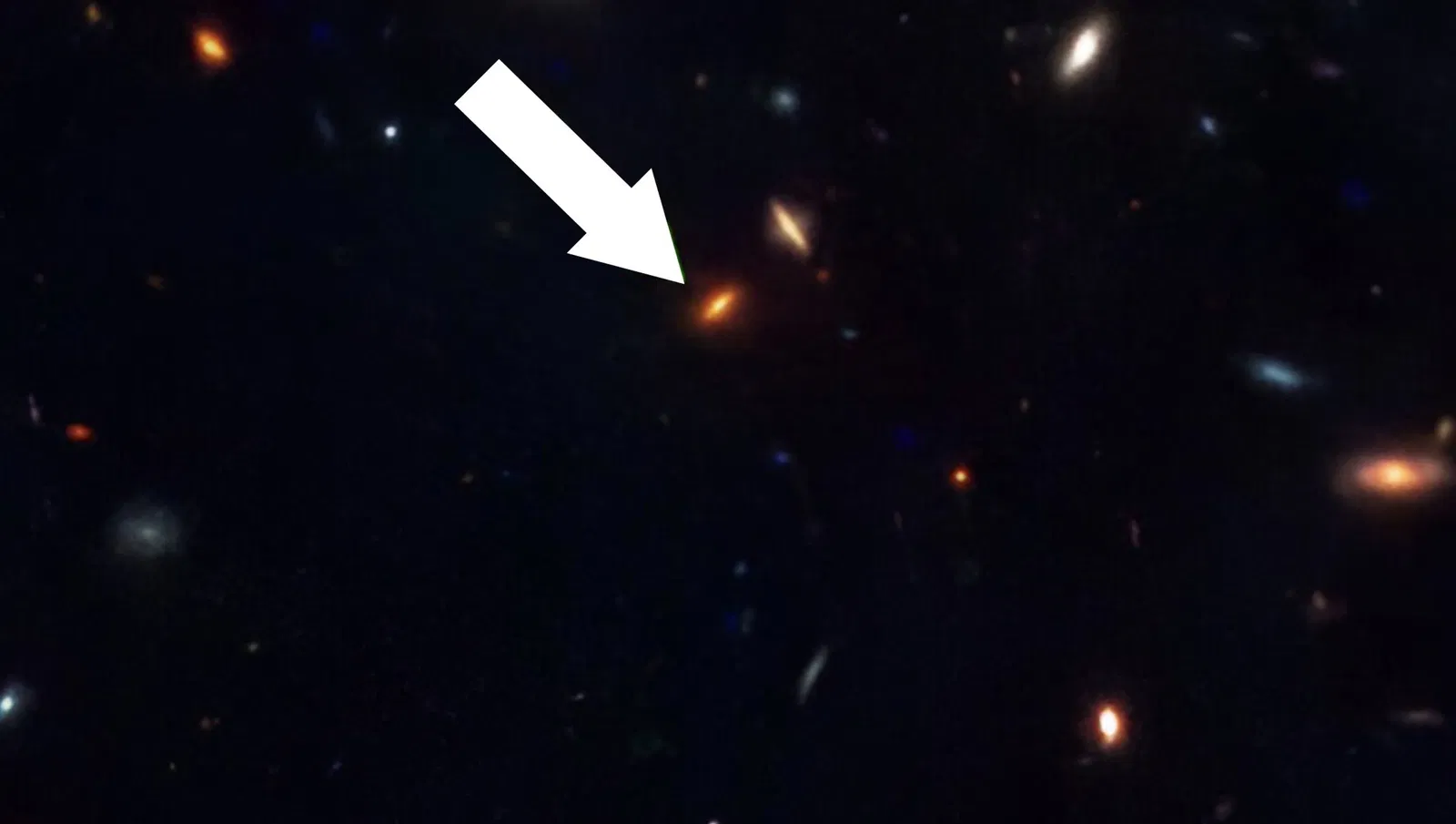
TL;DR Summary
NASA's James Webb Space Telescope has discovered an 11-billion-year-old massive galaxy, challenging current understanding of galaxy formation and dark matter. The galaxy, ZF-UDS-7329, contains ancient stars that shouldn't have formed according to existing models. This discovery raises questions about the nature of dark matter and its role in galactic formation. The findings, published in Nature, suggest that more observations are needed to understand the prevalence of such galaxies and their impact on our understanding of the early universe.
Topics:science#astronomy#astrophysics#dark-matter#early-universe#galaxy-formation#james-webb-space-telescope
- James Webb Space Telescope Has Discovered an Enormous Remnant of the Early Universe That Astronomers Say Shouldn’t Exist The Debrief
- James Webb Space Telescope tracks a galaxy's history back to just after the Big Bang Space.com
- Discovery of unexpected ultramassive galaxies may not rewrite cosmology, but still leaves questions Phys.org
- JWST Discovers Another “Beyond Possible” Galaxy And We Have To Rethink Everything IFLScience
- Looking Skyward: Newly discovered galaxies test understanding of dark matter WCAI
Reading Insights
Total Reads
0
Unique Readers
10
Time Saved
4 min
vs 5 min read
Condensed
92%
959 → 78 words
Want the full story? Read the original article
Read on The Debrief