
"Unraveling Cosmic Mysteries: Black Hole Jets and Relativistic Particles"
TL;DR
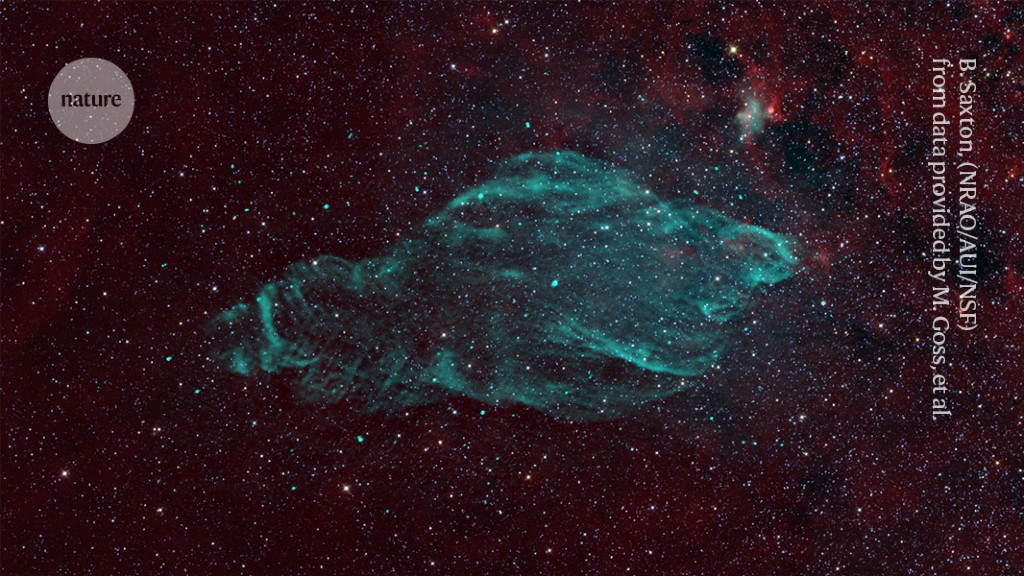
Observations from the High Energy Stereoscopic System (HESS) in Namibia have identified the origin of high-energy cosmic rays to a region near a black hole in the Manatee Nebula. These findings shed light on the century-old mystery of cosmic ray origins and suggest that smaller black holes, known as microquasars, could contribute to the cosmic-ray population. The study's precise gamma-ray observations indicate that the cosmic rays are produced by mechanisms internal to the jets, rather than by collisions with other matter, strengthening the case for X-ray binaries as smaller analogues to supermassive black holes capable of accelerating cosmic rays.
Topics:scienceastronomy#astronomy#astrophysics#black-holes#cosmic-rays#gamma-ray-observations#high-energy-stereoscopic-system-hess
- Black hole observations solve cosmic-ray mystery Nature.com
- Vampire black hole is a 'cosmic particle accelerator' that may solve a longstanding astronomy mystery Space.com
- Astrophysical jet caught in a 'speed trap' Phys.org
- Mysterious black hole jets may be the source of powerful cosmic rays New Scientist
- Acceleration and transport of relativistic electrons in the jets of the microquasar SS 433 Science
Want the full story? Read the original reporting
Read on Nature.com