
Unraveling the Mysteries of Black Hole Size and Mathematics.
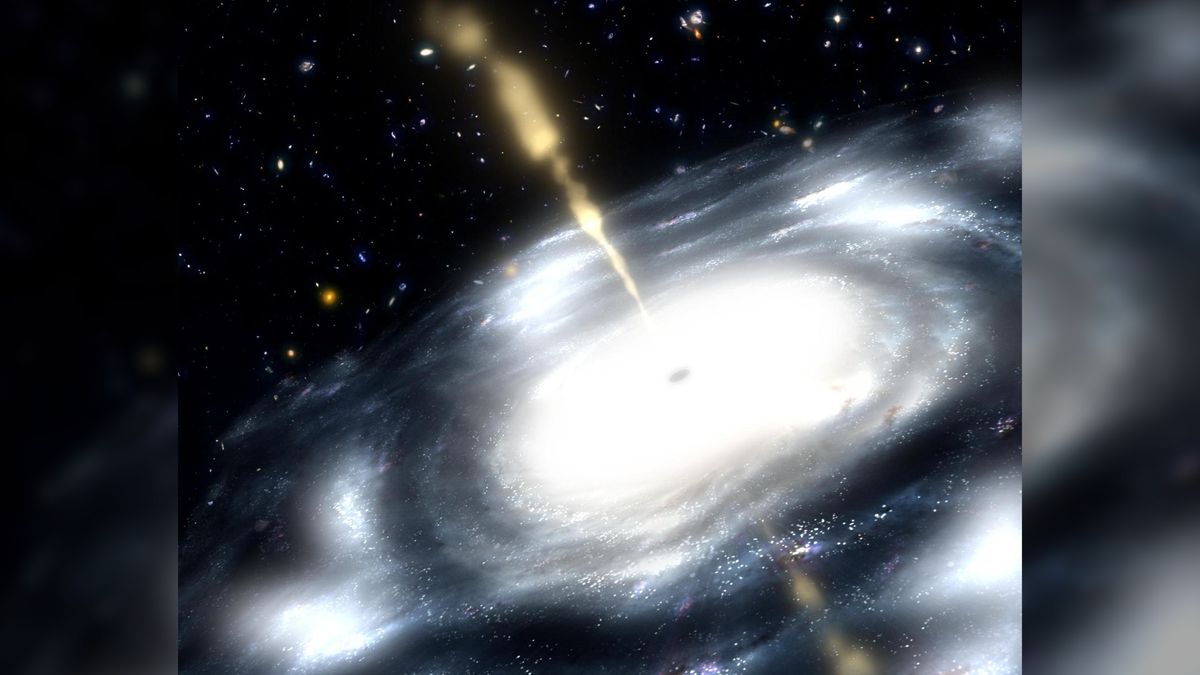
TON 618 is the largest directly observed black hole with a confirmed mass, weighing roughly 40 billion solar masses and having a radius of over 1,000 astronomical units. It powers a quasar, one of the brightest objects in the universe with the illuminating power of 140 trillion suns. Supermassive black holes become enormous through a combination of merging with other black holes and by constantly feeding on surrounding material. This feeding rate sets the limit on the size of a black hole, with an estimated maximum mass of around 50 billion solar masses. However, there may be other ways to create large black holes, such as from the direct collapse of large clumps of dark matter in the early universe.
- What's the biggest black hole in the universe? Livescience.com
- Here's a peek into the mathematics of black holes Science News Magazine
- What is a black hole's actual size? Big Think
Want the full story? Read the original reporting
Read on Livescience.com