
JWST Data Suggests Neptune’s Inner Moons Are Reassembled Debris from a Destroyed Original System
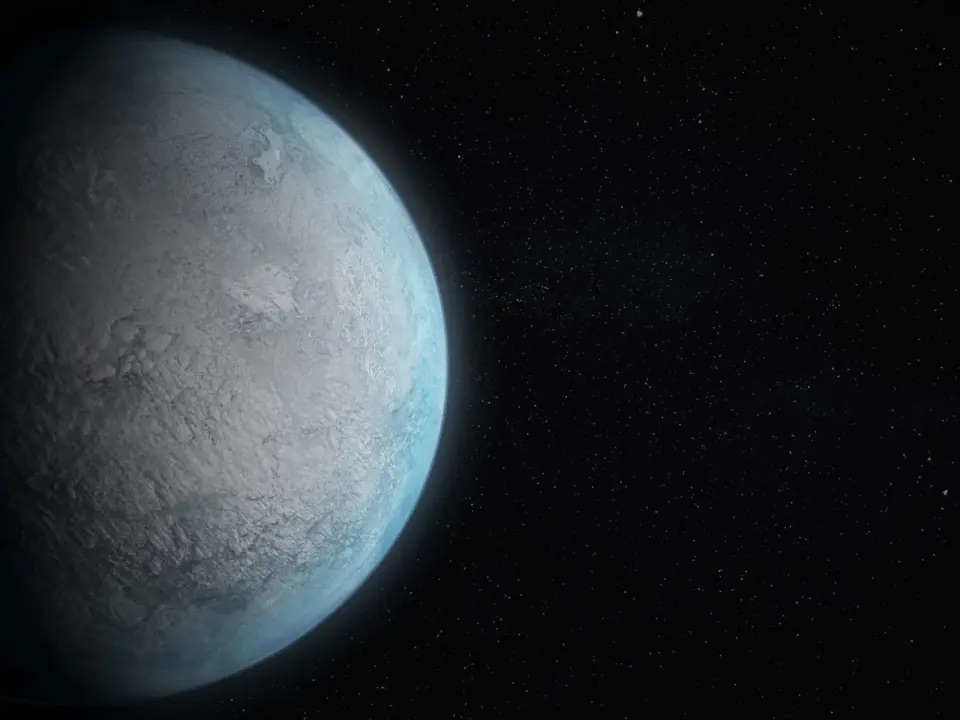
James Webb Space Telescope observations indicate that Neptune’s current inner moons likely formed from the debris of an original satellite system destroyed when Triton was captured. Spectra reveal ancient clay minerals on these small bodies, suggesting they are second-generation objects. Meanwhile, Nereid may be a surviving original moon displaced by the same event.
Key points
- JWST detected magnesium-rich phyllosilicates on Proteus, Larissa, and Galatea, minerals that require liquid water and heat, conditions impossible for these small, cold moons.
- The presence of these minerals implies the inner moons are fragments of larger, differentiated bodies that were shattered during Triton’s capture, which destabilized Neptune’s original moon system.
- A separate study suggests Nereid, an irregular moon with an eccentric orbit, may be an original satellite that survived the cataclysm and was pushed into its current path.
- The findings support a scenario where Triton’s arrival erased the primordial moon family, leaving behind a debris disc that reassembled into the current inner moons and rings.
- Researchers emphasize that while the evidence is strong, it is not definitive, as alternative explanations like a passing Kuiper Belt object remain possible.
Background
Previous coverage in August 2026 highlighted the same JWST findings, noting that the detection of hydrated clay on Neptune’s inner moons and rings points to a violent past. Earlier reports also discussed the possibility that Nereid is a survivor of the original system, while other inner moons are reassembled debris. The broader context includes the ongoing search for subsurface oceans on outer solar system moons, with Triton being a candidate for such features.
Why it matters
This research provides a compositional test for the long-held hypothesis that Triton’s capture destroyed Neptune’s original moon system. It transforms a dynamic theory into a tangible history, linking the current inner moons to a catastrophic past. Understanding the origin of these moons helps explain the unique architecture of Neptune’s satellite system and the role of gravitational interactions in shaping planetary environments.
What to watch
Future missions, such as a potential Neptune orbiter, could map compositions across individual moons, refine their masses and densities, and study the rings as part of the same evolving debris system. More observations could test whether other inner moons share the same altered material and whether Nereid’s surface is uniform, providing a more definitive answer to the origin of Neptune’s moons.
Want the full story? Read the original reporting
Read on Space Daily