
Antarctic Peninsula Shifts from Mercury Sink to Active Pollution Source
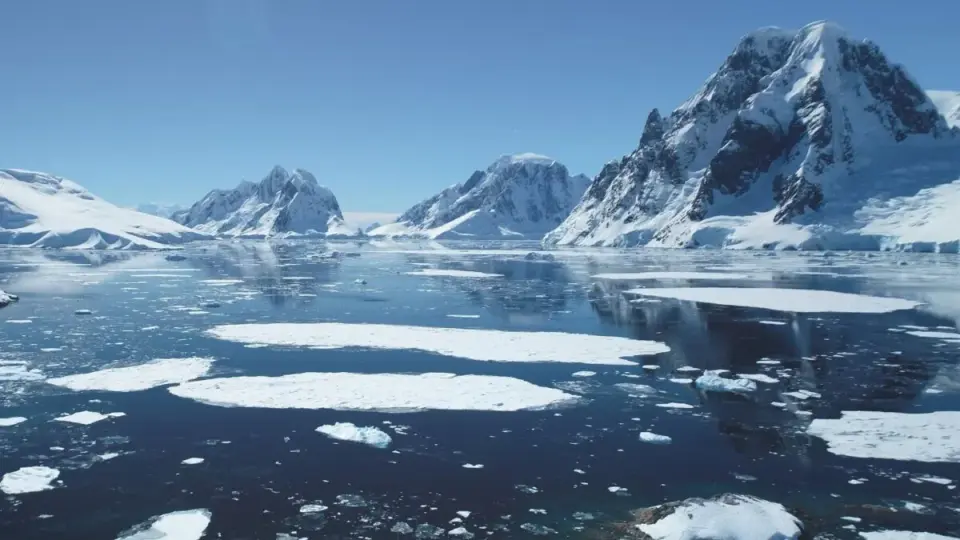
A new study reveals that rising temperatures are transforming Antarctica from a global mercury sink into a major pollution source. By analyzing sediment cores, researchers found that mercury accumulation in the Antarctic Peninsula has increased by 160% since industrialization, driven by both atmospheric deposition and the release of stored mercury from melting ice.
Key points
- Mercury accumulation in the Antarctic Peninsula shelf is now twice the global shelf average.
- Since industrialization, mercury accumulation rates in the region have risen by 160%.
- Melting glaciers and sea ice are releasing stored mercury, increasing terrestrial release by 550%.
- Expanding open water areas have increased air-sea mercury exchange by 350%.
- The study highlights a feedback loop where climate change amplifies mercury pollution risks.
Background
Previous coverage noted that while East Antarctica recorded record-low temperatures at Concordia Station in July 2026, the Antarctic Peninsula is experiencing rapid warming and glacier melt. This regional variability underscores that climate impacts are not uniform, with the Peninsula acting as a critical area for pollutant accumulation despite the continent's overall cold climate.
How outlets are covering it
Gizmodo and ZME Science both emphasize the dual mechanisms of atmospheric deposition and ice-melt release, citing the same PNAS study. ZME Science highlights the work of Maodian Liu from Peking University, noting that climate change acts as an amplifier for mercury cycling. Gizmodo provides specific quantitative data on the 550% increase in terrestrial release. While all sources agree on the shift from sink to source, ZME Science explicitly notes that prior research lacked evidence to separate these two mechanisms, a gap this study addresses. No significant disagreements were found among the sources.
Why it matters
This shift threatens marine ecology in the Southern Ocean and indicates that polar regions are no longer safe havens from industrial pollution. As ice melts, stored toxic heavy metals are released into the ocean, creating a secondary pollution source that exacerbates environmental damage. This underscores the urgent need to address both carbon emissions and mercury pollution to mitigate these cascading effects.
What to watch
Researchers will likely continue monitoring mercury levels in polar regions to track the extent of this shift. Policy discussions may focus on stricter regulations for mercury emissions from industrial sources, recognizing that these pollutants travel globally and are amplified by climate change in polar areas.
- Rising Temperatures Are Turning Antarctica Into a ‘Hotspot’ for This Toxic Pollutant Gizmodo
- As Ice Melts, Antarctica Is Leaking Mercury Into The Ocean Yahoo
- Antarctica Is Releasing Mercury Faster Than Ever Because of Melting Ice ZME Science
- A Worrisome Change: Antarctica Stops Being a Sink and Becomes a Source of Mercury Pollution Noticias Ambientales
- Antarctic ice melt drives record mercury levels into marine food chain: Study National Herald
Want the full story? Read the original reporting
Read on Gizmodo