
Ancient Clay Formation Linked to Prolonged Global Warming Event
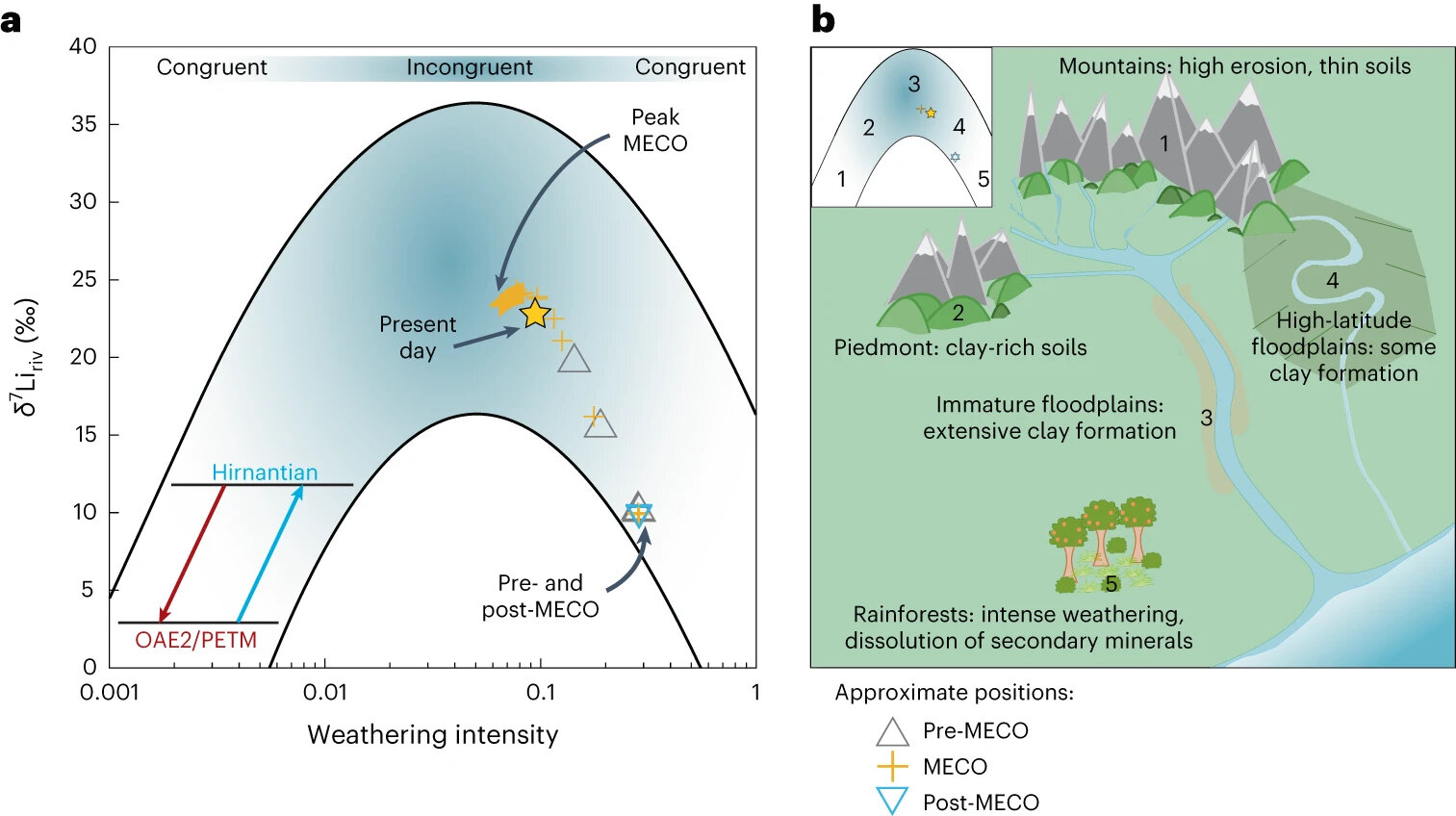
A new biogeochemical model suggests that the Middle Eocene Climatic Optimum (MECO), a global warming event that occurred 40 million years ago and lasted ~400,000 years, was prolonged due to changes in clay formation and silicate weathering. The research team analyzed carbonate rock cores from ocean drilling projects and measured lithium isotope ratios, finding a distinct positive peak in δ7Li coinciding with the climate warming. The researchers propose that enhanced clay formation during the MECO sequestered carbonate-forming components, reducing the transport of calcium to the ocean and sustaining the global warming event for a longer period. The findings highlight the role of clay formation in influencing past climate change events.
Reading Insights
1
24
4 min
vs 5 min read
88%
956 → 110 words
Want the full story? Read the original article
Read on Phys.org