
Princeton Team Achieves 87% Purity in Fusion Reactor Walls Using In-Situ Neon Plasma Cleaning
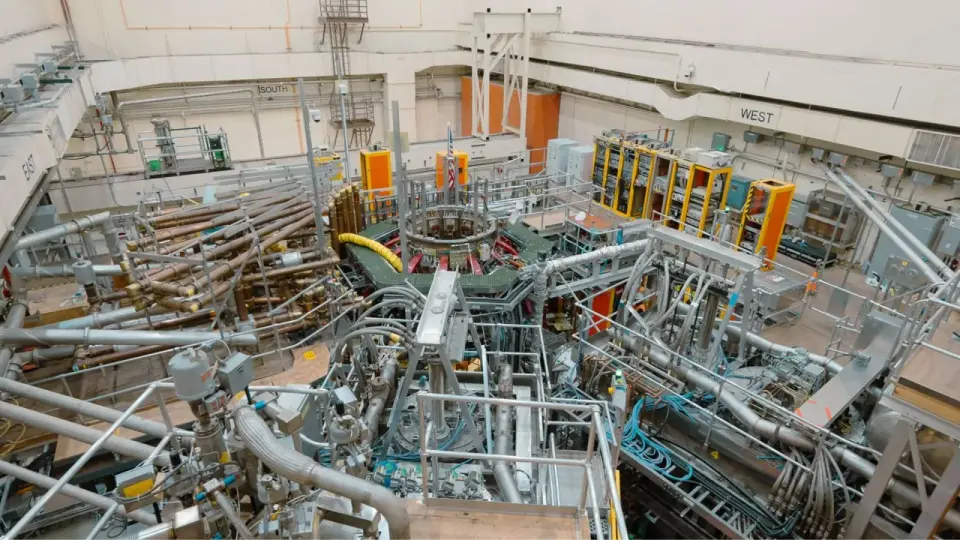
Researchers from Princeton University, the Princeton Plasma Physics Laboratory, and Pennsylvania State University have developed a method to clean the inner walls of nuclear fusion reactors without exposing them to air. By using low-temperature neon plasma and heat at 800°C (1472°F) inside a vacuum, they achieved 87% pure metallic tungsten on porous wall tiles. This technique removes contaminants like carbon and oxygen that clog the tiles' internal channels, ensuring liquid lithium can flow properly to protect the reactor. The study, published in Nuclear Materials and Energy, offers a critical solution for maintaining commercial fusion reactors, as traditional pre-installation cleaning fails because tiles re-contaminate upon exposure to air. The process physically knocks off impurities with neon ions while heat drives deeper contaminants to the surface, resulting in a visible shift from dark gray to bright silver.
Key points
- A joint US team achieved 87% purity in porous tungsten fusion reactor wall tiles using in-situ cleaning.
- The method combines low-temperature neon plasma and 800°C heat within a vacuum chamber to remove contaminants.
- Neon ions physically knock off carbon and oxygen atoms, while heat drives deeper impurities to the surface.
- The technique prevents re-contamination that occurs when cleaned tiles are exposed to air during assembly.
- The process ensures liquid lithium can flow through the tiles' internal channels to protect the reactor structure.
- The findings were published in the journal Nuclear Materials and Energy and confirmed by diagnostic probes.
Background
This development addresses a persistent materials challenge in fusion energy, where extreme temperatures require specialized armor. Recent archive coverage highlights ongoing efforts to improve fusion reactor components, such as the development of high-temperature tantalum alloys and graphene-based radiation sensors. While those innovations focus on durability and monitoring, this new cleaning technique directly tackles the issue of maintaining the integrity of liquid-metal-coated walls, a critical step for the commercial viability of fusion power.
Why it matters
This breakthrough removes a significant barrier to the commercialization of nuclear fusion energy. By enabling the cleaning of reactor walls without opening them to the atmosphere, the technique ensures that the porous tungsten tiles remain functional for distributing protective liquid lithium. This prevents the clogging of internal channels that would otherwise compromise the reactor's ability to withstand extreme heat, potentially accelerating the timeline for operational fusion plants.
What to watch
Researchers will likely focus on scaling this cleaning process for larger reactor components and testing its long-term effectiveness under continuous operation. The next steps may involve integrating this in-situ cleaning protocol into standard maintenance routines for fusion facilities, ensuring that wall purity is maintained throughout the reactor's operational life without the need for complex disassembly.
Want the full story? Read the original reporting
Read on Interesting Engineering