Tag

Plasma

All articles tagged with #plasma

technology27 days ago

KDE Plasma 6.7 Nears Release With Last-Minute Fixes

Ahead of Plasma 6.7's release next week, KDE is pushing final fixes—saving users from crashes tied to login monitor layout changes and wake-from-sleep after monitor updates—along with general regression fixes. The coverage also notes early 6.8 work (GTK2 theme/icon handling) and Frameworks 6.28 improvements, including a Meta-key trigger for KWin Overview and fixes for a local AVIF icon desktop issue; details are summarized in This Week in Plasma.

A Bolt of Chemistry: Methane Becomes Methanol in a Plasma Bubble Reactor
energy2 months ago

A Bolt of Chemistry: Methane Becomes Methanol in a Plasma Bubble Reactor

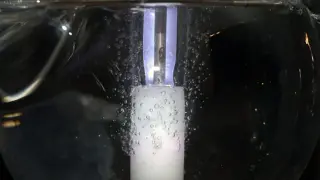
Northwestern chemists unveiled a plasma-bubble reactor coated with copper oxide that converts methane directly to methanol in a single step by applying high-voltage electricity to generate plasma, achieving roughly 97% selectivity and also yielding hydrogen and ethylene; while simpler and potentially more energy-efficient than the traditional two-step steam-reforming route, the technology still faces scaling and economic hurdles before it can compete with optimized industrial processes.

CU Boulder Unveils Global-Unique Plasma Tunnel for Hypersonic Reentry Testing
space5 months ago

CU Boulder Unveils Global-Unique Plasma Tunnel for Hypersonic Reentry Testing

Researchers at the University of Colorado Boulder have built a plasma tunnel that mimics the extreme heat and pressure of reentry, reaching up to 9,000°F to test materials, heat shields, and sensors under hypersonic conditions; the facility can also reproduce Mars-like CO2 atmospheres, and scientists are exploring magnetic control of the plasma to potentially steer reentry, which could improve future spacecraft safety and maneuverability.

LeAnn Rimes Documents Plasma Exchange, Describing It as an 'Oil Change' for the Body
entertainment5 months ago

LeAnn Rimes Documents Plasma Exchange, Describing It as an 'Oil Change' for the Body

LeAnn Rimes shared on Instagram that she underwent Therapeutic Plasma Exchange (removing plasma and replacing it with fresh albumin) and a stem cell boost at a Nashville clinic while on a day off from filming 9-1-1: Nashville. She explained the process as removing harmful substances from the plasma to help the body heal, likening it to an “oil change for your body,” and noted she experienced a headache afterward. Rimes emphasized openness about health treatments and acknowledged that access to such therapies isn’t universal.

Scientists Uncover Explanation for Rain on the Sun
science8 months ago

Scientists Uncover Explanation for Rain on the Sun

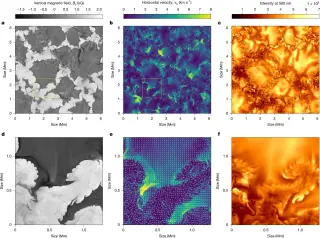
Researchers at the University of Hawai'i have discovered that the mysterious rain on the Sun, composed of superheated plasma, is influenced by shifting flows of elements like iron, silicon, and magnesium in the Sun's corona. This finding helps explain the rapid formation of coronal rain and suggests new insights into solar atmospheric dynamics and coronal heating. The study challenges previous models assuming constant elemental distribution and opens avenues for further research into solar phenomena.

Scientists Uncover the Mystery Behind 'Rain' on the Sun
science9 months ago

Scientists Uncover the Mystery Behind 'Rain' on the Sun

Scientists have long struggled to explain the rapid formation of 'solar rain'—cool, dense plasma blobs that fall during solar flares. Recent research shows that allowing elemental abundances, especially low FIP elements like iron, to vary in models explains the quick cooling and condensation observed. This new understanding improves the accuracy of solar models, helping to better interpret solar activity and predict space weather effects.

US Fusion Breakthrough: Stellarator Advances Promise Limitless Energy
science-and-technology1 year ago

US Fusion Breakthrough: Stellarator Advances Promise Limitless Energy

Researchers at the Princeton Plasma Physics Laboratory have made a significant breakthrough in stellarator fusion technology by developing a computational method to optimize plasma confinement. This method uses a proxy function to predict particle loss rates, allowing for the exploration of various magnetic configurations that improve particle retention. This advancement could enhance the efficiency and stability of stellarators, bringing fusion energy closer to practical use.