
Canada’s Last Epishelf Lake Vanishes Permanently After 2020 Ice Shelf Collapse
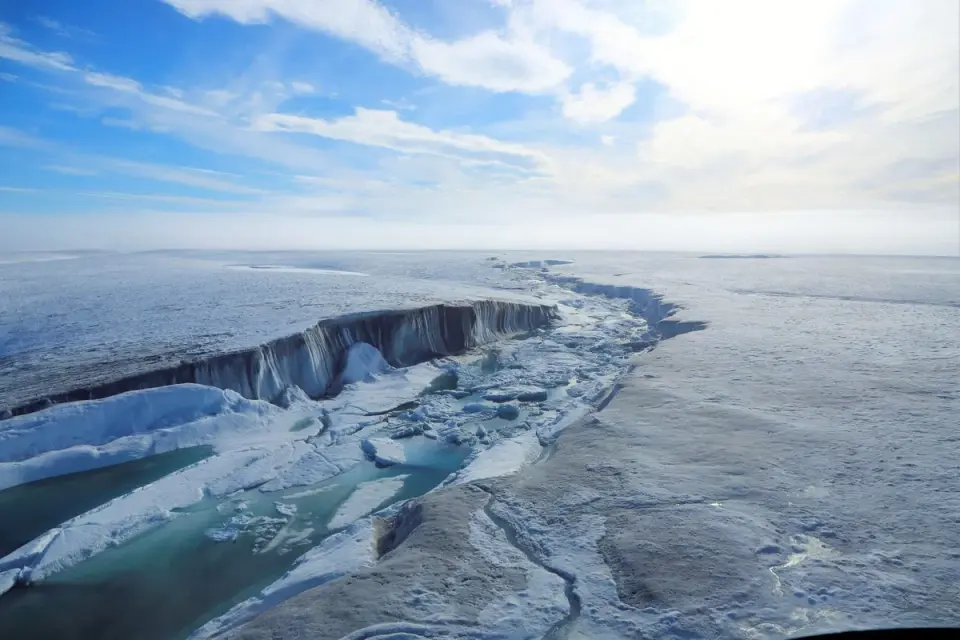
A new study confirms that Canada’s final epishelf lake, located in Milne Fiord, Nunavut, has permanently disappeared following the breakup of the Milne Ice Shelf in July 2020. Researchers from the University of British Columbia, University of Alberta, Université Laval, and Carleton University analyzed a decade of data to show that the freshwater layer drained within months of the ice shelf's collapse. By autumn 2020, the unique ecosystem had largely vanished, and by July 2022, brackish water had fully replaced the freshwater layer. Annual monitoring since then shows no signs of recovery. The study concludes that the lake is not returning, as the ice shelf cannot recover under current climate trajectories. This loss marks the end of a millennia-old habitat that supported coexisting freshwater and marine wildlife, highlighting the vulnerability of even remote Arctic refuges to rapid warming.
Key points
- The Milne Fiord epishelf lake, Canada’s last of its kind, drained completely within months of the Milne Ice Shelf breakup in July 2020.
- A study published in Scientific Reports in August 2026 confirms the lake’s permanent disappearance, with no recovery observed in annual monitoring since 2022.
- The lake formed when an ice shelf dammed freshwater above seawater, creating a multi-story habitat for diverse wildlife.
- Researchers used satellite images, ocean measurements, and field observations to reconstruct the lake’s decline, noting that the ice shelf had been thinning for decades before the 2020 collapse.
- Lead author Jérémie Bonneau stated that the systems took thousands of years to form but were lost in months, with no possibility of return on human timescales.
Background
This development follows broader concerns about Arctic ice loss and climate change impacts on remote ecosystems. While previous archive articles focused on U.S.-Canada trade disputes and cultural issues, this story highlights a distinct environmental crisis in the Canadian Arctic. The Milne Ice Shelf breakup in 2020 was a significant event, but this study provides definitive evidence of the long-term ecological consequences, confirming that the loss is irreversible under current climate conditions.
Why it matters
The permanent loss of Canada’s last epishelf lake underscores the rapid and irreversible impacts of climate change on Arctic ecosystems. It demonstrates that even remote, seemingly permanent ice refuges are vulnerable to warming temperatures. This loss affects unique habitats that supported coexisting freshwater and marine wildlife, with implications for biodiversity and the broader understanding of climate change effects in the Arctic.
What to watch
Researchers will continue monitoring the area to confirm the absence of any recovery, though the study suggests no return is possible. Further research may focus on the broader impacts of ice shelf loss on Arctic ecosystems and wildlife, such as polar bears and ringed seals, which depend on these habitats.
Want the full story? Read the original reporting
Read on BBC Wildlife Magazine