
Jonathan the Tortoise’s Stable Mitochondria Offer New Clues for Human Longevity
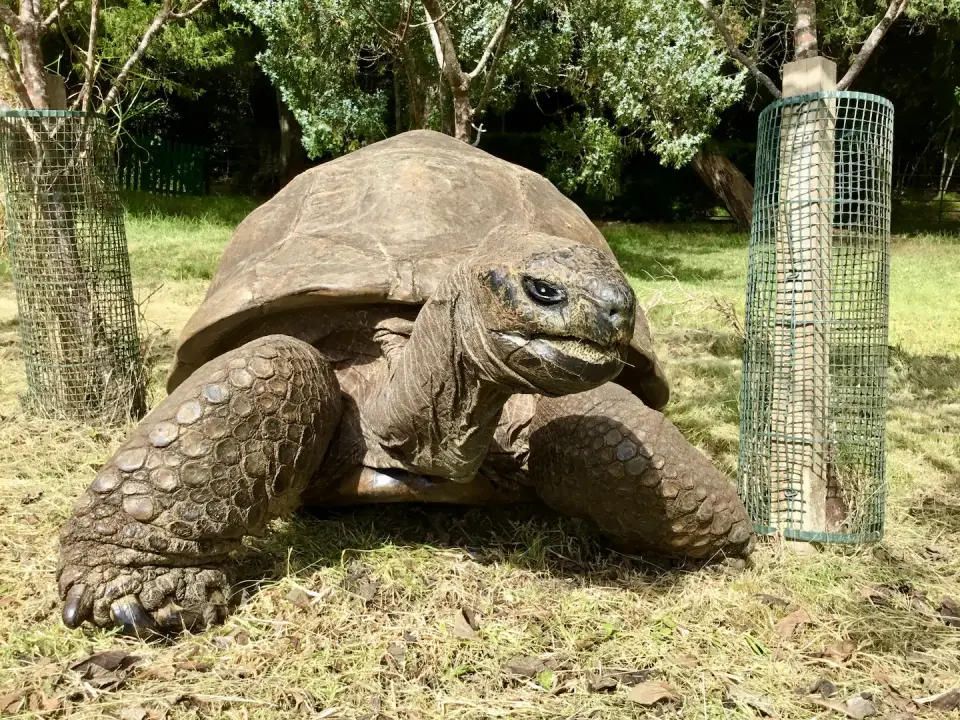
A new study published in Science Advances reveals that Jonathan, the 194-year-old Aldabra giant tortoise, possesses 287 unique gene variants that blunt aging effects. Researchers found his mitochondrial genes remain remarkably stable, resembling those of young tortoises, which may offer insights for future human anti-aging therapies.
Key points
- Jonathan, a 194-year-old tortoise on St. Helena, has 287 unique gene variants linked to DNA repair and inflammation control.
- His mitochondrial genes show stable epigenetic patterns similar to those of young tortoises, suggesting a feedback loop for cellular energy.
- Researchers collected saliva samples by pretending to feed him, as blood draws were prohibited by St. Helena officials.
- The study, led by Kallel Labs, aims to identify targets for extending human healthspan and lifespan.
- Experts caution that findings from a single animal require further validation before application to humans.
Background
Jonathan, the world’s oldest living land animal, has been the subject of multiple recent studies analyzing his genome and epigenome. Previous reports highlighted his stable mitochondrial genes and 287 unique gene variants, which are clustered around biological processes critical for longevity. These findings were published in Science Advances in October 2026, building on earlier analyses of his DNA and epigenetic patterns.
How outlets are covering it
The Washington Post emphasizes the unique methods used to collect Jonathan’s DNA samples, noting that veterinarian Joe Hollins tricked the blind tortoise into opening his mouth to obtain saliva samples. The Lamron highlights the broader implications of the research, focusing on the 287 unique gene variants that blunt aging effects and the potential for translating these findings into human treatments. Both sources agree on the significance of Jonathan’s stable mitochondrial genes but differ in their emphasis: The Washington Post focuses on the practical challenges of sample collection, while The Lamron stresses the potential for future human applications. The Indian Express source was inaccessible, so no perspective could be extracted from it.
Why it matters
Understanding the genetic and epigenetic factors that contribute to extreme longevity in species like Jonathan could lead to new treatments for human aging. The stability of his mitochondrial genes and the presence of unique gene variants in key aging pathways offer a potential roadmap for extending human healthspan and lifespan, though further research is needed to validate these findings.
What to watch
Researchers from Kallel Labs plan to continue studying Jonathan’s genome and compare it with that of younger tortoises, such as 36-year-old Tank, to identify additional targets for longevity. The ultimate goal is to develop treatments that can affect human healthspan and lifespan, though experts caution that the current findings from a single animal require further validation.
- At age 194, Jonathan the tortoise offers clues to longevity, study says The Washington Post
- At 194, Jonathan the Giant Tortoise knows about aging The Seattle Times
- Immortality lessons from Jonathan the tortoise The Indian Express
- Sustainability Corner: Jonathan the giant tortoise is helping scientists The Lamron
- 200-year-old giant tortoise could hold the key to humans living until the 2200s AOL.com
Want the full story? Read the original reporting
Read on The Washington Post