
Deep-sea dives reveal 200,000 corroded radioactive waste barrels leaking in the Atlantic
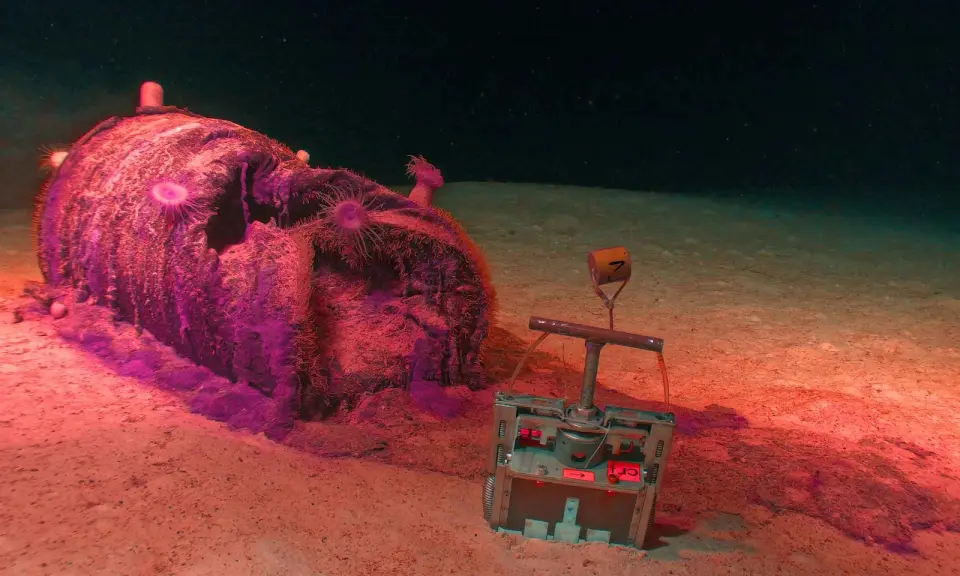
A 2026 expedition in the Northeast Atlantic confirmed that over 200,000 barrels of radioactive waste dumped in the mid-20th century are actively leaking. The Nautile submersible observed corroded containers and material spilling into seafloor mud, while instruments detected elevated levels of radionuclides like cobalt-60 and cesium-137. Although the waste was designed for gradual release rather than permanent containment, scientists are still analyzing samples to determine if deep-sea organisms are absorbing the radiation.
Key points
- The NODSSUM expedition aboard the Pourquoi Pas? conducted 20 dives below 15,400 feet between May and June 2026, directly observing over 200,000 barrels of radioactive waste in the Northeast Atlantic.
- Researchers found that many barrels are heavily corroded, with radioactive material already escaping into the surrounding seafloor mud, confirming that the containers are not acting as permanent vaults.
- On-site instruments detected radionuclides such as cobalt-60, niobium-94, cesium-137, and americium-241 at levels higher than the natural background, though distinguishing waste-specific contamination from legacy nuclear testing remains a challenge.
- Deep-sea organisms, including anemones, sponges, and crabs, have colonized the barrels, turning them into artificial hard substrates in the soft seabed, raising concerns about bioaccumulation of radioactive materials.
- France is known to have dumped over 46,000 barrels in 1967 and 1969, but the current survey area contains waste from multiple European nations, requiring further laboratory analysis to trace specific origins and ecological impacts.
Background
This discovery builds on a 2025 autonomous mapping campaign using the Ulyx robot, which identified 3,355 containers and collected initial water and sediment samples. The 2026 human-occupied dives provided the first close-up visual and chemical assessment of these historic dumping sites, which were common in the Northeast Atlantic during the postwar decades. While previous studies relied on remote sensing, this expedition offers direct evidence of container degradation and the presence of radionuclides in the immediate environment.
Why it matters
The findings challenge the historical assumption that deep-sea dumping would safely isolate radioactive waste. By confirming active leakage and the presence of radionuclides in the sediment, the research highlights potential long-term risks to deep-sea ecosystems. The data will help OSPAR and other international bodies refine environmental risk assessments and understand the legacy of mid-20th-century nuclear disposal practices.
What to watch
Scientists are currently processing sediment, water, and biological samples to determine the concentration and origin of specific radionuclides. Future analysis will focus on how radioactive materials move through the sediment and water, and whether deep-sea organisms are absorbing them in biologically significant amounts. These results will help distinguish waste-related contamination from background radiation caused by past nuclear weapons testing.
Want the full story? Read the original reporting
Read on Earth.com