Tag

Nuclear History

All articles tagged with #nuclear history

New Biography Argues Niels Bohr, Not Einstein, Defined Modern Physics
science1 month ago

New Biography Argues Niels Bohr, Not Einstein, Defined Modern Physics

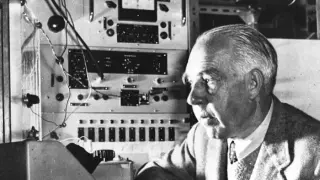
A new biography by Philip Ball argues that Niels Bohr was the more radical and influential figure of 20th-century physics compared to Albert Einstein. The book details Bohr’s development of the Copenhagen Interpretation, which posits that observation determines quantum states, and traces his role in the atomic age despite his opposition to nuclear weapons.
NS Savannah faces scrapyard fate as Savannah relocation plan collapses
energy1 month ago

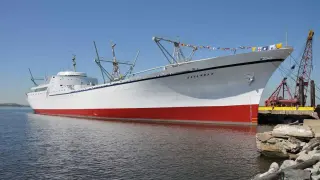
NS Savannah faces scrapyard fate as Savannah relocation plan collapses

The NS Savannah, the world's first nuclear-powered merchant ship, is at risk of being scrapped by late 2026 after a planned move to Savannah, Georgia, failed. The vessel, which sailed 450,000 nautical miles on just 163 pounds of uranium, is currently moored in Baltimore. The NS Savannah Association is now preparing a proposal to keep the ship in Baltimore as a museum, but the Maritime Administration has not publicly confirmed a disposal date.

1966 Palomares Crash: US B-52 Drops Four Nuclear Bombs in Spain, Triggering Decades-Long Health Disputes
history3 months ago

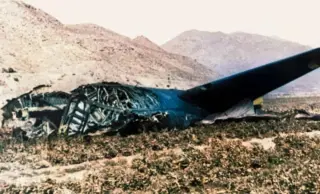
1966 Palomares Crash: US B-52 Drops Four Nuclear Bombs in Spain, Triggering Decades-Long Health Disputes

On January 17, 1966, a US B-52 bomber carrying four thermonuclear weapons broke apart mid-air over southern Spain during a refueling attempt, scattering the weapons across land and the Mediterranean. While three bombs landed near Palomares and one sank into the sea, the incident exposed severe gaps in safety protocols for cleanup crews. Decades later, veterans reported that they were sent into contaminated zones without protective gear or proper training, leading to long-term health issues that the Air Force initially dismissed as minimal risks.

Deep-sea dives reveal 200,000 corroded radioactive waste barrels leaking in the Atlantic
environment3 months ago

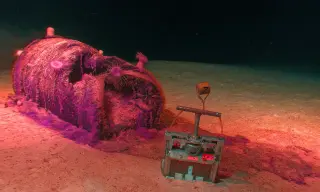
Deep-sea dives reveal 200,000 corroded radioactive waste barrels leaking in the Atlantic

A 2026 expedition in the Northeast Atlantic confirmed that over 200,000 barrels of radioactive waste dumped in the mid-20th century are actively leaking. The Nautile submersible observed corroded containers and material spilling into seafloor mud, while instruments detected elevated levels of radionuclides like cobalt-60 and cesium-137. Although the waste was designed for gradual release rather than permanent containment, scientists are still analyzing samples to determine if deep-sea organisms are absorbing the radiation.

Hiroshima Blast Forged a Novel Metallic Alloy, Scientists Confirm
science3 months ago

Hiroshima Blast Forged a Novel Metallic Alloy, Scientists Confirm

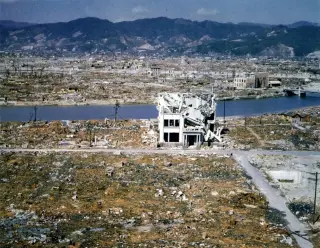
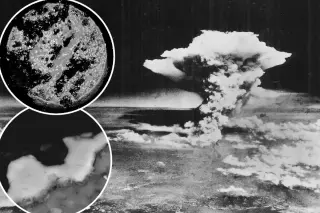
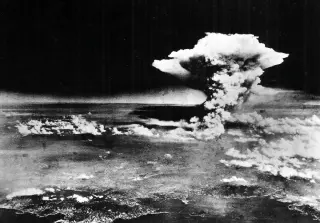
A team led by Luca Bindi of the University of Florence has identified a previously unknown metallic alloy within microscopic debris from the 1945 Hiroshima atomic bombing. Published in Science Advances, the discovery reveals that the extreme heat and rapid cooling of the blast created a complex cubic lattice of iron, chromium, nickel, manganese, molybdenum, silicon, and aluminum. This material, found in beach sands of Hiroshima Bay, represents a unique crystalline structure not seen in nature or laboratories, highlighting how violent events can forge new matter.

Hiroshima Fallout Yields First-Ever Silicon-Rich Alloy
science3 months ago

Hiroshima Fallout Yields First-Ever Silicon-Rich Alloy

A new study in Science Advances reports the discovery of a previously unknown metallic alloy within debris from the 1945 Hiroshima atomic bombing. Led by Luca Bindi of the University of Florence, the research team analyzed 34 'hiroshimaites'—glassy droplets found in Hiroshima Bay sands. One grain, roughly 10 micrometers wide, contained a complex mixture of iron, chromium, nickel, manganese, molybdenum, silicon, and aluminum arranged in a unique cubic lattice. This structure, formed by rapid cooling of vaporized urban materials, has never been observed in conventional alloys or nature. The finding suggests extreme nuclear events can create novel materials and may aid in nuclear forensics and future materials science.

Hiroshima Blast Debris Yields Unprecedented Metallic Alloy
science3 months ago

Hiroshima Blast Debris Yields Unprecedented Metallic Alloy

Researchers have identified a previously unknown metallic alloy within microscopic debris from the 1945 Hiroshima atomic bombing. Discovered by Luca Bindi of the University of Florence, the material features a complex cubic lattice composed of iron, chromium, nickel, manganese, molybdenum, silicon, and aluminum. This unique structure, which defies typical thermodynamic stabilization, was formed during the rapid cooling phase of the explosion. The finding, published in Science Advances, suggests that extreme nuclear events can create novel materials that serve as physical archives of the detonation conditions.

Researchers Discover Unprecedented Clathrate Inside Trinity Test Crystal
science6 months ago

Researchers Discover Unprecedented Clathrate Inside Trinity Test Crystal

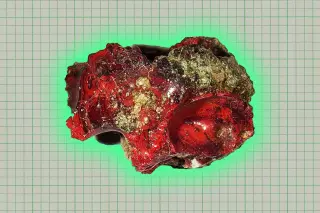
A new study in Proceedings of the National Academy of Sciences used CT and X-ray scans to analyze a rare red crystal from the Trinity test’s trinitite and found a previously unseen clathrate that traps atoms in its lattice—a material never observed in nature or in nuclear debris—highlighting the extreme chemistry produced by nuclear weapons, with the reminder that collecting such material is illegal.

"Tracing Oppenheimer: From Science to Streaming Success"
travel2 years ago

"Tracing Oppenheimer: From Science to Streaming Success"

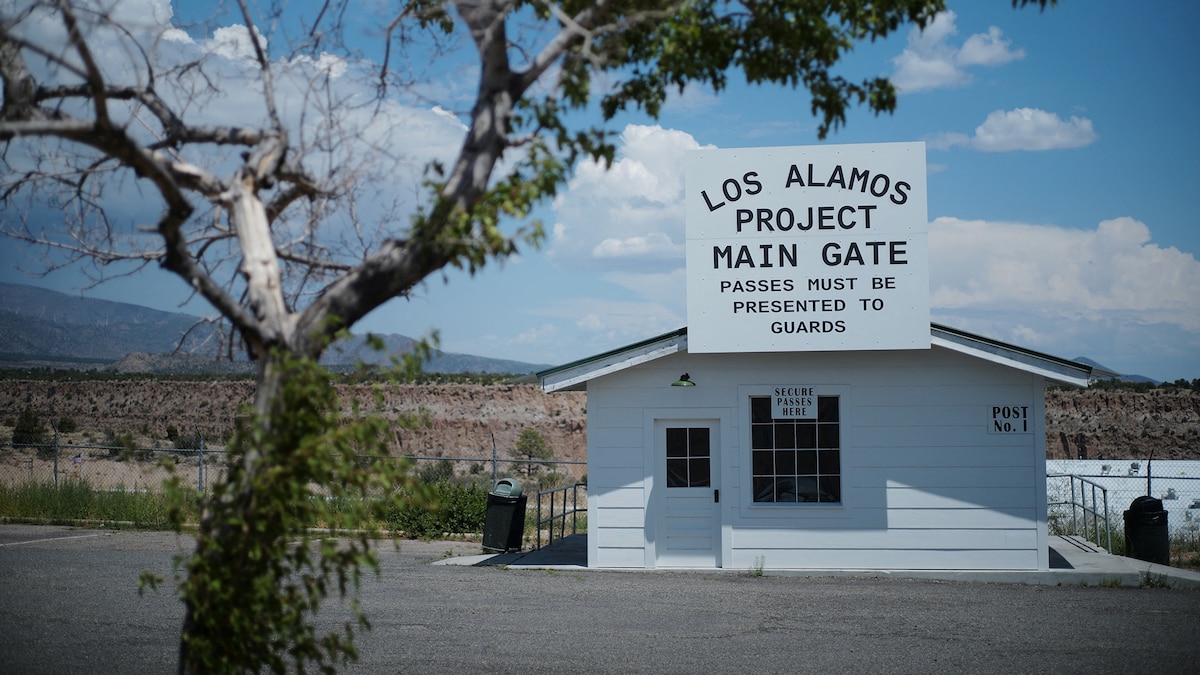
As Christopher Nolan’s film Oppenheimer brings attention to J. Robert Oppenheimer, known as the "father of the atomic bomb," travelers can retrace his significant steps from New Mexico to the Caribbean. From Los Alamos, the birthplace of the atomic bomb, to the Trinity site where the first atomic blast occurred, and the Nevada Test Site where nuclear devices were tested, to Oppenheimer Beach in St. John, U.S. Virgin Islands, where he sought solace from the nuclear arms race, these locations offer a glimpse into the physicist's legacy and the history of nuclear weaponry.