
Orbital Tensions: Russian Satellites Probe European Networks as Space Warfare Escalates
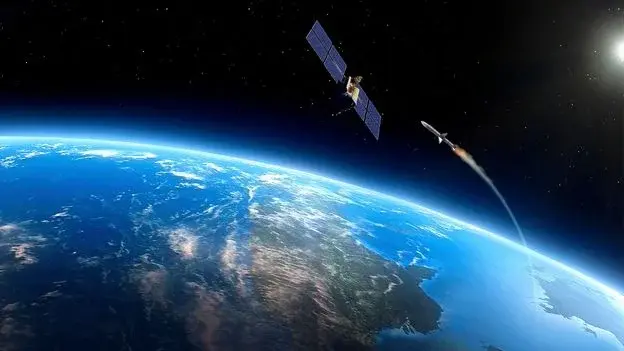
Russian satellites have likely intercepted communications from at least a dozen European geostationary satellites since 2022, marking a new phase of hybrid warfare in orbit. Experts warn that the space economy, valued at $626 billion, is increasingly vulnerable to cyberattacks, jamming, and kinetic strikes. While Russia denied developing space-based nuclear weapons, US officials suspect satellite Cosmos 2553 could be part of such a program. Western nations are now funding 'guardian' satellites to protect critical infrastructure, as the risk of accidental collisions or deliberate sabotage in orbit grows.
Key points
- In February 2022, a cyberattack on commercial satellite modems preceded Russia's invasion of Ukraine, aiming to degrade Ukrainian communications.
- Russian satellites Luch-1 and Luch-2 have made close approaches to European geostationary satellites, potentially intercepting sensitive data.
- The space economy is valued at $626 billion, making it a high-stakes target for military and hybrid warfare.
- Western countries, including Japan, France, India, and Germany, are developing 'guardian' satellites to protect vulnerable assets.
- US officials suspect Russian satellite Cosmos 2553 may be part of a program to develop space-based nuclear weapons, though Russia denies this.
- The 2021 Russian ASAT test on Cosmos 1408 created over 1,500 trackable debris fragments, forcing ISS crews to shelter for two hours.
Background
Space has historically been a domain of limited conflict, but recent events have shifted this. The 2007 Chinese ASAT test and the 2008 US Operation Burnt Frost established precedents for kinetic satellite destruction. The 2021 Russian ASAT test on Cosmos 1408, which occurred three months before the Ukraine invasion, highlighted the risks of debris generation. The 2022 cyberattack on satellite modems demonstrated the vulnerability of commercial space infrastructure to pre-war hybrid tactics. These events have prompted Western nations to prioritize satellite defense and counterspace capabilities.
How outlets are covering it
BBC and The News International emphasize the strategic significance of satellite interception and the potential for nuclear weapons in space, citing US concerns about Cosmos 2553. KeepTrack provides a technical perspective on the 2021 ASAT test, detailing the debris tracking and the immediate impact on the ISS. All sources agree on the growing threat from Russian and Chinese counterspace capabilities, but differ in focus: BBC and The News International highlight the geopolitical and hybrid warfare aspects, while KeepTrack focuses on the technical and environmental consequences of debris. Experts like Kari Bingen and Juliana Suess are cited across sources to provide analysis on the motivations and risks of these actions.
Why it matters
The increasing militarization of space threatens the stability of the $626 billion space economy and the security of global communications. The potential for kinetic or nuclear strikes in orbit could trigger the Kessler Syndrome, a chain reaction of debris collisions that could render space unusable for years. The vulnerability of commercial satellites, such as SpaceX's Starlink, to jamming and cyberattacks highlights the need for robust defense strategies. The actions of Russia and China in orbit signal a shift in global power dynamics, where space is no longer a safe haven but a contested domain.
What to watch
Western nations will likely accelerate the development of 'guardian' satellites and other defensive technologies. The US and its allies may increase monitoring of Russian and Chinese satellite activities, particularly close approaches to geostationary satellites. There may be further diplomatic tensions over the potential use of space-based nuclear weapons, though experts doubt their actual deployment. The long-term impact of debris from past ASAT tests will continue to affect orbital operations, requiring ongoing tracking and mitigation efforts.
Want the full story? Read the original reporting
Read on BBC