Tag

Space Debris

All articles tagged with #space debris

Private Firm Aims to Capture a House-Sized Asteroid to Jumpstart Space Mining
space17 days ago

Private Firm Aims to Capture a House-Sized Asteroid to Jumpstart Space Mining

TransAstra plans to fund a study for a mission to capture a 100-ton, house-sized asteroid and relocate it near Earth for processing and propellant production, potentially as early as 2028 under the 'New Moon' project; the plan relies on a large capture bag whose scale-up has NASA backing, with ambitions to use off-Earth resources to sustain a future space-based mining and manufacturing facility, while the bag may also help clear orbital debris.

SpaceX Unveils Gigantic AI Satellites Meant for Orbit, Longer Than the ISS
technology18 days ago

SpaceX Unveils Gigantic AI Satellites Meant for Orbit, Longer Than the ISS

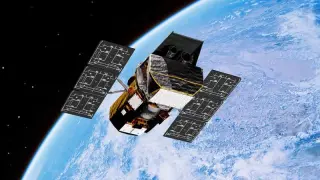
Elon Musk teased a rough rendering of orbiting data centers that would be longer than the ISS, powered by large solar arrays to support 100 kW of AI computing per satellite with future megawatt-scale versions, and a plan to launch up to 1 million satellites; experts warn about collision risk, light pollution, and atmosphere/astronomy interference, while SpaceX argues heat rejection in space and pursues a Terafab chip factory in Austin to supply AI hardware.

Fireball Meteor Crashes Through German Roof, Sparking European Watch
science1 month ago

Fireball Meteor Crashes Through German Roof, Sparking European Watch

A meteorite exploded over Europe on March 8, creating a bright fireball visible across several countries. In Koblenz-Güls, Germany, fragments damaged buildings and left a hole in a roof, though no injuries were reported. The event, captured by Europe’s AllSky7 network and tracked by the IMO/ESA, underscores how space rocks heat up and shed fragments upon atmospheric entry, often going undetected until impact.

Uncontrolled NASA debris reentry: tiny chance of ground harm
space1 month ago

Uncontrolled NASA debris reentry: tiny chance of ground harm

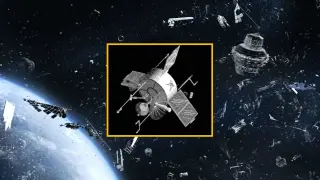
NASA’s defunct Van Allen Probes (launched in 2012, mission ended in 2019) are on an uncontrolled reentry path. Most of the 600-kg craft is expected to burn up, but a small portion could survive to reach Earth’s surface with an estimated ground-harm risk of about 1 in 4,200. Reentry could occur as soon as Tuesday evening due to solar activity increasing atmospheric drag, prompting NASA and the US Space Force to monitor. The episode underscores ongoing concerns about space debris and the challenge of safely disposing of aging spacecraft.

Uncontrolled re-entry: NASA's Van Allen Probe A poses small debris risk
science1 month ago

Uncontrolled re-entry: NASA's Van Allen Probe A poses small debris risk

A defunct NASA satellite, Van Allen Probe A (launched in 2012 to study Earth's radiation belts), is expected to re-enter Earth's atmosphere in an uncontrolled descent around 7:45 p.m. EDT; most of the 1,323-pound craft should burn up, but some components may survive, with an estimated risk to people on Earth of about 1 in 4,200. Predictions carry roughly 24 hours of uncertainty. The probe's twin, Van Allen Probe B, remains in orbit, and this event underscores ongoing space-debris concerns as launches increase; debris typically falls over oceans due to most of Earth's surface being water.

1,300-pound NASA satellite set for a fiery reentry on March 10
space-exploration1 month ago

1,300-pound NASA satellite set for a fiery reentry on March 10

NASA’s 1,323-pound Van Allen Probe A is expected to re-enter Earth’s atmosphere around March 10, with the Space Force targeting about 7:45 p.m. EDT (2345 GMT) ±24 hours. Most of the spacecraft should burn up during reentry, and any surviving pieces pose a very small risk to people on the ground (about 1 in 4,200). Debris would likely splash down in the ocean. The probes, launched in 2012 and deactivated in 2019, studied Earth’s radiation belts; heightened solar activity has increased atmospheric drag, shortening their orbital lifetimes, with Probe B not expected to reenter until around 2030.

Shenzhou-20 Window Crack Far More Severe Than First Reported, Prompting Emergency Measures
science1 month ago

Shenzhou-20 Window Crack Far More Severe Than First Reported, Prompting Emergency Measures

New revelations show that Shenzhou-20’s viewport cracks were far more serious than initially reported, triggering an uncrewed rescue mission, the use of a port-hole crack repair device during re-entry, and rapid ground-team actions—including cutting the main parachute to prevent dragging after landing when no crew member could detach it.

Megaconstellations Could Turn Earth's Atmosphere Into a Crematorium
science-tech1 month ago

Megaconstellations Could Turn Earth's Atmosphere Into a Crematorium

Researchers warn that the rapid push to satellite mega-constellations—SpaceX and other operators planning up to a million satellites—could cause vast amounts of debris to re-enter and burn up in the upper atmosphere, releasing alumina and other particulates that heat the atmosphere and deplete ozone, with potentially lasting climate impacts. Ground debris and casualty risks rise as more satellites are launched, and a million-satellite scale could significantly alter atmospheric chemistry. The piece calls for global regulation and a defined atmospheric carrying capacity for launches and re-entries, plus full lifecycle environmental assessments, urging SpaceX to take a leadership role.

Cracks in Shenzhou Window Expose Greater Space-Junk Risk
space1 month ago

Cracks in Shenzhou Window Expose Greater Space-Junk Risk

New details show cracks in the Shenzhou return capsule’s viewport penetrated the window, likely from space debris, with astronauts using a pen-shaped microscope to inspect them. A porthole crack repair device was deployed, a replacement crewless capsule was sent, and the damaged capsule landed in Mongolia on Jan 19. The incident underscores growing space-junk hazards as satellite megaconstellations expand.

Crack in Orbit: Chinese Taikonauts Survive Space Debris Hit
science1 month ago

Crack in Orbit: Chinese Taikonauts Survive Space Debris Hit

An anomaly on China’s Shenzhou 20 mission left three taikonauts temporarily stranded in space after a tiny piece of space debris cracked the viewport. After inspection, ground crews ferried them back to Earth using the Shenzhou 21 capsule that had been sent to retrieve the relief crew, leaving Shenzhou 20 docked. The empty Shenzhou 20 was later brought back to Earth as the Shenzhou 21 crew returned in another capsule. The crew landed in Inner Mongolia on Jan. 19, 2026. The incident highlights the dangers of orbital debris and showcases China’s space program’s safety and resilience.

Taikonauts recount discovering window cracks on Shenzhou-20 during return prep
space1 month ago

Taikonauts recount discovering window cracks on Shenzhou-20 during return prep

Chinese taikonauts aboard Shenzhou-20 described spotting a triangular mark on the return capsule’s window—suggesting cracks likely from a space‑debris impact—during routine checks at the Tiangong space station. The finding delayed their departure, with ground teams and the Shenzhou-21 relief crew working to assess the damage. The crew ultimately returned to Earth nine days later aboard Shenzhou-21 after a 204‑day in‑orbit stay, in what CCTV and officials describe as China’s first spaceflight emergency.

Lithium Trail in Upper Atmosphere Traced to SpaceX Re-entry
science1 month ago

Lithium Trail in Upper Atmosphere Traced to SpaceX Re-entry

Researchers using sensitive lasers detected a rapid lithium plume in the mesosphere–lower thermosphere and traced it to the February 2025 re-entry of a discarded SpaceX Falcon 9 upper stage, marking the first ground-based observation that re-entering space debris leaves a detectable chemical fingerprint. With orbital activity rising and megaconstellations planned, the study underscores the need for monitoring networks and regulatory action to understand and manage potential impacts on the upper atmosphere and ozone.