
HKUST Breaks Durability Barrier in Solid-State Cooling
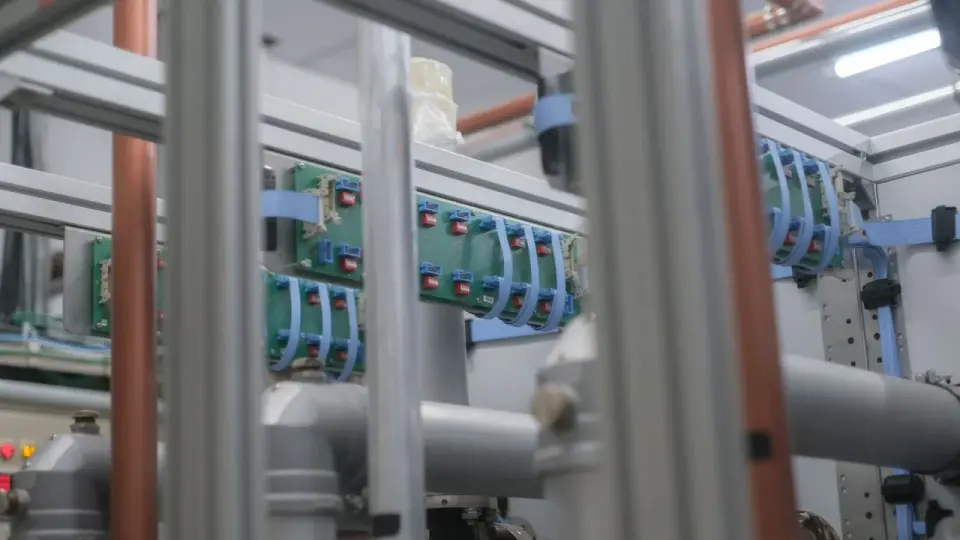
Researchers at the Hong Kong University of Science and Technology (HKUST) have unveiled the world’s first zero-degradation elastocaloric cooling device. By replacing traditional nickel-titanium alloys with a new titanium-nickel-copper-cobalt (TiNiCuCo) alloy, the team achieved stable cooling performance over one million operational cycles. The device maintains a constant 400W cooling power and a 41K temperature span without degradation, addressing the primary barrier to commercializing solid-state refrigeration.
Key points
- The new device uses a fatigue-resistant TiNiCuCo alloy instead of standard NiTi, which typically suffers from functional fatigue and declining cooling power over time.
- The system achieved a constant cooling power of 400W and a temperature span of 41K (41°C) across one million cycles with zero performance degradation.
- Accelerated fatigue testing showed the refrigerant remained functional after 100 million cycles, with an expected real-world operational life exceeding ten years.
- The design features a double-layer fin-type structure that improved heat transfer and buckling resistance, achieving an ultra-high fatigue life of over 10 million cyclic compressive cycles.
- The device architecture was optimized to reduce component count by 50% and lower the proportion of ineffective parts from 15% to 5%.
- Prof. SUN Qingping, the team leader, stated that the team is currently developing an air conditioner based on this technology to move it beyond laboratory demonstrations.
Background
Elastocaloric cooling, which relies on the reversible stress-induced phase transformation of shape memory alloys, has been explored as a green alternative to traditional vapor-compression refrigeration. While previous HKUST research in 2025 demonstrated a kilowatt-scale device achieving 1,284 watts of cooling power, the technology faced commercialization hurdles due to material fatigue. This latest development focuses on durability rather than raw power, aiming to solve the reliability issues that have hindered market adoption. The findings were published in the journal Joule.
How outlets are covering it
All three sources—Interesting Engineering, Cooling Post, and HKUST—report consistent figures regarding the 400W cooling power and 1 million cycle durability. However, they emphasize different aspects of the breakthrough. Interesting Engineering highlights the 'zero-degradation' claim and the potential for sustainable global development. Cooling Post focuses on the technical superiority of the new alloy and the specific structural improvements, such as the 50% reduction in components. HKUST’s official release provides the most detailed breakdown of the three distinct features: the fatigue-resistant alloy, the mechanically reliable structure, and the compact device architecture. While all outlets agree on the technical success, HKUST explicitly notes the team’s next step is developing a practical air conditioner, whereas the other sources frame it primarily as a scientific milestone.
Why it matters
Traditional refrigeration systems are energy-intensive and often use refrigerants that harm the ozone layer and exacerbate the greenhouse effect. A durable, solid-state cooling technology could significantly reduce energy consumption and environmental impact. By solving the long-standing issue of material fatigue, this breakthrough brings elastocaloric cooling closer to commercial viability for air conditioning and other applications, potentially offering a sustainable alternative to current vapor-compression systems.
What to watch
The HKUST team is currently developing an air conditioner based on this technology. Future goals include enhancing energy efficiency, power density, and cost competitiveness to accelerate market adoption. The team aims to move the technology from laboratory demonstrations to real-world applications, with the refrigerant expected to operate reliably for more than a decade under real-world conditions.
- World’s first zero-degradation elastocaloric cooling device maintains 1 million operational cycles Interesting Engineering
- A cooling device built to last: Sustainable refrigeration system maintains performance through one million cycles Tech Xplore
- Scientists claim elastocaloric cooling breakthrough Cooling Post
- HKUST Unveils World’s First Zero-Degradation Elastocaloric Cooling Device to Revolutionize Sustainable Refrigeration Technology | HKUST The Hong Kong University of Science and Technology
- HKUST Launches World's First Zero-Degradation Cooling Device Mirage News
Want the full story? Read the original reporting
Read on Interesting Engineering