Nine major European pharmaceutical companies urged EU leaders to treat medicines as strategic infrastructure, warning that the continent is losing ground to the US and China in research and investment. The letter cited a drop in Europe’s share of global R&D and clinical trials, urging governments to boost funding and regulatory efficiency to retain competitiveness.
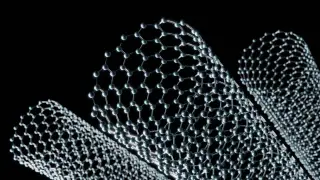
A collaborative team from South Korea’s KIMS and KIST has developed a 17.5-micrometer-thick composite film that blocks 99.9999999% of radar waves while maintaining the tensile strength of steel. By bonding carbon nanotube fibers with MXene nanosheets in a 'brick-and-mortar' structure, the material offers simultaneous electromagnetic shielding, infrared stealth, and mechanical durability. This innovation could revolutionize military aircraft by reducing weight and hiding thermal signatures, while also addressing electromagnetic interference in future 5G and 6G consumer electronics.
HKUST researchers unveiled the world’s first zero-degradation elastocaloric cooling device, using a fatigue-resistant TiNiCuCo shape memory alloy and a redesigned refrigerant structure to deliver a constant 400W cooling power and a 41°C temperature span over one million cycles; accelerated tests show no degradation up to 100 million cycles, and real-world use is expected to exceed a decade, marking a green alternative to conventional refrigeration and advancing toward market-ready elastocaloric cooling for air conditioning.
Bruce Straley, The Last of Us co-director, apologized on Twitter for naming God of War Laufey in a critique of AAA innovation, saying his comments were taken out of context. He argues the push for the next big games-as-a-service model has eroded creativity, while admitting Laufey is visually appealing but not inherently innovative; Laufey is scheduled for February release.
While distillation has been blamed for much of China's AI progress, observers including Cohere's Aidan Gomez say China is advancing through independent innovation and sometimes surpassing U.S. models; industry rivals and U.S. officials argue distillation matters, but a growing chorus contends it is only part of the story. China's rapid progress is anchored by a large talent pool, government support, and leaner compute due to chip restrictions, signaling the AI gap with the U.S. may be closing beyond copying.
Kraft Heinz CEO Steve Cahillane plans to invest about $700 million in product innovation and marketing to revive the company’s brands for a new generation, aiming to refresh pantry staples while keeping core brands largely intact.
A Bentley University-Gallup survey shows rank-and-file workers across parties increasingly support DEI, with 72% saying it should be a business priority and many linking diverse workforces to profitability and innovation, even as Republicans remain skeptical and a gap persists between expectations and corporate performance.
Apple unveiled its first foldable iPhone, the iPhone Duo, with a 5.4-inch front display that unfolds to 7.6 inches and a starting price of $1,999 (top model north of $3,100), while also highlighting upgraded AirPods and other devices; analysts say the foldable could boost demand and signal strong innovation, even if Duo is a niche product.
Litavis is Singular Photonics’ SPAD image sensor that performs photon counting, timing, histogramming and photon statistics directly on-chip. The CMOS SPAD device delivers 256×256 continuous photon-counting imaging while producing timestamped events on a 64×64 macropixel grid with picosecond timing, enabling on-chip analysis and reducing data transfer for lower latency and power use. It supports multiple modes (photon-counting imaging, time gating, various TDC configs, TCSPC, coincidence detection) and a flexible platform for diverse applications—from machine vision and robotics to spectroscopy, medical imaging and quantum sensing; pre-orders are underway and demonstrations are planned at SPIE Sensors + Imaging and VISION.
Johns Hopkins APL researchers have unveiled FAST CAR2, a field-assisted sintering method that rapidly densifies carbon-carbon composites, slashing production from months to days and reducing costs—potentially accelerating heat shields and rocket parts for hypersonic systems; scaling up for larger parts is underway.
Hyundai Steel broke ground on a $5.8 billion Electric Arc Furnace-based steel mill in Louisiana that will produce about 2.7 million metric tons of hot-rolled and cold-rolled steel annually (1.8 million for automotive sheet and 900,000 for general use), with commercial production slated for 2029. Operated by HYUNDAI-POSCO Louisiana Steel (HPLS) as a Hyundai-led joint venture, the plant will use a direct-reduction process powered by natural gas to feed the EAF and cut CO2 emissions by roughly 70% versus coal-based blast furnaces. The project, tied to Hyundai Motor Group’s $26 billion U.S. investment through 2028, is expected to create about 5,400 jobs and relies on Louisiana incentives, a deep-water port, and RiverPlex MegaPark infrastructure to support iron ore imports and steel shipments for Hyundai, Kia, and other automakers.
Researchers combined gallium arsenide/aluminum gallium arsenide multi-quantum-well layers with a nanoscale metasurface to amplify light’s nonlinear frequency conversion by up to 1,000 times, enabling smaller, scalable photonic devices for telecom and quantum technologies. The approach engineers both the material and the optical structure, yielding strong light–matter interactions at near-infrared wavelengths and compatibility with existing semiconductor manufacturing, with potential applications including quantum communication and entangled-photon sources.
Facing rolling electricity blackouts and fuel shortages worsened by sanctions and import losses, Cubans are getting creative: influencer Dayán Marrero shares DIY antenna tutorials to tap scarce mobile internet, farmers pasteurize milk over charcoal and power dairies with solar panels and batteries, and private solar-powered electric tricycles are increasingly ferrying Havana residents; at Viñales, a dairy farm runs on solar power with an inverter to keep a freezer, despite few tourists, illustrating Cuban resilience and ingenuity amid energy scarcity.
Researchers at Pohang University of Science and Technology (POSTECH) have developed MiPAL, a low-cost single-element speaker that uses a front acoustic metasurface lens and rear elastic meta-units to focus sound to a single listener, suppressing lateral leakage. Covering 500 Hz to 10 kHz (over four octaves) and designed for easy 3D-printed customization, the device promises headphone-free, personalized audio in public spaces like trains, planes, and museums without creating noise pollution.
As commerce ministers gather in North Carolina ahead of the G20 summit, the Trump administration is pushing a hands-off approach to AI regulation and backing the so-called Carolina Principles—promoting foundational AI research, expanding commercial opportunities, and reserving new rules for extraordinary cases—while critics and international bodies call for guardrails amid rapid AI advances; the talks will feature industry leaders (including OpenAI and Nvidia) and aim to accelerate innovation without heavy regulatory constraints.