
PBS Recommends Space Documentaries Ranging from Black Holes to Voyager
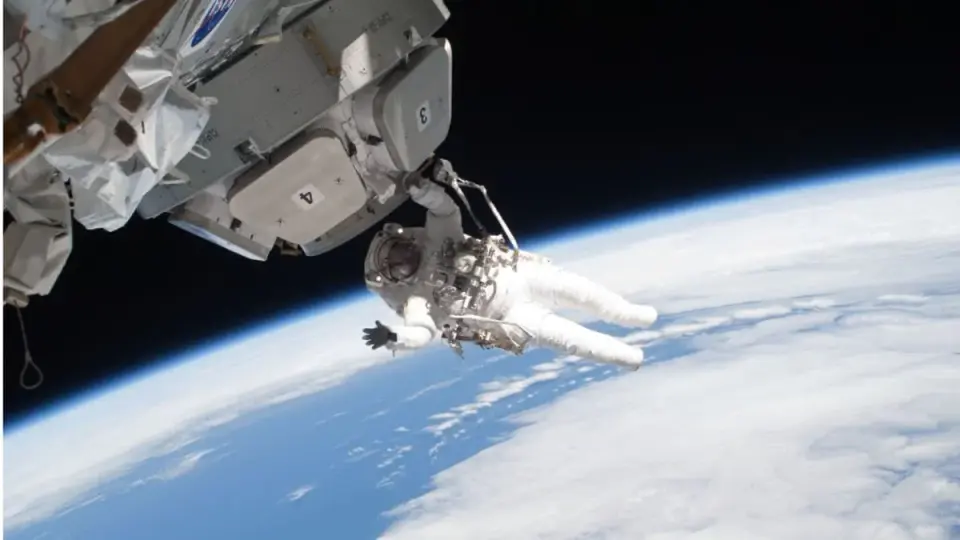
AV Club highlights a selection of PBS space documentaries that balance scientific depth with human narrative. The recommendations include the BBC co-productions 'The Planets' and 'The Solar System,' which use advanced CGI to detail planetary history and dynamics. Other featured titles are 'NOVA: Black Hole Apocalypse,' which explores cosmic mysteries with input from Neil deGrasse Tyson, and 'American Experience: Chasing The Moon,' which revisits the Apollo era using new archival footage. The list also covers 'The Farthest: Voyager In Space,' detailing the probe's journey to interstellar space, and 'Once Upon A Time In Space,' a 2026 series focusing on the human stories behind space exploration. Additionally, 'NOVA: Star Chasers of Senegal' examines the intersection of astronomy and faith in West Africa, while 'NOVA: Chasing Pluto' revisits the New Horizons mission.
Key points
- PBS offers a diverse range of space documentaries, from scientific deep dives to human-centric narratives, catering to viewers seeking awe-inspiring content amidst current geopolitical tensions in space.
- 'The Planets' (2019) and 'The Solar System' (2024) are five-part series co-produced with the BBC, utilizing mission data and CGI to chronicle planetary origins and dynamic forces like storms and gravity.
- 'NOVA: Black Hole Apocalypse' provides an in-depth look at black holes, featuring interviews with scientists Neil deGrasse Tyson and Paul Murdin, despite its sensational title.
- 'American Experience: Chasing The Moon' is a three-part film released for the 50th anniversary of the Apollo 11 landing, using previously unseen archival material to contextualize the space race within political and social turmoil.
- 'The Farthest: Voyager In Space' (2017) celebrates the Voyager mission's 40th anniversary, highlighting its status as the farthest human-made object, now 15 billion miles away, and its Golden Record carrying greetings in 55 languages.
- 'Once Upon A Time In Space' (2026), a BBC collaboration, focuses on the human vulnerability and personal anecdotes of astronauts and support staff during the space shuttle and station eras.
Background
This recommendation list arrives amidst a period of rapid advancement in space exploration and observation. Recent developments include the launch of the Nancy Grace Roman Space Telescope, which aims to map the cosmos with a field of view 100 times larger than Hubble, and the establishment of the US Space Academy to train officers for the Space Force. Additionally, commercial entities like Starfish Space are launching inspection spacecraft for NASA, and international collaborations, such as the ESA and Pokémon partnership for World Space Week, continue to engage the public. These events underscore a growing interest in both the technical and cultural dimensions of space, a theme reflected in the PBS documentaries highlighted by AV Club.
Why it matters
As space exploration becomes increasingly militarized and commercialized, as noted in the upcoming 'NOVA: Space Wars' special, these documentaries provide a counter-narrative focused on scientific wonder and human achievement. They serve as educational resources that make complex topics like black holes, planetary dynamics, and interstellar travel accessible to the general public. By highlighting both the technical feats of missions like Voyager and New Horizons and the human stories behind them, PBS helps maintain public engagement with space science, fostering a deeper understanding of our place in the universe and the historical context of space exploration.
What to watch
Viewers can watch these documentaries on PBS platforms, with 'Once Upon A Time In Space' being a recent 2026 release. The 'NOVA: Space Wars' special is forthcoming, focusing on the military aspects of space control. Meanwhile, the scientific missions referenced in the documentaries, such as the Lucy probe's flyby of Trojan Asteroids in 2028, will continue to provide new data and insights, potentially inspiring future documentary content.
Want the full story? Read the original reporting
Read on A.V. Club