
Early genome duplications expanded vertebrate brain cell diversity
TL;DR Summary
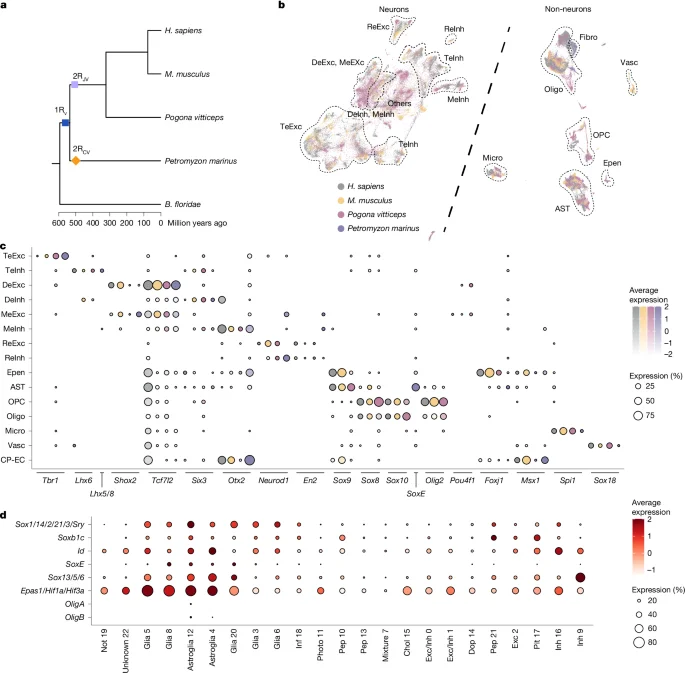
Cross-species single-cell analyses of human, mouse, lizard, lamprey and amphioxus brains show that vertebrate brain cell-type families often lack one-to-one amphioxus homologs; ohnologues from the first whole-genome duplication were especially important for vertebrate cell-type diversification, driven by dosage selection and subfunctionalization, with ohnologues continuing to enable cellular diversity across brain regions and glia.
Topics:science#cell-type-evolution#dosage-selection#neuroscience#ohnologues#vertebrate-brain#whole-genome-duplication
Reading Insights
Total Reads
1
Unique Readers
33
Time Saved
92 min
vs 93 min read
Condensed
100%
18,496 → 53 words
Want the full story? Read the original article
Read on Nature