Early genome duplications expanded vertebrate brain cell diversity
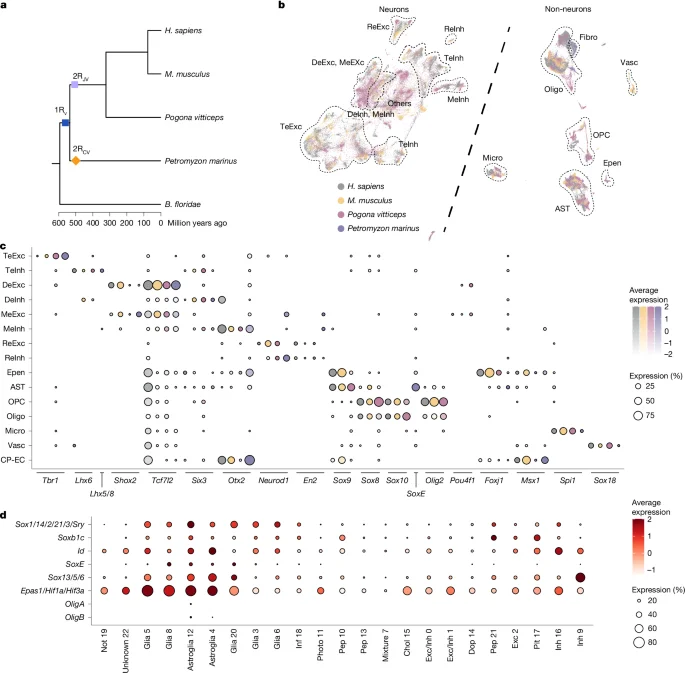
Cross-species single-cell analyses of human, mouse, lizard, lamprey and amphioxus brains show that vertebrate brain cell-type families often lack one-to-one amphioxus homologs; ohnologues from the first whole-genome duplication were especially important for vertebrate cell-type diversification, driven by dosage selection and subfunctionalization, with ohnologues continuing to enable cellular diversity across brain regions and glia.