
Insights into Hunger Regulation from Jellyfish and Fruit Flies.
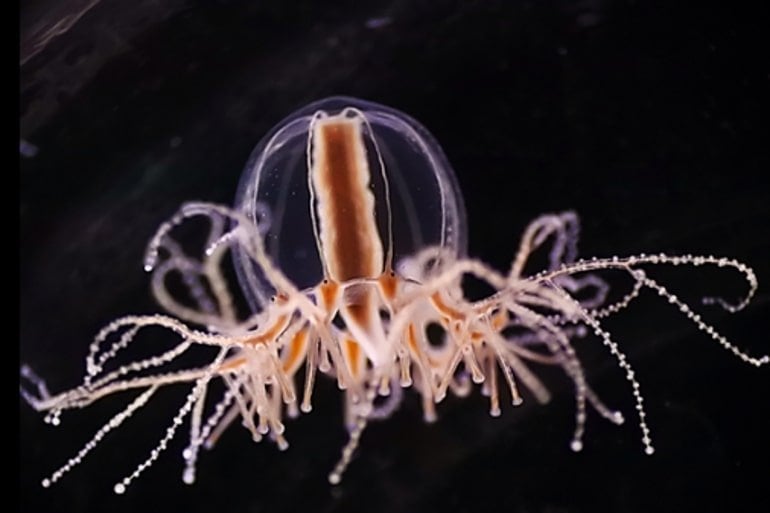
Researchers have studied jellyfish and fruit flies to explore the mechanisms underlying feeding regulation and the evolutionary origins of neuropeptides that control hunger and feelings of fullness. They found that the jellyfish Cladonema regulates how much it eats based on how hungry it is, and identified GLWamide as a feeding-suppressing neuropeptide. GLWamide acts as a satiety signal, indicating that the body has had enough food. The researchers also found that GLWamide and the neuropeptide myoinhibitory peptide (MIP) in fruit flies share similarities in their structures, suggesting they are related through evolution. The study highlights the deep evolutionary origins of a conserved satiety signal and the importance of a comparative approach in investigating the role of molecules, neurons, and circuits in regulating behavior.
Want the full story? Read the original reporting
Read on Neuroscience News