
Curiosity Captures Unbalanced Dawn Panorama of Mysterious Martian Yardangs
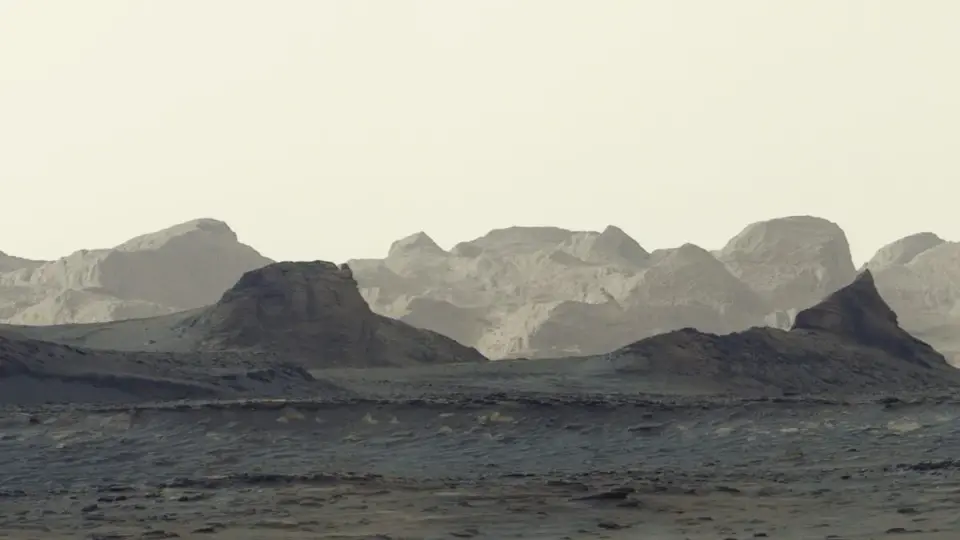
NASA’s Curiosity rover captured a detailed panorama of wind-carved cliffs called yardangs on Mount Sharp during Martian dawn on August 11, 2026. The image, processed without white balancing to preserve the morning light, reveals a geological layer that scientists find puzzling due to its color and angle. Curiosity has reached 1 kilometer of elevation and aims to reach the base of these cliffs by 2027 to analyze their origin.
Key points
- The panorama was captured on August 11, 2026, at 8:30 a.m. local Mars time, approximately one hour after sunrise.
- The image consists of six individual shots stitched together and was processed without white balancing to retain the soft, early morning hues.
- The yardang layer extends roughly 16 kilometers across the northwestern reaches of Mount Sharp and appears to have formed around 3 billion years ago.
- Curiosity recently reached an elevation of 1 kilometer, the highest point ever climbed by a rover on Mars.
- Scientists hope to reach the base of the yardangs by 2027 to collect data using the rover’s robotic arm.
Background
Curiosity has been ascending Mount Sharp since 2014, studying layers that record Mars’ geological history, including evidence of ancient water and drying minerals. Recent orbital imagery has also highlighted unusual polar colors and layered deposits, but this ground-level view provides the first detailed look at the yardang layer’s structure.
How outlets are covering it
Gizmodo and Space.com emphasize the aesthetic quality of the unbalanced image, noting how the lack of white balancing preserves the dawn’s soft light. NASA’s JPL focuses on the scientific mystery of the yardang layer’s formation, suggesting it may be volcanic ash. All sources agree that the layer’s odd color and tilt make it a priority for future exploration.
Why it matters
Understanding the origin of the yardang layer could reveal new insights into Mars’ ancient volcanic activity and atmospheric conditions. Reaching these cliffs will allow Curiosity to collect physical samples, potentially resolving long-standing questions about the planet’s geological history.
What to watch
Curiosity will continue its ascent through sulfate and carbonate layers enriched by ancient drying processes. The mission aims to reach the yardang layer’s base by 2027, where the rover will use its robotic arm to gather detailed data on the mysterious rock formations.
- A Rare Image of Mars at Dawn Reveals the Beauty of Its Ancient Cliffs Gizmodo
- NASA rover takes striking image of dawn's early light on Mars Reuters
- Dawn breaks on Mars photo of the day for Oct. 8, 2026 Space
- NASA’s Curiosity Rover Catches Stunning Martian Dawn NASA Jet Propulsion Laboratory (JPL) (.gov)
- Curiosity rover captures unprecedented view of Mars cliffs KTLA
Want the full story? Read the original reporting
Read on Gizmodo