
BGS confirms 454-million-year-old supervolcano beneath The Wash using 80-year-old rock samples
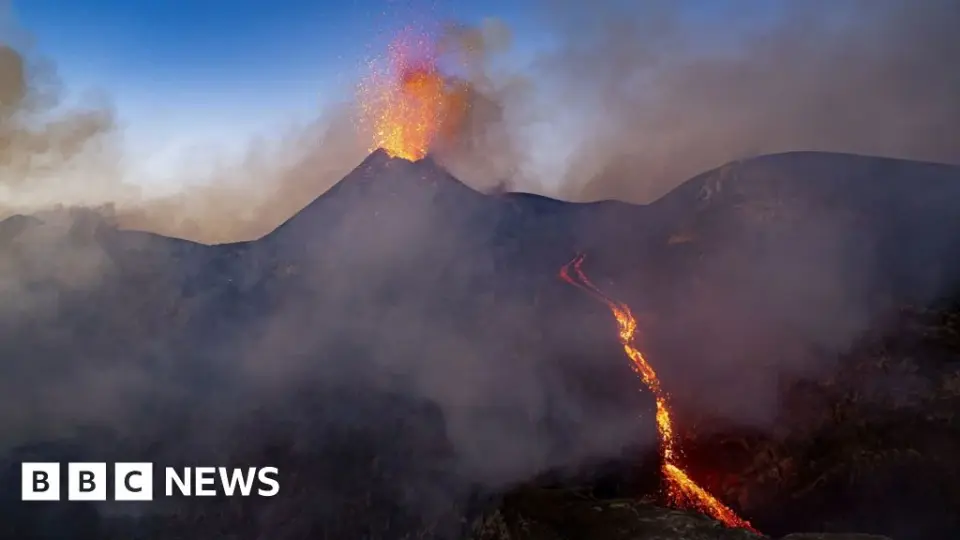
The British Geological Survey (BGS) has confirmed the existence of a massive, extinct supervolcano beneath The Wash in eastern England. The discovery, based on the re-analysis of rock samples collected 80 years ago, reveals a volcanic system 65km wide that erupted 454 million years ago. The event was powerful enough to spread ash across Scandinavia and is now considered extinct, posing no future risk.
Key points
- BGS researchers identified the supervolcano by analyzing zircon crystals from boreholes in North Creake, Norfolk, and Claxby, Lincolnshire, using new techniques during the pandemic.
- The volcano, centered under The Wash, is estimated to be at least 65km across and erupted with the force of thousands of hydrogen bombs.
- The eruption occurred 454 million years ago, roughly 200 million years before the dinosaurs, and left ash deposits in Norway, Sweden, and Poland.
- Dr. Tim Pharaoh of the BGS stated that the volcano is extinct and cannot erupt again, unlike seismic faults which can be reactivated.
- The discovery resolves a 40-year-old geological anomaly identified by the University of East Anglia, which had previously detected lighter granite rocks beneath the region.
Background
This discovery follows a long history of geological curiosity in the region. Approximately 40 to 50 years ago, scientists at the University of East Anglia identified a geophysical anomaly beneath The Wash, suspecting the presence of lighter granite rocks. Dr. Tim Pharaoh, who has worked at the BGS for 40 years, had previously attempted to confirm this but lacked the precise dating technology. The current confirmation builds on earlier global interest in supervolcanoes, such as the Taupo eruption in New Zealand, but focuses on a dormant system in the UK that has no active threat.
How outlets are covering it
While all three sources agree on the core facts, they emphasize different aspects of the discovery. The BBC and WION focus heavily on the scale of the eruption, comparing it to thousands of hydrogen bombs or atomic bombs, and highlight the global spread of ash to Scandinavia and Eastern Europe. WION specifically uses the 'million atomic bombs' comparison to emphasize the magnitude. In contrast, Lynn News highlights the local significance, noting that Spalding was likely near the 'heart' of the volcano and discussing potential future applications for geothermal energy in the horticultural industry. All sources agree that the volcano is extinct, but the BBC and WION frame the discovery as a major shift in understanding England's deep geological past, while Lynn News frames it as the resolution of a long-standing local mystery.
Why it matters
The confirmation of this supervolcano provides critical data for understanding the mechanics of massive volcanic eruptions, which could inform future risk assessments for active supervolcanoes like Yellowstone. Additionally, the discovery has practical implications for the UK's energy sector, as the BGS has expressed interest in drilling deep boreholes to access geothermal energy, potentially offering a sustainable heat source for the region's agricultural industries.
What to watch
The BGS is considering drilling a deep borehole to access geothermal energy, similar to projects in the Netherlands that use geothermal heat for greenhouses. Researchers will continue to analyze the zircon crystals to refine the geological timeline of the UK's subsurface. No further action is expected regarding the volcano itself, as it is confirmed to be extinct.
- Ancient supervolcano found under English coast BBC
- Colossal ancient supervolcano found under eastern England The Times
- Volcano that erupted with strength of a million atomic bombs discovered in England WION
- Scientists discover supervolcano under The Wash Lynn News
- Supervolcano with strength of a million atomic bombs discovered | Tap to know more | Inshorts Inshorts
Want the full story? Read the original reporting
Read on BBC