
Milne Fiord's freshwater layer vanishes, ending a 4,000-year Arctic era
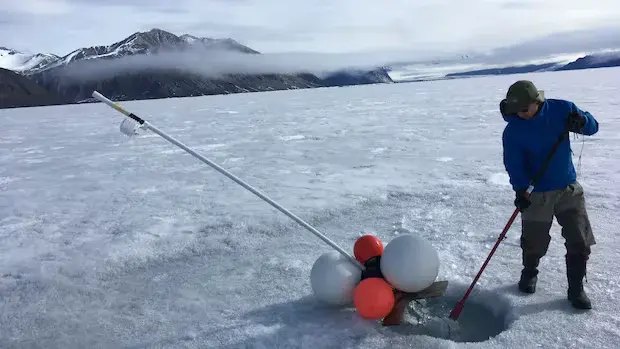
Canada's final epishelf lake, a rare freshwater layer floating on saltwater in Milne Fiord, has permanently disappeared. The loss was triggered by the 2020 collapse of the Milne Ice Shelf, which acted as a dam for the lake. A new study confirms the freshwater drained within months, destroying a unique dual-ecosystem that had existed for 4,000 years. Scientists warn that such systems are unlikely to return under current climate conditions.
Key points
- The Milne Fiord epishelf lake was the last of its kind in Canada, featuring a freshwater layer up to 18 meters deep floating above saltwater.
- The lake was sustained by the Milne Ice Shelf, which dammed the fjord mouth and prevented freshwater from mixing with the ocean.
- In July 2020, the ice shelf collapsed, losing over 40% of its surface area and removing the barrier that held the lake.
- Within two months of the collapse, the freshwater layer drained away, and the ecosystem was replaced by brackish water by 2022.
- The lake supported two distinct microbial communities separated by a sharp salinity boundary, a phenomenon unique to epishelf lakes.
Background
Previous coverage in September 2026 highlighted the irreversible nature of this loss, noting that the Milne Fiord is located in the 'Last Ice Area,' a region expected to retain perennial sea ice longer than other Arctic parts. The disappearance of this lake serves as a sentinel indicator of broader climate stress on Arctic ice shelves.
How outlets are covering it
CBC and Gizmodo both emphasize the finality of the loss, with CBC noting the lake's 4,000-year history and Gizmodo highlighting the rapid drainage within months. The Brighter Side of News provides more technical detail on the collapse mechanics, noting that the ice shelf had been thinning for decades and that the 2020 event was the 'last straw.' All sources agree that the ecosystem is not expected to recover, but The Brighter Side of News uniquely details the specific salinity measurements that confirmed the lake's disappearance.
Why it matters
The loss of the Milne Fiord epishelf lake marks a significant shift in Arctic ecosystems, demonstrating how climate change can rapidly erase unique biological habitats. It serves as a warning for similar systems in Greenland and Antarctica, which are also at risk of disappearing as ice shelves continue to collapse.
What to watch
Scientists will continue monitoring the Milne Fiord to confirm that the freshwater layer does not return. The remaining sections of the Milne Ice Shelf are expected to remain vulnerable to further collapse, potentially leading to additional environmental changes in the region.
- This was the last lake of its kind in Canada. Now it's gone CBC
- This Lake Was the Last of Its Kind in Canada. And It Just Vanished Gizmodo
- A unique lake has completely disappeared in the Arctic — the reasons surprised sud.ua
- Canada’s last epishelf lake vanished after recent Arctic ice shelf collapse The Brighter Side of News
- The Very Last Epishelf Lake In The Canadian Arctic Has Vanished – And It’s Gone For Good iflscience.com
Want the full story? Read the original reporting
Read on CBC