
Voyager 1 Set to Become First Human-Made Object at One Light-Day Distance
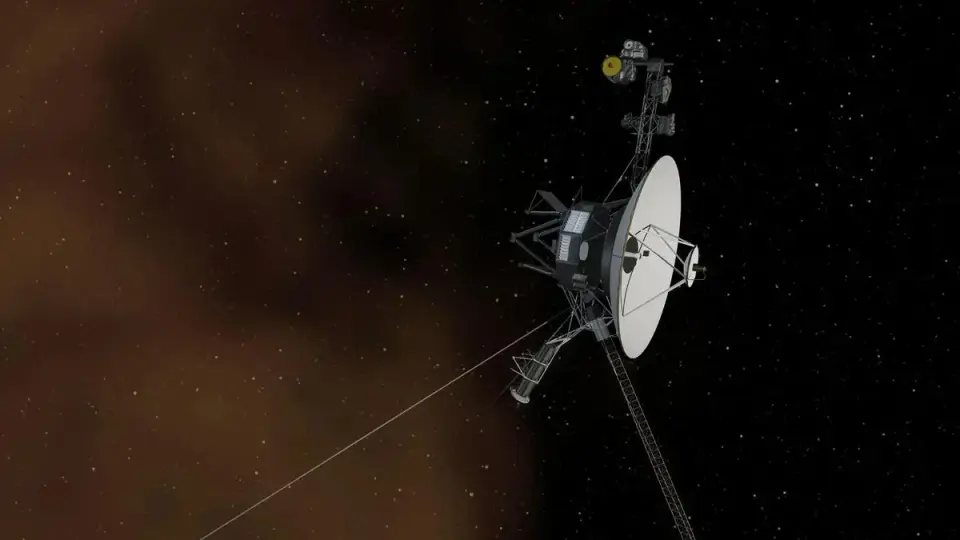
NASA’s Voyager 1, launched in 1977, is on track to reach a distance of one light-day from Earth by November 18, 2026. This milestone will mark the first time a human-made object travels this far. The spacecraft, originally designed for a five-year mission to study Jupiter and Saturn, has exceeded expectations by continuing to operate in interstellar space. Despite declining power levels, engineers are conserving energy by shutting down non-essential instruments to extend its operational life.
Key points
- Voyager 1 is expected to reach one light-day (approximately 16 billion miles or 26 billion km) from Earth on November 18, 2026.
- The spacecraft travels at approximately 38,000 miles per hour and has covered over 15.8 billion miles since launch.
- Launched in 1977, the probe was originally intended for a five-year mission but has continued operating for nearly five decades.
- In 2012, Voyager 1 crossed into interstellar space, a region where solar energy is minimal.
- NASA shut down the Low-Energy Charged Particles instrument on April 17, 2026, to conserve power.
- The spacecraft currently has two functioning instruments, and engineers are exploring methods to extend its operational life further.
Background
Voyager 1 has been a subject of public interest for decades, including its 1977 capture of the first combined image of Earth and the Moon from deep space. Recent media coverage, such as PBS documentaries, has highlighted the probe's journey to interstellar space. The current milestone follows a period of careful resource management, as the spacecraft's nuclear power source gradually weakens. This trajectory contrasts with other NASA initiatives, such as the recent competition for private successors to the International Space Station, which focuses on low Earth orbit rather than deep space exploration.
Why it matters
Reaching one light-day is a symbolic and technical benchmark for human exploration beyond the solar system. It demonstrates the durability of early space technology and provides continued data on interstellar conditions. The milestone underscores the long-term viability of deep space probes and their role in understanding the environment far from Earth. As power declines, the strategies used to extend Voyager 1’s life may inform future missions to distant destinations.
What to watch
NASA will monitor Voyager 1 as it approaches the one light-day mark on November 18, 2026. Engineers will continue to assess power levels and may disable additional instruments to preserve the spacecraft’s core functions. The agency is also investigating other methods to extend the probe’s operational life, potentially allowing it to gather data for many more years.
Want the full story? Read the original reporting
Read on DOGO News